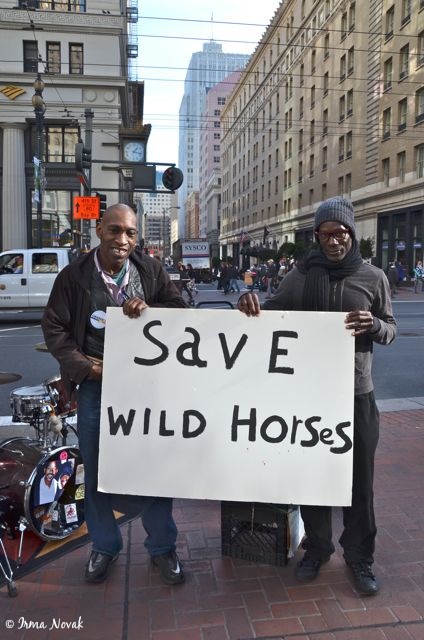
Natural gas pipelines destroy the environment and push out wild horses


© Irma Novak, all rights reserved

© Irma Novak, all rights reserved

The big push to frack for natural gas is for export to Asia.  They need liquid natural gas for their growing electricity needs.

Wild horses are rounded up and removed for mega pipeline projects like the Ruby Pipeline. Many native wild horses have ended up going to slaughter. Politicians sell out to the Oil & Gas lobbyists. It’s time to hold them accountable.

Look at the damage just one section of natural gas pipeline can cause. This is happening today in Canada:

Then there is all the environmental damage caused by fracking to get the natural gas out of the ground. Watch GASLAND 1 and 2 to learn the truth.

Watch GASLAND here:

Watch GASLAND 2 here.

Then join the movement to stop toxic fracking here.


Californians Submit 100,000 Public Comments Opposing Gov. Brown’s Dangerous Fracking Regulations

Sacramento, CA – In the wake of the driest recorded year in California’s history, concerned Californians submitted more than 100,000 public comments today denouncing Governor Brown’s proposed fracking regulations and urged him to ban the water-intensive drilling activity. At today’s event, Californians Against Fracking delivered boxes filled with tens of thousands of public comments to DOGGR while chanting, “Climate leaders don’t frack,” a clear message to Gov. Brown, whose legacy as a climate leader is on the line as he green-lights a massive expansion of fracking in the state.

“As California faces a massive drought, the last thing Gov. Brown should be doing is letting oil companies frack our state and contaminate our drinking water,” said Zack Malitz, CREDO’s Campaign Manager. “The only way to protect Californians is with a ban on fracking, not weak regulations that will only encourage more drilling.”

“In order to protect our water, farms, and public health from toxic contamination Governor Brown should ban fracking now,” said Adam Scow, California Director of Food & Water Watch.

“The days of Big Oil calling the shots in Sacramento are over. Californians are rising up in record numbers to say no to these dangerous oil extraction techniques,” said Ross Hammond, Senior Campaigner, Friends of the Earth.

“Governor Brown needs to make a choice. He can stand with thousands of Californians for a safe climate future and stop fracking up our state, or he can stand with Big Oil and for more droughts, wildfires and threatened communities,” said David Turnbull, Campaigns Director at Oil Change International.

“The tide of history is quickly turning against Governor Brown on fracking,” said Hollin Kretzmann, a staff attorney for the Center for Biological Diversity. “The question is whether he’ll be remembered as the governor who unleashed fracking’s nightmare on California or the man who stood with his fellow Californians and protected the places we all love.”

“We’re told this is a record-breaking number of comments on environmental and health policy in the state,” said Victoria Kaplan, MoveOn.org Civic Action Campaign Director. “Governor Brown can listen to the voters and ban fracking, or he can be remembered as the governor who paved the way for more climate change and drought.”

“If Governor Brown wants California to continue to hold its reputation as national leader in environmental standards, banning fracking should be a no brainer,” said Democracy for America Chair Jim Dean.

“The Central Valley has some of the most impacted communities in California, who are a key part of the movement to stop fracking. Today, we’re showing our grassroots power,” says Valley Resident Juan Flores Organizer at Center on Race, Poverty & the Environment.

“2013 was the driest year in California’s history, and opening the state to fracking will only make the problem worse. If Governor Brown wants to get serious about stopping climate change, he should listen to the thousands of Californians calling for a ban on fracking, and stand up to big oil,” said Linda Capato, Fracking Campaigner at 350.org

Californians Against Fracking is a coalition of environmental, business, health, agriculture, climate, labor, environmental justice and political organizations working to win a statewide ban on fracking in California. Groups that participated in today’s delivery include CREDO, Food & Water Watch, Center for Biological Diversity, MoveOn.org Civic Action, Friends of the Earth, Center on Race, Poverty and the Environment, 350.org, Oil Change International, Greenpeace, Democracy for America, and 350 Bay Area.

###

Nevada farm bureau, counties sue over wild horses

Cross-posted from the viral Associated Press article published in the San Francisco Chronicle for educational purposes: http://www.sfgate.com/news/science/article/Nevada-farm-bureau-counties-sue-over-wild-horses-5136697.php

Photo James Marvin Phelps / Foter.com / CC BY-NC

Photo James Marvin Phelps / Foter.com / CC BY-NC

RENO, Nev. (AP) — Two Nevada organizations have sued the federal government, alleging mismanagement of wild horses led to excessive damage to rangelands and the animals themselves.

The Nevada Farm Bureau Federation and the Nevada Association of Counties named Interior Secretary Sally Jewell, the Interior Department and the Bureau of Land Management as defendants in their lawsuit filed Dec. 30 in U.S. District Court in Nevada.

BLM spokeswoman Celia Boddington declined to comment on Sunday. “It’s under review,” she said.

The groups accuse the government of failing to comply with the Wild Free-Roaming Horses and Burros Act of 1971, which requires the BLM to protect the “natural ecological balance of all wildlife species” on public lands and to remove “excess” horses and burros from the range.

They argue the BLM should “destroy” horses that are deemed unadoptable, the Elko Daily Free Press reported (http://bit.ly/1eNObmf ). The BLM has opposed the sale of horses for slaughter.

The agency has removed nearly 100,000 horses from the Western range over the last decade, citing the requirements of the 1971 federal law. Horses passed over for adoption are sent to long-term facilities in the Midwest.

But the number of horses gathered last year declined as the BLM deals with budget constraints and a lack of capacity at short- and long-term holding facilities.

In addition to damaging public land and threatening private water rights, the government’s wild horse program is “first and foremost” detrimental to horses, according to the lawsuit.

“Free-roaming horse and burro herds in Nevada are frequently observed to be in malnourished condition, with the ribs and skeletal features of individual animals woefully on view and other signs of ill-health readily observable,” the complaint states.

Anne Novak, executive director of the horse advocacy group Protect Mustangs, said most wild herds are “healthy and fit,” and the groups’ claim that they are in poor condition appears to be a “skewed effort” to justify killing them because they don’t want to share water.

Some 1.75 million head of livestock grazing on public land outnumber wild horses by more than 50-to-1 and cause most of the range damage, she added.

“The plaintiffs have an arrogant sense of entitlement,” Novak told The Associated Press. “I’m grateful the American public will see how the plaintiffs allegedly intend on denying native wild horses the right to water and are requesting BLM destroy the majority of the roundup survivors. Their lawsuit will rally more voters to fight for wild horses to remain wild and free for future generations.”

Representatives of the two groups did not immediately respond to phone calls seeking comment Sunday.

___

Information from: Elko Daily Free Press, http://www.elkodaily.com

Please comment at the San Francisco Chronicle article here


Study shows wild horse herds with functional social structures contribute to low herd growth compared to BLM managed herds

© Novak


International Society for the Protection of Mustangs and Burros (ISPMB)

As we complete our thirteenth year in studying the White Sands and Gila herds, two isolated herds, which live in similar habitat but represent two different horse cultures, have demonstrated much lower reproductive rates than BLM managed herds.  Maintaining the “herd integrity” with a hands off management strategy (“minimal feasible management”) and no removals in 13 years has shown us that functional herds demonstrating strong social bonds and leadership of elder animals is key to the behavioral management of population growth.

ISPMB’s president, Karen Sussman, who has monitored and studied The Society’s four wild herds all these years explains, “We would ascertain from our data that due to BLM’s constant roundups causing the continual disruption of the very intricate social structures of the harem bands has allowed younger stallions to take over losing the mentorship of the older wiser stallions.

In simplistic terms Sussman makes the analogy that over time Harvard professors (elder wiser stallions) have been replaced by errant teenagers (younger bachelor stallions).  We know that generally teenagers do not make good parents because they are children themselves.

Sussman’s observations of her two stable herds show that there is tremendous respect commanded amongst the harems.  Bachelor stallions learn that respect from their natal harems.  Bachelors usually don’t take their own harems until they are ten years of age.  Sussman has observed that stallions mature emotionally at much slower rates than mares and at age ten they appear ready to assume the awesome responsibility of becoming a harem stallion.

Also observed in these herds is the length of time that fillies remain with their natal bands.  The fillies leave when they are bred by an outside stallion at the age of four or five years.  Often as first time mothers, they do quite well with their foals but foal mortality is higher than with seasoned mothers.

Sussman has also observed in her Gila herd where the harems work together for the good of the entire herd.  “Seeing this cooperative effort is quite exciting,” states Sussman.

ISPMB’s third herd, the Catnips, coming from the Sheldon Wildlife Range where efforts are underway to eliminate all horses on the refuge, demonstrate exactly the reverse of the organization’s two stable herds.

The first year of their arrival (2004) their fertility rates were 30% the following first and second years. They have loose band formations and some mares are without any harem stallions.  Stallions are observed breeding fillies as young as one year of age.  Foal mortality is very high in this herd.  Generally there is a lack of leadership and wisdom noted in the stallions as most of them were not older than ten years of age when they arrived.  In 2007, a decision to use PZP on this herd, a contraceptive, was employed by ISPMB.  This herd remains a very interesting herd to study over time according to Sussman.   “The question is, can a dysfunctional herd become functional,” says Sussman who speculates that the Catnips emulate many of the public lands herds.

In 1992 when Sussman and her colleague, Mary Ann Simonds, served on the National Wild Horse and Burro Advisory Board, they believed that BLM’s management should change and recommended that selective removals should begin by turning back all the older and wiser animals to retain the herd wisdom.  Sussman realizes that the missing ingredient was to stop the destruction of the harem bands caused by helicopter roundups where stallions are separated from their mares.  “Instead, bait and water trapping, band by band, needed to be instituted immediately,” says Sussman.  Had this been done for the past twenty years, we would have functionally healthy horses who have stable reproductive rates and we wouldn’t have had 52,000 wild horses in holding pastures today.   BLM’s selective removal policy was to return all horses over the age of five.  When the stallions and mares were released back to their herd management areas by the BLM, younger stallions under the age of ten fought for the mares and took mares from the older wiser stallions.  This occurs when there is chaos happening in a herd such as roundups cause.

Sussman also believes that when roundups happen often the younger stallions aged 6-9 are ones that evade capture.  This again contributes to younger stallions taking the place of older wiser stallions that remain with their mares and do not evade capture.  She is advocating that the BLM carry out two studies: determining the age of fillies who are pregnant and determining age structures of stallions after removals.

Currently Sussman is developing criteria to determine whether bands are behaviorally healthy or not.  This could be instituted easily in observation of public lands horses.

Taken from BLM’s website:  “Because of federal protection and a lack of natural predators, wild horse and burro herds can double in size about every four years.”

White Sands Herd Growth: 1999-2013 – 165 animals.

BLM’s assertion herds double every four years means there should be 980 horses or more than five times the growth of ISPMB’s White Sands herd.

Gila Herd Growth:1999-2013- 100 animals.

BLM’s assertion herds double every four years means there should be 434 horses or nearly four times the growth of ISPMB’s Gila herd.

Sussman says that BLM’s assertion as to why horse herds double every four years is incorrect. The two reasons given are federal protection of wild horse herds and lack of natural predators. ISPMB herds are also protected and also have no natural predators, but they do not reproduce exponentially. She adds that exponential wild horse population growth on BLM lands must have another cause, and the most likely cause is lack of management and understanding of wild horses as wildlife species.  Instead BLM manages horses like livestock. “According to the Wild Horse and Burro Act of 1971, all management of wild horse populations was to be at the ‘minimal feasible level’,” Sussman says. “When the BLM’s heavy-handed disruption and destruction of wild horse social structures is the chief contributing factor in creating population growth five times greater than normal, than the BLM interference can hardly be at a ‘minimal feasible level.’”

Sussman concludes that ISPMB herds are given the greatest opportunity for survival, compared to the BLM’s herds which are not monitored throughout the year.  “One would assume,” Sussman says, “herds that are well taken care of and monitored closely would have a greater survival rate.  Yet, even under the optimum conditions of ISPMB herds, they still did not increase nearly 500% like BLM herds.”

Karen Sussman has been riding horses since the age of four.  She has spent the last thirty-two years working with wild horses and burros and has been involved in every aspect of the BLM’s Wild Horse and Burro program including: assisting in the development of a consistent training program for the prison training program, development of a volunteer compliance program for adopted wild horses and burros, a catalyst for the increasing fines from $2,000 to $100,000 for the death of wild horses or burros, monitoring fee-waivered animals in Montana.  Sussman received the prestigious Health of the Land Award serving on the BLM’s Black Mountain Eco-team developing a gold-standard model for managing wild burros.  She served on the National Wild Horse and Advisory Board in 1990-92

Sign up for Intro to Environmental Law (free)

(Photo © Grandma Gregg)

(Photo © Grandma Gregg)

What:  Introduction to Environmental Law and Policy Course
 
 
When:  Starts Monday, January 13, 2014  (This is not a cutoff date.)
 
Where:  Anywhere, anytime, on-line.
 
Length:  Six weeks
 
Professor:  Don Hornstein, J.D., University of North Carolina at Chapel Hill
 
Cost:  FREE — including all materials that you’ll need
 
Register:  FREE — It’s a very simple procedure too.
 
Earn:  A Statement of Accomplishment, but no college credit.
 
Prerequisites:  None.  Designed for the under-grad.
 
Format:  Videos (15 to 20 minutes each) and short readings per topic.
 
Repeat:  Rewatch the videos and reread the readings as often as you like.
 
Quizzes:  Typically 8 questions, multiple choice.  Take when you’re ready.
 
Retake:  To improve your score on any test, you can retake it … twice!
 
Participation:  There are opportunities to take part in a forum if you’d like.
 
Professor Hornstein teaches what is known as “positive law” (what the law actually is) as opposed to “normative law” (what the law ought to be).  He is an outstanding teacher.  
 
The course imparts insight into how lawyers and judges think and reason with regard to environmental law.  It does not specifically address wild horse and burro issues.  But the information is still relevant for our purposes.  For instance, one of the first topics covered is “nuisance law.”  On the surface, it might not seem applicable to our advocacy.  But wait — don’t the wild horses and burros get blamed for being nuisances when they step outside the invisible boundaries of their herd management area?  So, understanding “nuisance” as a legal concept — determining what is and what is not deemed a nuisance according to the courts — can make us better-able to defend our clients.  Advocates who have reviewed and responded to BLM environmental assessments will already be familiar with many of the terms, concepts, and laws that are discussed.  
 
Dr. Hornstein has many teaching assistants that help him.  They are eager to answer questions.  Also, you will find that students from all over the world, not just America, take the course.  Last term, there were reportedly about 20,000!  Yes, twenty thousand!  
 

 A special thanks to Marybeth Devlin for bringing this class to our attention.


Signatures needed to help America’s wild horses

 Dianne_Feinstein,_official_Senate_photo

We are going to a meeting at Senator Dianne Feinstein‘s office soon and need your help to get more signatures on 3 important petitions:

1.) The DEFUND the ROUNDUPS PETITION http://www.change.org/petitions/defund-and-stop-the-wild-horse-burro-roundups

2.) SAVE OUR NATIVE WILD HORSES PETITION http://petitions.moveon.org/sign/save-our-native-wild

3.) PETITION for EMERGENCY SHELTER & SHADE http://www.change.org/petitions/bring-emergency-shelter-and-shade-to-captive-wild-horses-and-burros

Please help by sharing and emailing the two petitions to your friends and family. Thank you so much for helping America’s wild horses!

( Senator Feinstein photo courtesy Wikimedia Commons)

Help us help the wild horses!

Expenses Jan 2014


We need your help to continue the fight for mustang freedom and to care for the wild horses we have saved from probable slaughter.

Please donate to Contact@ProtectMustangs.org via www.PayPal.com

Mail in your donations to:
Protect Mustangs

P.O. Box 5661

Berkeley, Ca. 94705

We are in the process of filing for our 501c3 and are currently a California nonprofit.

Last month our Executive Director, Anne Novak, donated more than 240 hours of her time to Protect Mustangs. Our other team members donated their time too.

Our bill to feed the rescued wild horses is huge. For example a 100 pound bale of hay is $21.00 in the San Francisco Bay Area. They eat a lot of bales every month. Please help us with our expenses to help the wild horses. Thank you!

www.ProtectMustangs.org   Information: 415-531-8454

Wild horses are dying in BLM’s care

BLM’s Statement Regarding Horse Fatalities at Ridgecrest Corrals

December 6, 2013

In the past 30 days, the Ridgecrest Regional Wild Horse and Burro Corrals have reported 15 horse fatalities that appear to be related to a single undetermined cause. The Bureau of Land Management is working closely with state and federal animal health authorities along with a local veterinarian to determine the cause and decide the best course of action to protect the health and well-being of the wild horses and burros at the Ridgecrest Corrals.

At this time, the cause of the deaths does not appear to be contagious. The California Animal Health and Food Safety Laboratory in San Bernardino is testing samples from affected animals and feed supplies. Results are still pending.

A wild horse and burro adoption planned for December has been cancelled and no animals have been adopted since October. Animals are not being received or shipped from the facility. The Ridgecrest Corrals have approximately 800 wild horses and burros.

Additional information will be provided as it becomes available.

Contact: Stephen Razo (951) 697-5217