Get your I Love Ponies t-shirts to raise awareness for wild ponies


Order your shirts here: https://www.booster.com/loveponies

Help raise awareness with T-shirts! Did you know that many American wild horses are often pony height? Mustangs need to be adopted to get out of the holding pens and they make great pony partners! Get the “I love ponies” T-Shirt to encourage education and mustang adoptions. Irma Novak (17) a member of the United States Pony Club, was inspired to make this shirt for the Discover Mustangs program after she saw the most adorable wild ponies who need to find homes.

Here’s the link to get your T-Shirts: https://www.booster.com/loveponies Only 7 days left!

All the money raised goes to feed the Discover Mustangs program wild horses. Protect Mustangs is a California nonprofit dedicated to the preservation of native and wild horses (& ponies too).

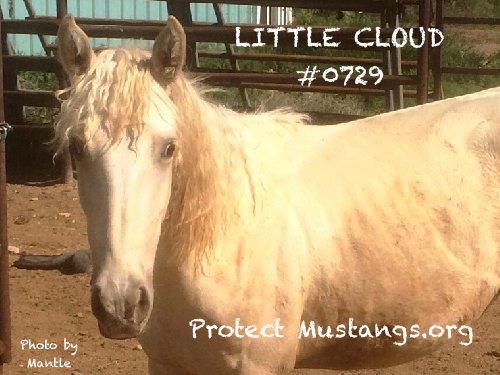
PM Mantle Little Cloud #0729

Dangerous bill puts America’s wild horses at risk of slaughter

©Cynthia Smalley


Dear Friends of Wild horses and burros,

It’s bad when the BLM holds captive mustangs with no shade or shelter but if we all don’t rally quickly to stop a misleading bill in Congress, we could witness America’s cherished wild horses being sold to slaughter by the thousands instead of being held captive in holding pens or living in freedom as the law intended–safe from harassment and slaughter.

You probably have witnessed what happens when the states “manage” wild horses. . . In the case of the 41 wild horses from Dry Creek, Wyoming, 37 were sold to the Canadian slaughterhouse. We are so grateful to have rescued 14 youngsters (8mo-2 yrs) who were all going to be butchered for human consumption abroad.

Below is an Associated Press article that is going viral this weekend while the National Association of Counties is meeting in New Orleans. The Utah Commissioners are trying to get a joint resolution backed which would put American wild horses at-risk of being killed and slaughtered to “dispose of them.” Of course the politicians don’t pitch it this way. No . . . they cover that part up and make their resolution and their legislation look like it has animal welfare in mind. You can see the bill below.

Let’s hope this article shines the light on their sinister plans. It’s time to fight for the protection of wild horses.

Bill seeks to allow states to manage wild horses
By Martin Griffith, Associated Press

RENO, Nev. (AP) — A Utah congressman has introduced legislation to allow Western states and American Indian tribes to take over management of wild horses and burros from the federal government.

Rep. Chris Stewart said the U.S. Bureau of Land Management has mismanaged the animals on public rangelands and states should have the option of managing them.

An overpopulation of horses is pushing cattle off the range, the Republican lawmaker said, and leading to the destruction of important habitat for native species.

“States and tribes already successfully manage large quantities of wildlife within their borders,” Stewart said in a statement. “If horses and burros were under that same jurisdiction, I’m confident that new ideas and opportunities would be developed to manage the herds more successfully than the federal government.”

But Anne Novak, executive director of California-based Protect Mustangs, said her group opposes the legislation because it would lead to states and tribes killing the animals or selling them off for slaughter for human consumption.

The government is rounding up too many mustangs while allowing livestock to feed at taxpayer expense on the same rangeland scientists say is being overgrazed, she said.

“We’ve had firsthand experience with states and tribes managing wild horses, and it’s horribly cruel,” Novak said in a statement. “They ruthlessly remove wild horses and sell them to kill-buyers at auction. Severe animal abuse would be the result of the (legislation).”

The Bureau of Land Management says it’s doing all it can, given budget constraints, overflowing holding pens and a distaste for the politically unpopular options of either ending the costly roundups or slaughtering excess horses.

The bill’s introduction comes at a time when the bureau has been under increasing pressure from ranchers to remove horses that they say threaten livestock and wildlife on rangelands already damaged by drought.

In Utah, Iron County commissioners had threatened to gather up hundreds of mustangs themselves, saying the government refuses to remove enough horses in herds that double in size every five years.

Iron County Commissioner Dave Miller said he and commissioners from Utah’s Beaver and Garfield counties are trying to drum up support for a resolution in support of the legislation at the National Association of Counties annual conference in New Orleans, which ends Monday.

“The resolution will be instrumental in getting Chris Stewart’s bill through Congress because it shows support across the nation,” he told The Spectrum of St. George, Utah.

Stewart said his Wild Horse Oversight Act would extend all protections that horses and burros enjoy under the federal Wild Free-Roaming Horses and Burros Act of 1971 while giving states the opportunity of implementing their own management plans.

Under the bill, the states could form cooperative agreements to manage herds that cross over borders, and the federal government would continue to monitor horses and burros to ensure that population numbers as prescribed by the 1971 act are maintained.

The bureau estimates 40,600 of the animals — the vast majority horses — roam free on bureau-managed rangelands in 10 Western states. The population exceeds by nearly 14,000 the number the agency has determined can exist in balance with other public rangeland resources and uses.

Some 49,000 horses and burros removed from the range are being held in government-funded short- and long-term facilities.

# # #

Cross-posted from the San Francisco Chronicle for educational purposes: http://www.sfgate.com/news/science/article/Bill-seeks-to-allow-states-to-manage-wild-horses-5617520.php

Please share this news with your friends and help with a donation to feed and care for the WY14 and the other wild horses in our Outreach Program here: http://protectmustangs.org/?page_id=701

Hear a commissioner spin his pitch while interviewed on a friendly radio station in Utah: https://soundcloud.com/ksvc/mark

Take action and contact your county commissioners and all your elected officials to request they do not support rogue commissioners in Utah and ask that they do not support the individual states managing wild horses because it would put them at risk of slaughter.

Now is the time to stand up and fight for the voiceless!  Together we can turn this around.

Many blessings,
Anne

Anne Novak
Executive Director
Anne@ProtectMustangs.org
www.ProtectMustangs.org

PM WH&B Oversight Act Web


PM WH&B Oversight Act 2


at Wynema Ranch

Conservationists question sage grouse protection plans

WIKIMEDIA

WIKIMEDIA

Cross-posted from New Science Magazine

By Chelsea Biondolillo 10 July 2014

The U.S. government should be cautious about adopting the state of Wyoming’s strategy for protecting the greater sage grouse—a grassland bird at the center of a national controversy—conservationists argue in a report scheduled to be released tomorrow. The critics say the state, which is home to an estimated one-third of the country’s remaining sage grouse, is pursuing a strategy that fails to preclude intrusive development in key habitat, provide adequate buffer zones, and preserve winter habitat. The critique comes as federal officials have begun to adopt portions of Wyoming’s approach to protecting the bird on federal lands, saying it offers a promising way to balance conservation and economic development.

The grouse (Centrocercus urophasianus) makes its home in sagebrush steppe in 11 states and is the largest grouse in North America. Biologists estimate its current population is between 200,000 and 400,000 birds. That could be as low as 1% of historic levels, says Mark Salvo of Defenders of Wildlife in Washington, D.C., a lead author of the white paper. In 2003, the population decline prompted many scientists and environmentalists to ask the U.S. Fish and Wildlife Service (FWS) to add the sage grouse to its list of animals protected by the Endangered Species Act. In 2010, the agency ruled that the bird warranted listing, but that other animals were of higher priority, and said it would reconsider the issue in September 2015.

That deadline is looming, and state officials and agencies across the grouse’s habitat have been scrambling to come up with management plans that they hope will prevent the bird being listed as endangered. State officials fear that a listing would force a wide range of development controls on lands owned by the federal government, which account for more than half of the territory of some western states. Nearly one-half of Wyoming, for example, is federal land, including areas key to the mining and oil and gas industries.

In a bid to avoid listing, Wyoming’s governor in 2011 outlined the state’s strategy in an executive order. It is based on a concept called core area protection, and recently the federal Bureau of Land Management (BLM) announced it was adopting major elements of the strategy in a long-range plan for protecting more than 800,000 hectares of federal land around Lander, Wyoming. The plan, officially known as a Resource Management Plan (RMP), is the first of 15 such plans BLM is developing across the 11 sage grouse states.

Rick Vander Voet, field manager at the Lander BLM office, says that the RMP was chosen as the best and most balanced mix of options among the alternatives considered. He says this plan “reflects years of extensive collaboration with cooperating agencies, non-governmental organizations and the public.” The Lander Field Office is unique among the other areas in the state considering RMPs, in that 99% of BLM land under their jurisdiction is sage grouse habitat—and nearly two-thirds of it is considered core habitat. Vander Voet says that in and around Lander, “every other resource, from archaeology to wilderness study areas will in some way influence greater sage grouse.”

The report concludes that the RMP’s version of the core area strategy will not prevent future declines in grouse populations. Among the specific concerns:

Buffer zones aren’t big enough. The plan establishes “surface occupancy buffer zones” around grouse leks—the areas where the birds gather for mating displays—which means no oil or gas infrastructure within about 1 kilometer of active leks. But that number is not supported by any scientific literature or studies, the report argues. Instead, Salvo notes, the best available scientific literature recommends about a 6-kilometer buffer. Critics note that a BLM draft of an alternative plan that was not adopted quoted a 2007 study which concluded that buffers of about 1 to 3 kilometers wide failed to prevent population declines of sage grouse. The agency should heed such research and widen the buffer zones, the report argues.

Too few controls on surface disturbances in critical sage grouse habitat. Such disturbances can include roads, oil and gas development, and construction. Wyoming’s plan allows for up to 5% of “suitable sage grouse habitat” to be disturbed, although a 2011 review prepared for BLM by nearly two dozen federal and state biologists and land managers recommended 3% or less surface disturbance. The Wyoming plan allows “too much drilling … in the wrong places,” Salvo argues.

It ignores threats to wintering grounds. The plan restricts development activities in sage grouse habitat that the birds use during the winter months, but eases up when the birds move elsewhere in the spring and summer. Research, however, suggests the birds will avoid returning to wintering grounds if they have been disturbed, critics say. They urge BLM to follow the advice of its 2011 review panel, which recommended prohibiting surface disturbance in or adjacent to winter habitat any time of the year.

The authors of the report hope BLM officials will take such issues into account as the agency finalizes its remaining management plans, including three more for Wyoming. The state “is key to sage-grouse conservation,” Salvo says.

BLM’s Vander Voet says the goal for his office, in administering the RMP, will be to balance the “primary drivers of the local economy” (oil and gas, tourism, recreation, and agriculture) while protecting important cultural and natural resources—including greater sage grouse—for the future.

*Correction, 11 July, 1:25 p.m.: The current sage grouse population compared with historic levels has been corrected. Additionally, FWS ruled in 2010, not in 2011, that the sage grouse warranted listing. Finally, a link to the report has been added.

Urgent 2 young wild fillies need homes

PM Mantle Little Cloud #0729

Visit our Facebook page for updates on LITTLE CLOUD and FEATHER: https://www.facebook.com/ProtectMustangs

Please share to find a home for LITTLE CLOUD (#0729), a sweet and sensitive Salt Wells yearling filly who will trust you and be your dream horse if you gentle her nice and slow. Let her come to you and she will realize you won’t hurt her. LITTLE CLOUD is a love and a rare wild horse from the American West. Go here to bid on her and know she is growing through the awkward phase. https://www.blm.gov/adoptahorse/onlinegallery.php?horseCategory=470

LITTLE CLOUD (#0729) needs a home or she will get another STRIKE against her! 3 STRIKES and they lose ALL protections and can legally be sold to SLAUGHTER. That’s the law on the books. It’s called the BURNS AMENDMENT. Read what BLM says about 3 STRIKES: http://protectmustangs.org/?p=2811

Even if BLM got in trouble due to the Tom Davis scandal and said they would be more careful the BLM still has the legal right to sell young and old wild horses for $10 a head by the truckload. So yes it is urgent to find a home for LITTLE CLOUD (#0729) Thank you for sharing her info so she can find her person

SAVE LITTLE CLOUD! Call Steve Mantle’s son Nick Mantle at mantle0345@yahoo.com or call 307-331-1488 to get her even after the bidding stops.

Remember Sharing is Caring. Here is her Facebook post to share out: https://www.facebook.com/ProtectMustangs/photos/a.240625045996522.58710.233633560029004/720265634699125/?type=1&theater


PM Mantle Feather #0519


URGENT UPDATE July 7 4pm: FEATHER (#0519) from Salt Wells needs an adopter!!! NO One is picking her because she’s not flashy. She’s supersensitive and needs someone who will love her and take their time to gentle her. She will feel your love and build trust with you Please SHARE widely to find her a home. TYVM.

FEATHER (#0519) needs a home or she will get another STRIKE against her! 3 STRIKES and they lose ALL protections and can legally be sold to SLAUGHTER. That’s the law on the books. It’s called the BURNS AMENDMENT. Read what BLM says about 3 STRIKES: http://protectmustangs.org/?p=2811

Even if BLM got in trouble due to the Tom Davis scandal and said they would be more careful the BLM still has the legal right to sell young and old wild horses for $10 a head by the truckload. So yes it is urgent to find a home for FEATHER. Thank you for sharing her info so she can find her person

SHARE to HELP FEATHER (#0519) find her home. She so wants to be safe and loved. You can bid on her here: https://www.blm.gov/adoptahorse/onlinegallery.php?horseCategory=470

Call Steve Mantle’s son Nick Mantle at mantle0345@yahoo.com or call 307-331-1488 to get her even after the bidding stops. FEATHER must be saved!  https://www.facebook.com/ProtectMustangs/photos/a.240625045996522.58710.233633560029004/719868748072147/?type=1&theater

Wild horses as native north American wildlife


© Cynthia Smalley

Statement for the 109th Congress (1st Session) in support of H.R. 297
A Bill in the House of Representatives
House Committee on Resources
Introduced January 25, 2005

To restore the prohibition on the commercial sale and slaughter of wild free-roaming horses and burros.

BY JAY F. KIRKPATRICK, PH.D. AND PATRICIA M. FAZIO, PH.D.

Are wild horses truly “wild,” as an indigenous species in North America, or are they “feral” weeds – barnyard escapees, far removed genetically from their prehistoric ancestors? The question at hand is, therefore, whether or not modern horses, Equus caballus, should be considered native wildlife.

The genus Equus, which includes modern horses, zebras, and asses, is the only surviving genus in a once diverse family of horses that included 27 genera. The precise date of origin for the genus Equus is unknown, but evidence documents the dispersal of Equus from North America to Eurasia approximately 2-3 million years ago and a possible origin at about 3.4-3.9 million years ago. Following this original emigration, several extinctions occurred in North America, with additional migrations to Asia (presumably across the Bering Land Bridge), and return migrations back to North America, over time. The last North American extinction occurred between 13,000 and 11,000 years ago.1 Had it not been for previous westward migration, over the land bridge, into northwestern Russia (Siberia) and Asia, the horse would have faced complete extinction. However, Equus survived and spread to all continents of the globe, except Australia and Antarctica.

In 1493, on Columbus’ second voyage to the Americas, Spanish horses, representing E. caballus, were brought back to North America, first in the Virgin Islands, and, in 1519, they were reintroduced on the continent, in modern-day Mexico, from where they radiated throughout the American Great Plains, after escape from their owners.2

Critics of the idea that the North American wild horse is a native animal, using only paleontological data, assert that the species, E. caballus (or the caballoid horse), which was introduced in 1519, was a different species from that which disappeared 13,000 to 11,000 years before. Herein lies the crux of the debate. However, the relatively new (27-year-old) field of molecular biology, using mitochondrial-DNA analysis, has recently found that the modern or caballine horse, E. caballus, is genetically equivalent to E. lambei, a horse, according to fossil records, that represented the most recent Equus species in North America prior to extinction. Not only is E. caballus genetically equivalent to E. lambei, but no evidence exists for the origin of E. caballus anywhere except North America.3

According to the work of Uppsala University researcher Ann Forstén, of the Department of Evolutionary Biology, the date of origin, based on mutation rates for mitochondrial-DNA, for E. caballus, is set at approximately 1.7 million years ago in North America. Now the debate becomes one of whether the older paleontological fossil data or the modern molecular biology data more accurately provide a picture of horse evolution. The older taxonomic methodologies looked at physical form for classifying animals and plants, relying on visual observations of physical characteristics. While earlier taxonomists tried to deal with the subjectivity of choosing characters they felt would adequately describe, and thus group, genera and species, these observations were lacking in precision. Reclassifications are now taking place, based on the power and objectivity of molecular biology. If one considers primate evolution, for example, the molecular biologists have provided us with a completely different evolutionary pathway for humans, and they have described entirely different relationships with other primates. None of this would have been possible prior to the methodologies now available through mitochondrial-DNA analysis.

Carles Vilà, also of the Department of Evolutionary Biology at Uppsala University, has corroborated Forstén’s work. Vilà et al have shown that the origin of domestic horse lineages was extremely widespread, over time and geography, and supports the existence of the caballoid horse in North American before its disappearance.4

Finally, the work of Hofreiter et al, 5 examining the genetics of the so-called E. lambei from the permafrost of Alaska, found that the variation was within that of modern horses, which translates into E. lambei actually being E. caballus, genetically. The molecular biology evidence is incontrovertible and indisputable. The fact that horses were domesticated before they were reintroduced matters little from a biological viewpoint. They are the same species that originated here, and whether or not they were domesticated is quite irrelevant. Domestication altered little biology, and we can see that in the phenomenon called “going wild,” where wild horses revert to ancient behavioral patterns. James Dean Feist dubbed this “social conservation” in his paper on behavior patterns and communication in the Pryor Mountain wild horses. The reemergence of primitive behaviors, resembling those of the plains zebra, indicated to him the shallowness of domestication in horses.6

The issue of feralization and the use of the word “feral” is a human construct that has little biological meaning except in transitory behavior, usually forced on the animal in some manner. Consider this parallel. E. Przewalski (Mongolian wild horse) disappeared from Mongolia a hundred years ago. It has survived since then in zoos. That is not domestication in the classic sense, but it is captivity, with keepers providing food and veterinarians providing health care. Then they were released a few years back and now repopulate their native range in Mongolia. Are they a reintroduced native species or not? And what is the difference between them and E. caballus in North America, except for the time frame and degree of captivity?

The key element in describing an animal as a native species is (1) where it originated; and (2) whether or not it co-evolved with its habitat. Clearly, E. caballus did both, here in North American. There might be arguments about “breeds,” but there are no scientific grounds for arguments about “species.” The non-native, feral, and exotic designations given by agencies are not merely reflections of their failure to understand modern science, but also a reflection of their desire to preserve old ways of thinking to keep alive the conflict between a species (wild horses) with no economic value anymore (by law) and th economic value of commercial livestock. Native status for wild horses would place these animals, under law, within a new category for management considerations. As a form of wildlife, embedded with wildness, ancient behavioral patterns, and the morphology and biology of a sensitive prey species, they may finally be released from the “livestock-goneloose” appellation.

_________________________________

Jay F. Kirkpatrick, Director, The Science and Conservation Center, Billings, Mondana, holds a Ph.D. in reproductive physiology from the College of Veterinary Medicine at Cornell University. Patricia M. Fazio is currently a freelance environmental writer and editor residing in Cody, Wyoming and holds a B.S. in animal husbandry/biology from Cornell University, and M.S. in environmental history from the University of Wyoming, and a Ph.D. in environmental history from Texas A&M University, College Station.

1 “Horse Evolution” by Kathleen Hunt from www.onthenet.com.au/~stear/horse_evolution.htm; Bruce J. MacFadden, Fossil Horses: Systematics, Paleobiology, and Evolution of the Family Equidae (New York: Cambridge University Press, 1992), p. 205.

2 Patricia Mabee Fazio, “The Fight to Save a Memory: Creation of the Pryor Mountain Wild Horse Range (1968) and Evolving Federal Wild Horse Protection through 1971,” doctoral dissertation, Texas A&M University, College Station, 1995, p. 21.

3 Ann Forstén, 1992. Mitochondrial-DNA timetable and the evolution of Equus: Comparison of molecular and paleontological evidence. Ann. Zool. Fennici 28: 301-309.

4 Carles Vilà, Jennifer A. Leonard, Anders Götherström, Stefan Marklund, Kaj Sandberg, Kerstin Lidén, Robert K. Wayne, Hans Ellegren. 2001. Widespread origins of domestic horse lineages. Science 291: 474- 477.

5 Hofreiter, Michael; Serre, David; Poinar, Hendrik N.; Kuch, Melanie; Pääbo, Svante. 2001. Ancient DNA. Nature Reviews Genetics. 2(5), 353-359.

6 James Dean Feist and Dale R. McCullough. 1976. Behavior patterns and communication in feral horses. Z. Tierpsychol. 41: 367.

Posted for educational purposes.
Dine’ Elders and Medicine People take action to protect horses

© Irma Novak, all rights reserved

© Irma Novak, all rights reserved

Dine’ Elders and Medicine people unanimously pass joint resolution urging Navajo Nation to comply with fundamental law in treatment of horses and expressing opposition to the 2014 Rangeland Improvement Act

TEESTO, Az — Diné Hataalii Association and Nohooka’ Diné, traditional cultural leaders, passed a joint resolution on June 14, 2014, advising the Navajo Nation to adhere to Dine’ spiritual traditions and culture to insure the humane treatment of horses and complete halt to NN horse round-up. Dr. Anthony Lee, President of DHA, spoke of the fire that is out of control on the Chuska Mountain Range, “this (fire) can be attributed, in part, to the horses that already have been slaughtered with no amends made to the Holy People.”

The resolution also expresses opposition to the 2014 Rangeland Improvement Act because the Navajo Nation has not properly consulted or informed the Dine’ people about the Act’s purpose, intent, impacts and/or consequences. The resolution states, “The 2014 Rangeland Improvement Act defines horses as “livestock” or an “animal unit” without regard for the sacred place that horses have in our healing ceremonies, prayers and way of life. This attempt to diminish or prohibit our spiritual way of life and understandings is a direct violation of the Navajo Nation’s bill of rights under freedom of religion.”

The two traditional groups also asked the Navajo Nation to conduct a formal and thorough investigation into alleged horse theft by those the Nation employed during the round-up, charging that some of the horses taken during the roundups were professionally trained with brands and grazing permits. Mr. Leland Grass of Nohooka Dine’ said, “Horse theft and cruelty is a serious crime, it victimizes both the people whose horses were taken and it victimizes the horses.  As traditional people we see every horse as sacred and when we treat them inhumanely we violate our own sacredness as human beings”.

The resolution also expresses concerns with a recent Memorandum of Understanding (MOU) between Bill Richardson, Robert Redford and Navajo Nation President Ben Shelly regarding horse slaughter and the round-ups. The resolution states, the MOU “does not acknowledge our sacred way of life and custom of Dine’ People” and “without the direct involvement and full participation of the Dine’ People, Elders, and Medicine People this MOU…will not have attained the free, prior and informed consent of the Dine’ Peoples as is required by law”. Dr. Lee states “In the long run, we, as medicine people, are advocating and protecting the sacred medicine bundles, passed down to us by our forebears and ancestry. They ensure the future survival of our children and grandchildren.”

The resolution further states, “It is unacceptable to violate or challenge our Creator’s immutable Laws and the way of life that was provided to us, as Dine’, to maintain balance and harmony with All Creation”. “We strongly urge the Navajo Nation to create and uphold man-made laws that do not oppose, challenge or go against our sacred Dine’ way of life”. “As earth surface people, we do not have the power nor the authority to change, alter, or supersede the natural and fundamental laws established by the Holy People”, adds Dr. Lee.

The resolution affirms that horses are sacred and created with the universe and ends by insisting “that all horses be treated humanely and that we maintain a healthy relationship with (the horse).”

Read more about the resolution HERE

BLM to bait/water trap wild horses who will lose their freedom forever


BLM Press Release:

Winnemucca, Nev. – The Bureau of Land Management (BLM), Winnemucca District, Humboldt River Field Office will begin a wild horse bait/water trap on Monday, June 23 with a placement of corrals located in Pershing County approximately 10 miles northeast of Lovelock, Nevada at the Humboldt Herd Area (HA). Actual gathering of wild horses will commence once the corrals are in place and the wild horses become accustomed. The BLM will gather and remove approximately 100 wild horses from the range.

“The Humboldt HA was not designated for the long-term management of wild horses through the Sonoma-Gerlach Management Framework Plan due to the checkerboard land pattern found within the HA and, therefore, is not currently managed for wild horses or burros,” said Humboldt River Field Manager Vic Lozano. “Since this area is not a Herd Management Area managed for wild horses, these wild horses have been identified as excess.”

A Wild Horse Gather Information Line has been established for this gather at (775) 623-1747. A recorded message will provide information on daily gather activities and updated gather schedules. The BLM will also post daily gather reports on its website at: http://bit.ly/HHAGather.

A Public/Media tour has been set-up for Tuesday, June 24. Public will meet at the Court House Park, at 400 Main Street in Lovelock, Nevada at 7:30 a.m. Visitors must RSVP by calling the Gather Information Hotline (775) 623-1747 and leave a message, or call Lisa Ross, Public Affairs Specialist, at (775) 885-6107 (email: lross@blm.gov).

The gather area is comprised of 431,544 acres of both private and public lands. Removing the excess wild horses will help prevent further deterioration of the range and water resources, as well as address safety issues on roads and private land issues. There are currently an estimated 282 wild horses from an aerial population count conducted in May 2014.

The contractor for this gather is Cattoor Livestock of Nephi, Utah. The gathered animals will be transported to the Palomino Valley Center near Reno, Nevada where they will be prepared for the BLM adoption program. Horses not adopted will be placed in long-term pastures where they will be humanly cared for and retain their “wild” status and protection under the 1971 Wild Free-Roaming Horses and Burros Act.

For more information contact Mandy Deforest at 775-623-1579.


–BLM—

Urgent! The WY14 need strong corral fencing


Please HELP the WY14 get panel fencing because their layover is soon to end and we need to move them soon!

Places we’ve looked at don’t have strong fencing for wild horses so we will need to put up panel fencing. These tramatized young wild horses need sturdy panel fencing for safety. We are going to need a lot of panels and posts for the WY14. This is their first panel drive and your donation is going directly to the fencing! Donate here: http://www.gofundme.com/al5tp8

Your donations are tax-deductible to the fullest extent of the law as you see here: http://www.gofundme.com/al5tp8

We will post reciepts when we purchase the fencing (panels, posts, gates) as we believe in accountability and transparency. Please keep in mind GoFundMe and WePay takes about 8% combined for this fundraising tool. We are not receiving funding from any large groups. This is grassroots aid for wild horses rescued fromt he slaughterhouse and you are part of the solution here: http://www.gofundme.com/al5tp8

The long-term goal is to create sanctuary for the 14 young wild horses (8 mo to 2 years) who were rounded up in March and purchased by the slaughterhouse for human consumption abroad. But first we need to halter gentle them for their peace and safety. They will need to be handled from time to time to have their feet trimmed regularly for example and we want that to be a calm, safe and peaceful experience. The WY14 will never be ridden. They will live in peace and hopefully inspire people to value and protect America’s wild horses.

Sadly they have already been through so much trauma.

It takes a village of caring people coming together to undo the wrong done by the horrible BLM helicopter roundup and heinous slaughter of their families. You can donate here: http://www.gofundme.com/al5tp8

The WY14 are grateful for your help.

Owyhee survivor needs a home away from 3-Strikes and slaughter

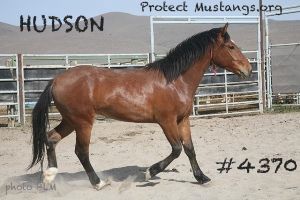
Help Hudson find a forever home.

Hudson is a bay gelding with id number is 12224370 from the Owyhee HMA in Nevada. He’s 2 years old and already 14.3 hands.

So many of Hudson’s relations were killed during the Owyhee roundup. Reports came in of wild horses being chased by choppers and run off cliffs. . .

Why did the BLM roundup the Owyhee mustangs? Why did they spin to the public that they didn’t have enough water? Didn’t award-winning reporter, George Knapp, find bodies of water out on the Owyhee range? Why were the wild horses fenced out? Does their tragic removal have anything to do with fracking in Nevada? What is the truth?

Help Hudson find his forever home to keep him safe from the heinous 3-Strike system.

Every time a protected wild horses is offered for adoption and no one picks him or her they earn a strike against them. After 3 strikes they loose all their protections and legally can be sold for $10 a head by the truckload. The pro-slaughter Burns Amendment twisted the intention of the 1971 Free Roaming Wild Horse and Burro Protection Act. The BLM claims that after the Tom Davis fiasco they won’t do this anymore. Do you believe BLM?

Why does Congress support the Burns Amendment?

Here is a video of Hudson #4370. He’s a nice mover and a sweet boy.

Here is information from BLM about the California Internet Adoption event:

The Bureau of Land Management (BLM) will offer 45 wild horses and 6 wild burros through its first online adoption in California beginning June 16.

Profiles of adoptable animals will be available on the BLM California website http://www.blm.gov/ca/st/en/prog/wild_horse_and_burro/whb_internet_adoption.htmlbeginning June 9 and will be available on a first come, first served basis. The website will be updated daily as animals are adopted.

The animals are available for adoption from 8:00 a.m. to 4:00 p.m. Monday, June 16, through Friday, June 27. The adoption fee is $125 per animal. Animals can be picked up at the Santa Clara Horseman’s Park in San Jose on July 12 from 8 a.m. to 12 p.m., or at either the Ridgecrest or Litchfield Corral.

All animals available for adoption have been vaccinated, de-wormed and have a health certificate. None of these animals are gentled or trained.

Those individuals interested in adopting must first complete an application and be approved by the BLM.  Applications can be accessed online at http://www.blm.gov/or/resources/whb/files/adoption_application_4710-010.pdf

For more information about the adoption, please contact Videll Retterath, BLM Wild Horse and Burro Program Assistant, at (530) 254-6575.

Please share this widely to help Hudson find a home where he will be safe and loved. Thank you for taking action to help the wild horses and burros.