Dangerous bill puts America’s wild horses at risk of slaughter

©Cynthia Smalley


Dear Friends of Wild horses and burros,

It’s bad when the BLM holds captive mustangs with no shade or shelter but if we all don’t rally quickly to stop a misleading bill in Congress, we could witness America’s cherished wild horses being sold to slaughter by the thousands instead of being held captive in holding pens or living in freedom as the law intended–safe from harassment and slaughter.

You probably have witnessed what happens when the states “manage” wild horses. . . In the case of the 41 wild horses from Dry Creek, Wyoming, 37 were sold to the Canadian slaughterhouse. We are so grateful to have rescued 14 youngsters (8mo-2 yrs) who were all going to be butchered for human consumption abroad.

Below is an Associated Press article that is going viral this weekend while the National Association of Counties is meeting in New Orleans. The Utah Commissioners are trying to get a joint resolution backed which would put American wild horses at-risk of being killed and slaughtered to “dispose of them.” Of course the politicians don’t pitch it this way. No . . . they cover that part up and make their resolution and their legislation look like it has animal welfare in mind. You can see the bill below.

Let’s hope this article shines the light on their sinister plans. It’s time to fight for the protection of wild horses.

Bill seeks to allow states to manage wild horses
By Martin Griffith, Associated Press

RENO, Nev. (AP) — A Utah congressman has introduced legislation to allow Western states and American Indian tribes to take over management of wild horses and burros from the federal government.

Rep. Chris Stewart said the U.S. Bureau of Land Management has mismanaged the animals on public rangelands and states should have the option of managing them.

An overpopulation of horses is pushing cattle off the range, the Republican lawmaker said, and leading to the destruction of important habitat for native species.

“States and tribes already successfully manage large quantities of wildlife within their borders,” Stewart said in a statement. “If horses and burros were under that same jurisdiction, I’m confident that new ideas and opportunities would be developed to manage the herds more successfully than the federal government.”

But Anne Novak, executive director of California-based Protect Mustangs, said her group opposes the legislation because it would lead to states and tribes killing the animals or selling them off for slaughter for human consumption.

The government is rounding up too many mustangs while allowing livestock to feed at taxpayer expense on the same rangeland scientists say is being overgrazed, she said.

“We’ve had firsthand experience with states and tribes managing wild horses, and it’s horribly cruel,” Novak said in a statement. “They ruthlessly remove wild horses and sell them to kill-buyers at auction. Severe animal abuse would be the result of the (legislation).”

The Bureau of Land Management says it’s doing all it can, given budget constraints, overflowing holding pens and a distaste for the politically unpopular options of either ending the costly roundups or slaughtering excess horses.

The bill’s introduction comes at a time when the bureau has been under increasing pressure from ranchers to remove horses that they say threaten livestock and wildlife on rangelands already damaged by drought.

In Utah, Iron County commissioners had threatened to gather up hundreds of mustangs themselves, saying the government refuses to remove enough horses in herds that double in size every five years.

Iron County Commissioner Dave Miller said he and commissioners from Utah’s Beaver and Garfield counties are trying to drum up support for a resolution in support of the legislation at the National Association of Counties annual conference in New Orleans, which ends Monday.

“The resolution will be instrumental in getting Chris Stewart’s bill through Congress because it shows support across the nation,” he told The Spectrum of St. George, Utah.

Stewart said his Wild Horse Oversight Act would extend all protections that horses and burros enjoy under the federal Wild Free-Roaming Horses and Burros Act of 1971 while giving states the opportunity of implementing their own management plans.

Under the bill, the states could form cooperative agreements to manage herds that cross over borders, and the federal government would continue to monitor horses and burros to ensure that population numbers as prescribed by the 1971 act are maintained.

The bureau estimates 40,600 of the animals — the vast majority horses — roam free on bureau-managed rangelands in 10 Western states. The population exceeds by nearly 14,000 the number the agency has determined can exist in balance with other public rangeland resources and uses.

Some 49,000 horses and burros removed from the range are being held in government-funded short- and long-term facilities.

# # #

Cross-posted from the San Francisco Chronicle for educational purposes: http://www.sfgate.com/news/science/article/Bill-seeks-to-allow-states-to-manage-wild-horses-5617520.php

Please share this news with your friends and help with a donation to feed and care for the WY14 and the other wild horses in our Outreach Program here: http://protectmustangs.org/?page_id=701

Hear a commissioner spin his pitch while interviewed on a friendly radio station in Utah: https://soundcloud.com/ksvc/mark

Take action and contact your county commissioners and all your elected officials to request they do not support rogue commissioners in Utah and ask that they do not support the individual states managing wild horses because it would put them at risk of slaughter.

Now is the time to stand up and fight for the voiceless!  Together we can turn this around.

Many blessings,
Anne

Anne Novak
Executive Director
Anne@ProtectMustangs.org
www.ProtectMustangs.org

PM WH&B Oversight Act Web


PM WH&B Oversight Act 2


at Wynema Ranch

Conservationists question sage grouse protection plans

WIKIMEDIA

WIKIMEDIA

Cross-posted from New Science Magazine

By Chelsea Biondolillo 10 July 2014

The U.S. government should be cautious about adopting the state of Wyoming’s strategy for protecting the greater sage grouse—a grassland bird at the center of a national controversy—conservationists argue in a report scheduled to be released tomorrow. The critics say the state, which is home to an estimated one-third of the country’s remaining sage grouse, is pursuing a strategy that fails to preclude intrusive development in key habitat, provide adequate buffer zones, and preserve winter habitat. The critique comes as federal officials have begun to adopt portions of Wyoming’s approach to protecting the bird on federal lands, saying it offers a promising way to balance conservation and economic development.

The grouse (Centrocercus urophasianus) makes its home in sagebrush steppe in 11 states and is the largest grouse in North America. Biologists estimate its current population is between 200,000 and 400,000 birds. That could be as low as 1% of historic levels, says Mark Salvo of Defenders of Wildlife in Washington, D.C., a lead author of the white paper. In 2003, the population decline prompted many scientists and environmentalists to ask the U.S. Fish and Wildlife Service (FWS) to add the sage grouse to its list of animals protected by the Endangered Species Act. In 2010, the agency ruled that the bird warranted listing, but that other animals were of higher priority, and said it would reconsider the issue in September 2015.

That deadline is looming, and state officials and agencies across the grouse’s habitat have been scrambling to come up with management plans that they hope will prevent the bird being listed as endangered. State officials fear that a listing would force a wide range of development controls on lands owned by the federal government, which account for more than half of the territory of some western states. Nearly one-half of Wyoming, for example, is federal land, including areas key to the mining and oil and gas industries.

In a bid to avoid listing, Wyoming’s governor in 2011 outlined the state’s strategy in an executive order. It is based on a concept called core area protection, and recently the federal Bureau of Land Management (BLM) announced it was adopting major elements of the strategy in a long-range plan for protecting more than 800,000 hectares of federal land around Lander, Wyoming. The plan, officially known as a Resource Management Plan (RMP), is the first of 15 such plans BLM is developing across the 11 sage grouse states.

Rick Vander Voet, field manager at the Lander BLM office, says that the RMP was chosen as the best and most balanced mix of options among the alternatives considered. He says this plan “reflects years of extensive collaboration with cooperating agencies, non-governmental organizations and the public.” The Lander Field Office is unique among the other areas in the state considering RMPs, in that 99% of BLM land under their jurisdiction is sage grouse habitat—and nearly two-thirds of it is considered core habitat. Vander Voet says that in and around Lander, “every other resource, from archaeology to wilderness study areas will in some way influence greater sage grouse.”

The report concludes that the RMP’s version of the core area strategy will not prevent future declines in grouse populations. Among the specific concerns:

Buffer zones aren’t big enough. The plan establishes “surface occupancy buffer zones” around grouse leks—the areas where the birds gather for mating displays—which means no oil or gas infrastructure within about 1 kilometer of active leks. But that number is not supported by any scientific literature or studies, the report argues. Instead, Salvo notes, the best available scientific literature recommends about a 6-kilometer buffer. Critics note that a BLM draft of an alternative plan that was not adopted quoted a 2007 study which concluded that buffers of about 1 to 3 kilometers wide failed to prevent population declines of sage grouse. The agency should heed such research and widen the buffer zones, the report argues.

Too few controls on surface disturbances in critical sage grouse habitat. Such disturbances can include roads, oil and gas development, and construction. Wyoming’s plan allows for up to 5% of “suitable sage grouse habitat” to be disturbed, although a 2011 review prepared for BLM by nearly two dozen federal and state biologists and land managers recommended 3% or less surface disturbance. The Wyoming plan allows “too much drilling … in the wrong places,” Salvo argues.

It ignores threats to wintering grounds. The plan restricts development activities in sage grouse habitat that the birds use during the winter months, but eases up when the birds move elsewhere in the spring and summer. Research, however, suggests the birds will avoid returning to wintering grounds if they have been disturbed, critics say. They urge BLM to follow the advice of its 2011 review panel, which recommended prohibiting surface disturbance in or adjacent to winter habitat any time of the year.

The authors of the report hope BLM officials will take such issues into account as the agency finalizes its remaining management plans, including three more for Wyoming. The state “is key to sage-grouse conservation,” Salvo says.

BLM’s Vander Voet says the goal for his office, in administering the RMP, will be to balance the “primary drivers of the local economy” (oil and gas, tourism, recreation, and agriculture) while protecting important cultural and natural resources—including greater sage grouse—for the future.

*Correction, 11 July, 1:25 p.m.: The current sage grouse population compared with historic levels has been corrected. Additionally, FWS ruled in 2010, not in 2011, that the sage grouse warranted listing. Finally, a link to the report has been added.

Owyhee survivor needs a home away from 3-Strikes and slaughter

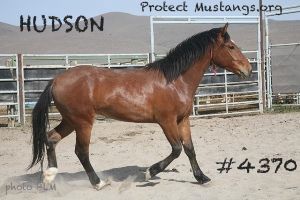
Help Hudson find a forever home.

Hudson is a bay gelding with id number is 12224370 from the Owyhee HMA in Nevada. He’s 2 years old and already 14.3 hands.

So many of Hudson’s relations were killed during the Owyhee roundup. Reports came in of wild horses being chased by choppers and run off cliffs. . .

Why did the BLM roundup the Owyhee mustangs? Why did they spin to the public that they didn’t have enough water? Didn’t award-winning reporter, George Knapp, find bodies of water out on the Owyhee range? Why were the wild horses fenced out? Does their tragic removal have anything to do with fracking in Nevada? What is the truth?

Help Hudson find his forever home to keep him safe from the heinous 3-Strike system.

Every time a protected wild horses is offered for adoption and no one picks him or her they earn a strike against them. After 3 strikes they loose all their protections and legally can be sold for $10 a head by the truckload. The pro-slaughter Burns Amendment twisted the intention of the 1971 Free Roaming Wild Horse and Burro Protection Act. The BLM claims that after the Tom Davis fiasco they won’t do this anymore. Do you believe BLM?

Why does Congress support the Burns Amendment?

Here is a video of Hudson #4370. He’s a nice mover and a sweet boy.

Here is information from BLM about the California Internet Adoption event:

The Bureau of Land Management (BLM) will offer 45 wild horses and 6 wild burros through its first online adoption in California beginning June 16.

Profiles of adoptable animals will be available on the BLM California website http://www.blm.gov/ca/st/en/prog/wild_horse_and_burro/whb_internet_adoption.htmlbeginning June 9 and will be available on a first come, first served basis. The website will be updated daily as animals are adopted.

The animals are available for adoption from 8:00 a.m. to 4:00 p.m. Monday, June 16, through Friday, June 27. The adoption fee is $125 per animal. Animals can be picked up at the Santa Clara Horseman’s Park in San Jose on July 12 from 8 a.m. to 12 p.m., or at either the Ridgecrest or Litchfield Corral.

All animals available for adoption have been vaccinated, de-wormed and have a health certificate. None of these animals are gentled or trained.

Those individuals interested in adopting must first complete an application and be approved by the BLM.  Applications can be accessed online at http://www.blm.gov/or/resources/whb/files/adoption_application_4710-010.pdf

For more information about the adoption, please contact Videll Retterath, BLM Wild Horse and Burro Program Assistant, at (530) 254-6575.

Please share this widely to help Hudson find a home where he will be safe and loved. Thank you for taking action to help the wild horses and burros.

Press Release: Mark Boone Junior helps save the mustangs

 © Gage Skidmore

© Gage Skidmore

For immediate release

Protect Mustangs rescues 14 young wild horses from slaughterhouse after BLM roundup

SAN FRANCISCO, Ca. (May 7, 2014)—Against all odds, actor Mark Boone Junior (Batman Begins & Sons of Anarchy) and Anne Novak, executive director of Protect Mustangs, saved 14 young free-roaming wild horses from slaughter thanks to donations from Alicia Goetz, the Schnurmacher family and others. This unprecedented rescue seems to be the first time American wild horses have been purchased back from a slaughterhouse following a Bureau of Land Management (BLM) roundup. In March, the herd of 41 wild horses was rounded up by the BLM, using taxpayer funds, handed over to the the Wyoming Livestock Board and sold at auction to a Canadian slaughterhouse for human consumption abroad. The BLM claims everything they did was legal.

“If it’s legal then the law needs to change,” states Novak. “Americans love wild horses. They want to make sure they’re protected. Congress knows that and it’s time they represent the public who elected them into office—not interests who want to dispose of them.”

In 2004, former Montana Senator, Conrad Burns, added the Burns amendment to the Appropriations Act of 2005 without any public or Congressional discussion. The Burns amendment overruled many protections in the Wild and Free-Roaming Horses and Burros Act of 1971. From that time forward, “unlimited sales” to slaughter has been legal.

Due to public outcry against selling wild horses for slaughter, the BLM uses middle men who sell the mustangs to the slaughterhouse. This time the scapegoat was the Wyoming Livestock Board, other times it’s men like Tom Davis. The 1,700 wild horses he purchased from the feds have never been accounted for. Advocates believe they went to slaughter in Mexico.

Public outcry over Tom Davis prompted BLM to revise their policy to avoid another fiasco in the future. A change in policy is not a change in law. It’s still legal for the BLM to allow slaughter and exportation of horse meat.

Out of the 41 wild horses rounded up on March 18th and 19th near Greybull, Wyoming, 37 were quickly sold to the slaughterhouse. 4 foals were saved by the co-owner of the auction house and later transferred to advocates. Protect Mustangs jumped in later on April 2nd to save the other 37 wild horses from being slaughtered. Chances were slim they would find any alive.

Boone and Novak quickly learned that a group of 23 mares and stallions had already perished. The two managed to prevent the last 14 orphaned wild youngsters from going to slaughter. The survivors are called the WY14. They range in age from 8 months to 2 years old.

“It’s a miracle we were able to get them out,” says Boone. “I can’t believe the EPA, in 2012, designated our wild horses as pests—especially when the horse originated in America.”

“American free-roaming wild horses are a returned-native species who contribute to the thriving natural ecological balance,” explains Novak. “They have value on the range because they reduce the risk of wildfires, reverse desertification and with climate change that’s really important.”

For generations, free-roaming wild horses lived in family bands north of Greybull and close to a former herd area called Dry Creek/Foster Gulch that was zeroed out in 1987 to make room for extractive uses such as bentonite mining.

In 1971 there were 339 wild herds in the West, but now there are only 179 left in all 10 western states combined.

Today the Bighorn Basin is preparing for another extractive boom but this time it’s about fracking for oil and gas with right-of-way corridors to service those fields. Is this why the small herd of 41 wild horses was suddenly ripped off public land?

The feds maintain the 41 wild horses were not wild even though they lived wild and free for generations.

Curiously reports have surfaced that a bucking string made up of wild mustangs was turned out by their original owner more than 40 years ago. If it could be proven these wild horses were on public land in 1971, they would be protected under the Free Roaming Wild Horse and Burro Protection Act. The BLM claims the horses have been there for only 40 years not 43.

“It’s horrible for tourism that the State of Wyoming would allow this sort of thing,” states Boone. “The beauty of the Bighorn Basin is like no other place on earth but it won’t be the same now that these wild horses are gone.”

Go to www.ProtectMustangs.org to help the WY14 with your donation. Protect Mustangs is a California nonprofit based in San Francisco.

# # #

Media Contacts:

Anne Novak, 415.531.8454 Anne@ProtectMustangs.org

Tami Hottes, 618.790.4339 Tami@ProtectMustangs.org

Photos, video and interviews available upon request

Links of interest™:

Cody Enterprise: ‘Some’ horses avoid slaughter http://www.codyenterprise.com/news/local/article_99e78c52-d0a8-11e3-a6ac-001a4bcf887a.html

AP (Viral): Feds draw criticism for selling Wyoming horses for slaughter http://www.foxnews.com/politics/2014/04/20/feds-draw-criticism-for-selling-wyoming-horses-for-slaughter/

Sons of Anarchy’s Bobby Elvis wants to save 37 American wild horses http://protectmustangs.org/?p=6668

The horse and burro as positively contributing returned-natives in North America http://article.sciencepublishinggroup.com/pdf/10.11648.j.ajls.20140201.12.pdf

Native wild horses: http://protectmustangs.org/?page_id=562 

Wild horse overpopulation myth debunked: http://protectmustangs.org/?p=6721

Washington Post (Viral) U.S. looking for ideas to help manage wild-horse overpopulation http://www.washingtonpost.com/national/health-science/us-looking-for-ideas-to-help-manage-wild-horse-overpopulation/2014/01/26/8cae7c96-84f2-11e3-9dd4-e7278db80d86_story.html

Huffington Post: Advisory board recommends BLM sterilize wild horses http://www.huffingtonpost.com/huff-wires/20121030/us-wild-horses/

Westword: Callie Hendrickson, allegedly pro-slaughter appointee to the Wild Horse and Burro Advisory Board http://blogs.westword.com/latestword/2012/03/callie_hendrickson_wild_horse_board_slaughter.php

Advisory Board member endorses slaughter http://rtfitchauthor.com/2012/10/30/blm-wild-horse-burro-advisory-board-member-endorses-horse-slaughter-during-public-session/#comment-68620

BLM and wild horse slaughter: http://protectmustangs.org/?page_id=1141

Video footage of helicopter roundups: http://www.youtube.com/watch?v=yF49csCB9qM

PEER: BLM doesn’t track cattle on Public land http://www.peer.org/news/news-releases/2013/01/24/blm-says-it-cannot-track-cattle-on-its-lands/

2012 EPA Pesticide Information for Fertility Control http://www.epa.gov/pesticides/chem_search/reg_actions/pending/fs_PC-176603_01-Jan-12.pdf

ProPublica: All the missing horses: What happened to the wild horses Tom Davis bought from the gov’t?http://www.propublica.org/article/missing-what-happened-to-wild-horses-tom-davis-bought-from-the-govt

Princeton University: Wildlife and cows can be partners, not enemies, in the search for food http://www.princeton.edu/main/news/archive/S32/93/41K10/index.xml?section=featured

Princeton and the International Society for the Protection of Mustangs and Burros Population Growth Study shows BLM roundups increase population growthhttp://www.ispmb.org/herd_social_structures.html

Horseback Magazine: Group takes umbridge at use of the word “feral” http://horsebackmagazine.com/hb/archives/19392

Petition to Defund and Stop the Roundups: http://www.change.org/petitions/defund-and-stop-the-wild-horse-burro-roundups

Petition for a Moratorium on roundups for recovery and scientific studies: http://www.change.org/petitions/sally-jewell-urgent-grant-a-10-year-moratorium-on-wild-horse-roundups-for-recovery-and-scientific-studies

Wyoming tourism “Roam Free”: http://www.wyomingtourism.org/

Wyoming Pipeline Corridor Initiative (Bighorn Basin) http://wyia.org/wp-content/uploads/2014/01/brian-jeffries.pdf

KLS News BLM horses seized in suspected slaughter ring (Aug. 5, 2011) http://www.ksl.com/?nid=960&sid=16686555#JFD7d0UvEtYOc4fi.99

Washington Post: The Story of Conrad Burns and Wild Horseshttp://blog.washingtonpost.com/benchconference/2006/10/they_reallly_do_shoot_horses_d.html

Christian Science Monitor and cross-posted by The Seattle Times (March 2, 2005) Law allows slaughter of wild horses for meat  by Brad Knickerbocker http://bit.ly/K8DWIF

Now, a law signed by President Bush will allow the slaughter and export of horse meat form thousands of wild horses. Horse lovers are urging reversal of the measure, which slipped into a recent federal appropriations bill by Sen. Conrad Burns, R-Mont.

Wild and Free Roaming Horses and Burro Act http://en.wikipedia.org/wiki/Wild_and_Free-Roaming_Horses_and_Burros_Act_of_1971

Mark Boone Junior: http://www.imdb.com/name/nm0095478/

Anne Novak:  https://twitter.com/TheAnneNovak  and  http://newsle.com/AnneNovak

www.ProtectMustangs.org Protect Mustangs educates, protects and preserves native and wild horses. The nonprofit conservation group strives for a 10 year moratorium on roundups and science-based holistic land management to reduce global warming.


Wild horse overpopulation myth debunked

Nevada mustang © Carl Mrozek

Nevada mustang © Carl Mrozek


WILD HORSE POPULATION GROWTH

Research Collaboration by

Kathleen Gregg Environmental Researcher

Lisa LeBlanc Environmental Researcher

Jesica Johnston Environmental Scientist April 25, 2014


INTRODUCTION

The recent National Academy of Science (NAS) report on the Wild Horse and Burro Program determined that the Bureau of Land Management (BLM) has no evidence of excess wild horses and burros; because the BLM has failed to use scientifically sound methods to estimate the populations (NAS, 2013). The NAS cited two chief criticisms of the Wild Horse and Burro Program: unsubstantiated estimates in herd management areas (HMA), and management decisions that are not based in science (NAS, 2013).

Effective wild horse and burro management is dependent on accurate population counts and defensible assumptions. The Bureau of Land Management (BLM) routinely uses the assumption that wild horse and burro herds increase annually at an average rate of 20%. However, our review of available scientific literature combined with an analysis of BLM data for 5,859 wild horses found that approximately 50% of the foals survived to the age of 1 year, which indicates a 10% population growth rate based on yearling survival rates.

METHODS AND DATA

The data and analysis is based on the BLM’s wild horse and burro removal and processing documents acquired under the Freedom of Information Act. The data sets were evaluated separately, and then combined to total 5,859 wild horses, captured, aged, and branded by BLM. This data is the basis for the analysis in this report and the accompanying chart in table 1 below.

Burro data was also calculated for foal and yearling survival. That data indicated a 7% population growth rate for burros based on yearling survival, but that data is not included here as burros are not present in all of the HMAs.

The data was collected from 4 herds captured by BLM in Nevada and California in 2010 and 2011. The data below in table 1 shows the individual herds and accumulated age structure data which supports the overall conclusion. Wild horse foals and yearlings were tallied for population increases and in all four samples, recorded a combined foaling rate of less than 20%, but only half or 50% survived to the age of 1 year (see table 1 below).

Table 1 Age Structure Yearling Survival Rate

PM Population growth


DISCUSSION

This research does not include or reflect the additional adult mortality rates due to the complexity of population dynamics, but does raise serious questions about the validity of the BLM’s assumed 20% annual herd population growth rate. Furthermore, the BLMs assumption fails to consider that wild horse populations are dynamic due to isolation and have varied rates of reproduction and survival due to changing climates, forage, competition, disturbance and environmental conditions. All these are factors that can lead to varied herd growth rates and each herd should be evaluated separately.

This research paper is supported by previous studies using age structure data completed by Michael L. Wolfe, Jr. in 1980 titled “Feral Horse Demography: A Preliminary Report”. Mr. Wolfe cited observations in 12 HMAs, over a period of 2 to 5 years, and covered a much broader range over six Western states. He questioned the annual rate increase of 20%, and found that first-year survival rates to range between 50% and 70% (Wolfe, 1980).

Other supporting research includes The National Academy of Science National Wild and Free-Roaming Horse and Burro report of 1982, which states, “…several biases in the (BLM) census data, cited or calculated rates of increase based on a number of published values for reproduction and survival rates, as well as sex and age ratios, and concluded annual rates of increase of ten percent or less” (NAS, 1982).

The NAS 2013 report also used age structure data to estimate population growth. However, the report used foaling rates to draw conclusions about the population growth; rather than first year survival rates (NAS, pg.51-52 2013). This and other studies challenge the assumption that the 20% foaling rate provides an adequate measure of population growth.

The BLM bases their management decisions on environmental assessments that cite inflated population estimates. As shown in this study and previous research, the BLM’s assumption of a 20% annual wild horse population growth rate is not based in science; leading to unsubstantiated population estimates with no evidence of excess wild horses.


REFERENCES

National Academy of Science 2013, “Using Science to Improve the BLM Wild Horse and Burro Program – A Way Forward”
http://www.nap.edu/openbook.php?record_id=13511&page=R1

Johnston, J. (2011). California’s, Wild Horses and Burros: Twin Peaks HMA.

http://csusdspace.calstate.edu/xmlui/bitstream/handle/10211.9/1492/WHB_Thesis_Final%2011.30.11.pdf?seq uence=1

“Feral Horse Demography: A Preliminary Report”, Michael L. Wolfe, Jr.

http://www.jstor.org/discover/10.2307/3897882?uid=3739560&uid=2&uid=4&uid=3739256&sid=2110368888 4451

National Academy of Science 1982, “Wild and Free-Roaming Horses and Burros”

http://books.google.com/books?id=Q2IrAAAAYAAJ&printsec=frontcover#v=onepage&q&f=false

U.S. Department of the Interior, Bureau of Land Management Freedom Of Information Act (2012). FOIA BLM FY12-011 1278.

U.S. Department of the Interior, Bureau of Land Management Freedom Of Information Act (2012). FOIA BLM- 2012-00934.

U.S. Department of the Interior, Bureau of Land Management Freedom Of Information Act (2012). FOIA BLM 2012-01046.

U.S. Department of the Interior, Bureau of Land Management Freedom Of Information Act (2012). FOIA BLM 2012-00250.

Download the paper here: PM Population Growth 4.25.14 FINAL

Letter to BLM: Rogue roundups must stop

BLM Aug 2013 Spin-shop

To:

Neil Kornze, BLM Director
Joan Guilfoyle, Division Chief BLM Division of Wild Horses and Burros jguilfoy@blm.gov
Juan Palma, Utah State Director, BLM   jpalma@blm.gov
Jenna Whitlock, Utah Associate State Director, BLM   jwhitloc@blm.gov
Todd Christensen, Color Country Utah District Manager BLM utccmail@blm.gov
Salvatore R. Lauro Director, Office of Law Enforcement and Security BLM SLauro@blm.gov
BLM Utah State Office utsomail@blm.gov

Re: Rogue Roundups

Dear Sirs & Madams,

We officially request you put an immediate stop to rogue roundups and incidents of wild horses allegedly being trapped, harassed and sent to auction where kill buyers have been known to purchase horses or shot or poisoned on or nearby public land in Utah, Nevada and elsewhere. Not only is it wrong, cruel and against federal protections but it is also a global embarrassment

Chasing wild horses onto private property, luring them onto private property or any other method of getting unbranded wild horses on private land to shoot, kill, trap, load, abduct, take is in violation of the Free-Roaming Wild Horse and Burro Act of 1971 and must be stopped immediately. Wild horse and burro harassment must stop. It appears to be a federal crime to “willfully remove or attempt to remove wild free-roaming horse or burros from public lands, without authority from the Secretary.”

The National Environmental Policy Act (NEPA) appears to be violated by the Bureau of Land Management (BLM) granting–without public input–the removal of horses from public lands. It appears you are in violation of NEPA. This must cease immediately.

It appears the county commissioners are engaging in retaliatory acts, connected with lobbying groups, against federally protected free-roaming wild horses and burros because the BLM is reducing livestock grazing. This must stop now.

There is no emergency such as fire, disease, catastrophic incident to merit a roundup. It appears you are joining in an act of subterfuge.

As it is foaling season, according to your handbook, you must prohibit vigilante roundups to avoid the loss of lives and to prevent animal cruelty–chasing young foals for miles on their tiny hooves as well as chasing and harassing heavily pregnant mares, other wild horses and burros.

Loss of life from being harassed and chased by men is not a form of natural predation. This appears to be in violation of the 1971 Act.

You appear to be failing your job to protect America’s beloved free-roaming wild horses and burros in the West due to your conflict of interest. The current example in Utah merits Congressional investigation.

We hereby request to be copied on all communications regarding roundups or removals in Utah, all press releases, included in all conference calls and meetings pertaining to the issue, etc. You must become transparent.

Reports are coming in that Utah residents and officials have declared protected wild horses “feral”, are driving them onto private land, baiting them onto private land, trapping them, killing some, giving some away by the truckload to alleged kill buyers, and trucking many to auction where kill buyers allegedly purchase them for slaughter.

What proof do you have that any unbranded wild horses are anything but free-roaming wild horses? Kindly disclose all photos and videos on this matter with in 7 days of this letter.

We hold the BLM accountable and request immediate and full disclosure of all photographs and videos showing dead horses shot from land as well as those shot from the air and all horses who have been injured and were euthanized.

This is not the 90s. This is an era of social media, whistle blowers and widespread truth. Our supporters are watching. The whole world is watching. They want you to do the right thing.

Sincerely,
Anne Novak

Anne Novak
Executive Director
Protect Mustang

Read about native wild horses: http://protectmustangs.org/?page_id=562
www.ProtectMustangs.org
Protect Mustangs educates, protects and preserves native and wild horses. The nonprofit conservation group strives for a 10 year moratorium on roundups and science-based holistic land management to reduce global warming.

TMM/elected officials & VIP list
PS

BREAKING NEWS: Sons of Anarchy’s Bobby Elvis wants to save 37 iconic wild horses

© Dennis Van Tine/Future Image / WENN

Dennis Van Tine/Future Image / WENN

For immediate release

Horse advocates will protest roundups at BLM Advisory Board meeting April 14 in Sacramento

Los Angeles, Ca. (April 2, 2014)–Mark Boone Junior, who plays Bobby Elvis in Sons of Anarchy, is working with Anne Novak at Protect Mustangs, a nonprofit based in San Francisco, to get 37 Wyoming wild horses including 2 colts from a Canadian slaughterhouse before they are slaughtered for human consumption abroad.

“We hope we can get them before they slaughter them,” explains Boone. “Wild horses are a national treasure and we want them back.”

The Bureau of Land Management (BLM) did not notify wild horse groups about the helicopter roundup. Instead they handed over 41 free-roaming wild horses, including 6 youngsters, to the Wyoming Livestock Board who quickly sold these living icons of freedom at auction. 4 foals were purchased a Montana buyer to save them. 37 wild horses including 2 youngsters were purchased by a Canadian slaughterhouse.

“If we had known what was going on, we would have bought the wild horses directly from the Wyoming livestock board and put them in a safe place,” explains Anne Novak, executive director of Protect Mustangs. “Why didn’t the BLM notify horse protection groups that the free-roaming wild horses were going to be rounded up and sold?”

The Wyoming 41 were a small herd roaming east of US 310 between Lovell and Greybull, Wyoming. They were likely descendants of the Foster Gulch/Dry Creek Herd Area that was zeroed out in 1987 to make room for other uses. In 1971 there were 339 wild herds in the West, but today there are only 179 left in all 10 western states combined.

Despite spin created by the BLM and industrial interests who don’t want to share the land with federally protected wild horses, the truth is that they are gravely underpopulated. The National Academy of Sciences reported there is no evidence of overpopulation in 2013. Therefore, Secretary Jewell’s push to control population is unnecessary.

Independent estimates report only 21,354 wild horses are left in the wild while there are approximately 240,000-480,000 heads of livestock in wild horse and burro areas. As a result of roundups more than 48,000 wild horses are warehoused in captivity at taxpayer expense. Native wild horses should be returned to the original herd management areas established in 1971.

A 13-year study of wild herds done by the International Society for the Protection of Mustangs and Burros working with Princeton University shows wild horse herds with functional social structures contribute to low herd growth compared to BLM-managed herds.

In the wild, the majority of herds need to recover from recurring roundups so they can self-regulate. Protect Mustangs is calling for a 10 year moratorium on roundups for recovery and scientific studies. Their Change.org petition to Secretary Jewell is here: http://www.change.org/petitions/sally-jewell-urgent-grant-a-10-year-moratorium-on-wild-horse-roundups-for-recovery-and-scientific-studies

Since the EPA categorized native wild horses as pests in 2012, to pass the restricted use pesticide and immunocontraceptive known as PZP, the BLM doesn’t care to notify the public about roundups on public land outside of herd management areas. These horses are sent off to auction and are purchased for probable slaughter.

The public is furious to learn the BLM rounded up free-roaming wild horses–using taxpayer funds–with no public input on the roundup. The Wyoming 41 should have been tested to see if they were descendants of the Foster Gulch/Dry Creek Herd not just handed over to the livestock board and sold off to a slaughter company.

A protest is being planned in reaction to BLM’s slaughter-friendly policies and the clandestine Wyoming 41 roundup at the Wild Horse and Burro Advisory Board meeting in Sacramento April 14-15.

“Americans are outraged that their tax dollars are being used to chase iconic wild horses from freedom into the chambers of death–so they can be a eaten abroad,” states Novak.

If anyone has any information about clandestine roundups or removals please contact Protect Mustangs.org

Protect Mustangs educates, protects and preserves native and wild horses. The nonprofit conservation group strives for a 10 year moratorium on roundups for recovery and science-based holistic land management to reduce global warming.

“With this latest action, the Bureau of Land Management seems to feel that they can act with impunity and these fabulous animals should never be passed to a middleman for sale to foreign markets who wish to devour a spirit that exists only in these animals, only on our nation’s lands,” says Boone. “Wild horses are now wrongfully designated as “pests” so that they may be pursued and cleared from lands, so that those very same lands may be used solely by corporate interests (fracking, mining, and ranching) supported by tax dollars by the Department of the Interior. We need to stop this momentum now.”

# # #

Media Contacts:

Anne Novak, 415.531.8454 Anne@ProtectMustangs.org

Kerry Becklund, 510.502.1913 Kerry@ProtectMustangs.org

Photos, video and interviews available upon request

Links of interest™:

Footage of helicopter roundups: http://www.youtube.com/watch?v=yF49csCB9qM

Celebrities speak out against wild horse roundups: http://www.youtube.com/watch?v=VLsS9r87tRk

BLM’s Wild Horse & Burro Advisory Board Meeting April 14-15 in Sacramento: http://www.blm.gov/wo/st/en/info/newsroom/2014/March/BLM_Sets_Meeting_of_National_Wild_Horse_and_Burro_Advisory_Board_for_April_14_15_in_Sacramento.html

Washington Post (Viral) U.S. looking for ideas to help manage wild-horse overpopulation  http://www.washingtonpost.com/national/health-science/us-looking-for-ideas-to-help-manage-wild-horse-overpopulation/2014/01/26/8cae7c96-84f2-11e3-9dd4-e7278db80d86_story.html

The Horse Magazine, BLM Seeks Ideas on Wild Horse Management http://www.thehorse.com/articles/33289/blm-seeks-ideas-on-wild-horse-management

San Jose Mercury News, Associated Press, Nevada farm bureau, counties sue over wild horses http://www.mercurynews.com/california/ci_24897316/nevada-farm-bureau-counties-sue-over-wild-horses

Nevada Appeal by Scott Sonner, Associated Press (viral): Horse roundups waste money  http://www.nevadaappeal.com/news/local/6813542-113/horses-blm-horse-report

Huffington Post: Advisory board recommends BLM sterilize wild horses: http://www.huffingtonpost.com/huff-wires/20121030/us-wild-horses/

Callie Hendrickson, allegedly pro-slaughter appointee to the Wild Horse and Burro Advisory Board: http://blogs.westword.com/latestword/2012/03/callie_hendrickson_wild_horse_board_slaughter.php

Advisory Board member endorses slaughter: http://rtfitchauthor.com/2012/10/30/blm-wild-horse-burro-advisory-board-member-endorses-horse-slaughter-during-public-session/#comment-68620

BLM and the slaughtering wild horses: http://protectmustangs.org/?page_id=1141

BLM doesn’t track cattle on Public land: http://www.peer.org/news/news-releases/2013/01/24/blm-says-it-cannot-track-cattle-on-its-lands/

EPA Pesticide Information for ZonaStat-H http://www.epa.gov/pesticides/chem_search/reg_actions/pending/fs_PC-176603_01-Jan-12.pdf

National Academy of Sciences report: Using Science to Improve the BLM Wild Horse and Burro Program http://www.nap.edu/catalog.php?record_id=13511

Rallies held in 50 states to drum up opposition to roundups, slaughter http://www.therepublic.com/view/story/80561cc4e8a64b43ae909f7d09a0473e/NV–Wild-Horses-Rallies

ProPublica: All the missing horses: What happened to the wild horses Tom Davis bought from the gov’t? http://www.propublica.org/article/missing-what-happened-to-wild-horses-tom-davis-bought-from-the-govt

Princeton University: Wildlife and cows can be partners, not enemies, in the search for food http://www.princeton.edu/main/news/archive/S32/93/41K10/index.xml?section=featured

International Society for the Protection of Mustangs and Burros Study: http://www.ispmb.org/herd_social_structures.html

Horseback Magazine: Group takes umbridge at use of the word “feral” http://horsebackmagazine.com/hb/archives/19392

Petition to Defund and Stop the Roundups: http://www.change.org/petitions/defund-and-stop-the-wild-horse-burro-roundups

Petition for a Moratorium on roundups for recovery and scientific studies: http://www.change.org/petitions/sally-jewell-urgent-grant-a-10-year-moratorium-on-wild-horse-roundups-for-recovery-and-scientific-studies

Wyoming tourism “Roam Free”: http://www.wyomingtourism.org/

Anne Novak on Twitter: http://www.Twitter.com/theAnneNovak

Protect Mustangs’ press releases: http://protectmustangs.org/?page_id=12

Protect Mustangs in the news: http://protectmustangs.org/?page_id=218

America’s native wild horses: http://www.Protectmustangs.org/?page_id=562

Protect Mustangs.org


BLM reveals wild horse whereabouts

For transparency we are sharing this email. Our questions are in bold.

——– Original Message ——–
Subject:
From: “Peters, Stacy” <skpeters@blm.gov>
Date: Tue, April 01, 2014 12:29 pm
To: Anne Novak <protectmustangs.org>
Cc: “James (Jeb) Beck” <j1beck@blm.gov>, Deborah Collins
<dacollin@blm.gov>, Dean Bolstad <dbolstad@blm.gov>

The public is concerned many wild horses have been moved out of the Palomino Valley facility. From January 1, 2014 to March 31, 2014 592 animals have been shipped.

Kindly explain exactly where they went, how many have left for each destination, and how many remain at PVC as of Monday March 31, 2014.

01/08/2014    14 to ORF52 Burns Preparation Facility
01/23/2014   201 to WOF56 Fallon Maintenance Facility
01/24/2014    15  to IDF51 Boise Perparation Facility
01/30/2014   200  to NVF83 Northern Nevada Correctional Center
02/07/2014       1 to CAF56 Ridgecrest Preparation Facility
02/25/2014     99 to WOF56 Fallon Maintenance Facility
03/04/2014     12 to WOF56 Fallon Maintenance Facility
03/22/2014     12 to UTF54 Delta Preparation Facility 
03/26/2014     38 to CAF56 Ridgecrest Preparation Facility 

Palomino Valley, as of March 31,2014 has 1,321 animals in the facility.

How many horses have left the facility under “sale authority” since January 1, 2014?

1 3 strike horse was transported to Ridgecrest for the United State Border Patrol.

How many wild horses have left the facility under “sale authority” from January 1, 2013 to December 31, 2013? 1

Stacy
Stacy K. Peters
National Wild Horse & Burro Program
Palomino Valley Wild Horse & Burro Center
15780 State Route 445
Reno, NV 89510
(775) 475-2222  Office

Heinous BLM Roundup = Slaughter 4 #Mustangs

Stop the Roundups

URGENT: Sign and share the Petition to Defund the Roundups! This heinous act was funded by American tax dollars http://www.change.org/petitions/defund-and-stop-the-wild-horse-burro-roundups


TAKE ACTION! Call and email your senators and rep ASAP. Demand the American wild horses be returned to the American public!  http://www.contactingthecongress.org/

Tweet: BLM Roundup = Slaughter

Sign up for action updates www.ProtectMustangs.org

Free Roaming Wyoming Horses Rounded up by BLM and sold to Canadian Slaughterhouse by Wyoming Livestock Board

No public comment period and no transparency

COLORADO SPRINGS, CO. (March 31, 2014) – On March 24, The Cloud Foundation received an anonymous tip that BLM had rounded up and removed 41 free-roaming horses from public lands in northern Wyoming.  Further investigation revealed that BLM conducted a helicopter roundup of the horses and turned them over to the Wyoming Livestock Board who sold the horses directly to the Canadian Bouvry Slaughterhouse. The taxpayer-funded roundup was conducted with no notice of sale after the horses were impounded, giving no one the opportunity to step in and negotiate a deal to purchase any of the horses. Even Bighorn County Sheriff, Kenneth Blackburn, was surprised that he received no notification of the roundup, which was conducted in his jurisdiction. The horses were driven to Shelby, Montana, to the Bouvry-owned feedlot, the jumping off point to their Canadian slaughterhouse, the largest slaughterhouse in Canada.

“These were colorful wild horses I spotted several years ago while driving to the Pryor Mountains,” stated  Ginger Kathrens Executive Director of the Cloud Foundation. “They lived on what we’ve been told was a wild horse Herd Area southeast of the Pryors.” The small, remnant herd roamed a starkly beautiful landscape east of US 310 between Lovell and Greybull, WY. ‘”We stopped to admire them on March 10th on our way back to Colorado.” Kathrens adds. “The sight of these lovely, free-spirited animals, some with their newborn foals, against the backdrop of the snow-covered Bighorn Mountains was glorious. It’s hard to think about the horror they suffered just days later.”

On March 18, only eight days after Kathrens last spotted the horses, the BLM Field Office in Cody, WY supervised their roundup and removal. A BLM spokesperson told a Cloud Foundation representative that the horses would be held at the Worland Livestock Auction for 10 days and then sold.  However, later investigation revealed that the 41 horses rounded up by Cattoor Livestock Company on March 18-19 were delivered to the Worland Livestock Auction for brand inspection. Just a few hours later, once the brand inspection was completed, 37 horses were loaded onto a truck paid for by the Wyoming Department of Agriculture and hauled to the Canadian border.

“According to Wyoming, Statute, Title 11, Chapter 24 entitled Agriculture, Livestock and Other Animals, ‘Estray horses rounded up must be held for not more than 10 days before going to auction,'” reported Paula Todd King, Communications Director for the Cloud Foundation. “These horses were rounded up and within hours they were on their way to the border. We found no notice announcing the roundup.”

The history of these horses is debatable. The BLM contends they are not wild, stating that they once belonged to an area rancher who died and his horses have only been in the area for 40 years. However, the Wild Horse and Burro Act (WHB Act) defines a wild horses as an “unclaimed, unbranded horse on federal lands in the United States.” Wyoming brand inspector, Frank Barrett, verified there were no brands of any kind on any of the animals.

Less than a mile from where Kathrens had been observing the horses is the boundary of the “zeroed out” Foster Gulch/Dry Creek Herd Area, designated for wild horse use after the passage of the WHB Act in 1971. “As they have done over a hundred times, the BLM decided not to manage wild horses in the area in 1987,” explains Kathrens. “If the horses have lived in the area for 40 years as BLM states, it is entirely possible that these horses were descendants of the herd eliminated from management in 1987.”

It is clear that these horses have survived for many years on their own, living in wild family bands, and thriving without human intervention.  Conflicting reasons have been given for the timing of this BLM roundup when the horses had newborn foals. BLM indicated that private landowners in the area have complained about horses trespassing on their land.  Sarah Beckwith, BLM spokesperson said that the horses were a threat to public safety – vehicles had killed two horses.  However, after further investigation, TCF found that a train struck one horse 6-8 years ago, and a private vehicle struck another around 5 years ago. Jack Mononi, Supervisory Rangeland Management Specialist for Cody BLM, told Todd-King that if the Agency did not spend the federal dollars by the end of March, the funds would no longer be available.

Kathrens called the Bouvry Exports Shelby facility in an attempt to negotiate purchase of the 37 horses. The woman who answered the phone would not confirm that the horses had arrived in Shelby and told Kathrens that “these horses were rounded up and removed for slaughter and that is where they are going.” Kathrens offered to pay more than the going price and was told that this was not possible. “I was shaking when I got off the phone,” Kathrens said. “To think that this could be happening sickens me.”

Kim Michels of Red Lodge, MT, purchased all that appears to have survived of the small herd, four tiny foals born this year. “We will do all we can to see that these babies not only survive but thrive as a fitting legacy to their lost freedom and their families,” said Michels. The foals were rescued by Stacey Newby, co-owner of the Worland Livestock Auction, who fed and cared for the foals, bottle-feeding the tiniest, a 3-week-old filly. The foals are now in the care of equine veterinarian, Lisa Jacobson, in Colorado.

TCF continues to investigate the legality of what appears to be a carefully planned and executed operation at taxpayer expense. “Was it legal?” Kathrens questions. “It is clear to me that it was not moral and certainly inhumane. I do not believe that American taxpayers want their money spent to roundup and send horses to slaughter.”

Protect Mustangs suggests links of interest™:

Bouvry: http://www.vianderichelieu.com/qui-sommes-nous.php

Bouvry Investigation: http://archive.constantcontact.com/fs161/1101655399670/archive/1111647580202.html

Cloud Foundation: http://www.thecloudfoundation.org/

Catoor Livestock: http://www.wildhorseroundups.com/

Helicopter roundup gets attention of horse advocates: http://www.greybullstandard.com/?p=2364