AP reports: BLM plans to use birth control on Utah wild horses

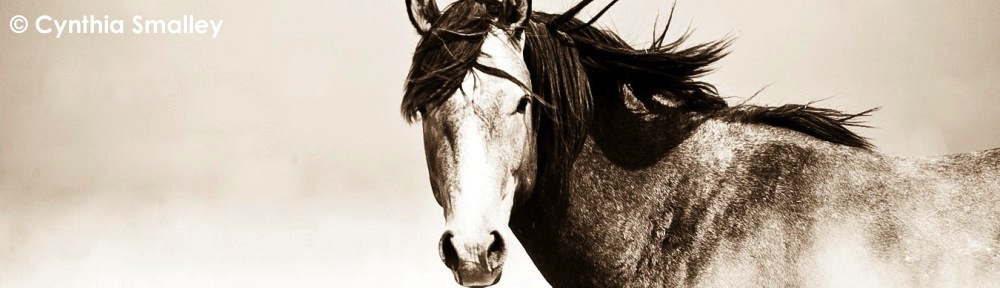
Photo © Cynthia Smalley


by the Associated Press

SALT LAKE CITY (AP) — Bureau of Land Management officials in Utah plan to inject 130 wild horses with contraceptives next winter as part of effort to control the population.

The Salt Lake Tribune reports that the plan’s environmental assessment still needs approval before it becomes official. It would be the second time officials have used birth control on this herd, which lives in a valley southwest of Salt Lake City.

Gus Warr of the BLM in Utah says the estimated 4,300 wild horses in the state is more than double the appropriate number.

The group Protect Mustangs, which disputes the BLM’s assertion that there are too many wild horses, denounced the plan to use contraceptives and instead advocated that the herds be left alone to self-stabilize their numbers.


As seen in the San Francisco Chronicle and in media across the country: http://www.sfgate.com/news/science/article/BLM-plans-to-use-birth-control-on-Utah-wild-horses-5555799.php
Posted for educational purposes only

Alarm over behavioral and physiological side effects of wild horse birth control (PZP)


MANAGEMENT OF WILD HORSES WITH PORCINE ZONA PELLUCIDA: HISTORY, CONSEQUENCES, AND FUTURE STRATEGIES

Cassandra M.V. Nuñez

Department of Ecology and Evolutionary Biology, Princeton University, Princeton, New Jersey

ABSTRACT

The advent of immunocontraception with porcine zona pellucida (PZP) has all but revolutionized wild horse management, providing a more humane method of population control than earlier strategies. Early studies on Assateague Island National Seashore have described it as an ideal form of fertility control in that it reduces the chance of conception to below 10%, can be delivered remotely, is reversible (after short-term use), lacks debilitating physiological side effects, cannot pass through the food chain, and shows minimal effects on social behaviors. However, recent research in other populations has revealed behavioral and physiological side effects of long-term PZP use. These results indicate that studies from one population may not necessarily be applicable to another, regardless of similarities in habitat and population structure. Careful study of the animals’ demography, physiology, and behavior is necessary prior to and during treatment to ensure that a) the potential effects of PZP can be assessed accurately, and b) within managerial constraints, PZP effects are ameliorated as much as is possible. Here I explain the history of PZP use in wild horses, its side effects on the horses of Shackleford Banks, North Carolina in comparison to other populations, and offer management suggestions based upon wild horse biology and behavioral ecology, which may minimize or prevent these side effects in other populations.

Read the full article here: PM Nunez 2010 management of horses with PZP


Posted for educational purposes only

PZP, the restricted use pesticide for wild horses, is problematic


Photo credit: Eduardo Amorim / Foter.com / CC BY-NC-SA

Photo credit: Eduardo Amorim / Foter.com / CC BY-NC-SA

Immunocontraception in Wild Horses (Equus caballus) Extends Reproductive Cycling Beyond the Normal Breeding Season

by Cassandra M. V. Nuñez, James S. Adelman, Daniel I. Rubenstein

Background

Although the physiological effects of immunocontraceptive treatment with porcine zona pellucida (PZP) have been well studied, little is known about PZP’s effects on the scheduling of reproductive cycling. Recent behavioral research has suggested that recipients of PZP extend the receptive breeding period into what is normally the non-breeding season.

Methodology/Principal Findings

To determine if this is the case, we compiled foaling data from wild horses (Equus caballus) living on Shackleford Banks, North Carolina for 4 years pre- and 8 years post-contraception management with PZP (pre-contraception, n = 65 births from 45 mares; post-contraception, n = 97 births from 46 mares). Gestation lasts approximately 11–12 months in wild horses, placing conception at approximately 11.5 months prior to birth. Since the contraception program began in January 2000, foaling has occurred over a significantly broader range than it had before the contraception program. Foaling in PZP recipients (n = 45 births from 27 mares) has consistently occurred over a broader range than has foaling in non-recipients (n = 52 births from 19 mares). In addition, current recipients of PZP foaled later in the year than did prior recipient and non-recipient mares. Females receiving more consecutive PZP applications gave birth later in the season than did females receiving fewer applications. Finally, the efficacy of PZP declined with increasing consecutive applications before reaching 100% after five consecutive applications.

Conclusions/Significance

For a gregarious species such as the horse, the extension of reproductive cycling into the fall months has important social consequences, including decreased group stability and the extension of male reproductive behavior. In addition, reproductive cycling into the fall months could have long-term effects on foal survivorship. Managers should consider these factors before enacting immunocontraceptive programs in new populations. We suggest minor alterations to management strategies to help alleviate such unintended effects in new populations.

Read the complete article here:  http://www.plosone.org/article/info%3Adoi%2F10.1371%2Fjournal.pone.0013635

Posted for educational purposes only

Photos of the Wyoming 14 ~ National treasures saved from the slaughterhouse


©PM


Horseback Magazine reported on National treasures saved from the slaughterhouse http://horsebackmagazine.com/hb/archives/28702


A special to thank you to Craig Downer who took photos of the WY14 for us.

www.ProtectMustangs.org
Protect Mustangs is a nonprofit organization who protects and preserves native and wild horses.


Craig Downer at Western Horse Expo Friday-Sunday

Photo © Cat Kindsfather

Photo © Cat Kindsfather

Craig C. Downer, wildlife biologist, PhD candidate and Protect Mustangs’ Advisory Board Member will be at the Western States Horse Expo, June 13-15 in Sacramento.

The Author will be at the Book Corral as part of this major event. Copies of his updated book will be available along with his musical CD Wild Horse Rhapsody. There will be free handouts and some wild horse pictures, some on canvas, for sale.

The author will answer questions about the wild horses and burro, their survival crisis, and what must be done to restore these magnificent animals to their rightful land and freedom.

Link: www.horseexpo.com


Help Feed the WY14 saved from slaughter


Dear Friends of wild horses and burros,

After a stealth Bureau of Land Management (BLM) roundup, paid for with tax dollars, 37 wild horses were sold to a Canadian slaughterhouse.

These wild horses from the Bighorn Basin and Pryor Mountain area were found 1 mile from a former protected Heard Area, zeroed out in 1987, known as Dry Creek/Foster Gulch. The heritage herd had been on the range for generations but the State of Wyoming didn’t want them roaming free on public land anymore so they called in the BLM to round them up.

In March the herd was chased by helicopters and rounded up at taxpayer expense, handed over to the Wyoming Livestock Board and sold at auction to a Canadian slaughterhouse for $40 a piece. 23 herd members over the age of 2 were slaughtered to be eaten abroad before we got involved.

I’m grateful actor Mark Boone Junior and I were able to secure all 14 youngsters ages 8 months to 2-years-old and get them out before they were slaughtered too. We call them the WY14. Sadly all their mamas and papas were butchered at the Canadian slaughterhouse shortly after the clandestine roundup.

On Memorial Day weekend we transported the WY14 out of the Montana feedlot to a ranch, in California near Reno where they will stay temporarily until they move down to their home in the San Francisco Bay Area.

While at the ranch , Protect Mustangs pays for all their hay and these youngsters need to eat a lot. Right now the orphans eat about 3 bales a day. We need your help to feed the 14 survivors. We have started a fundraiser here:  http://www.gofundme.com/9xcfag Please share it with your friends and family so we can raise the money for hay to help the survivors of the roundup.

Grass hay locally is $17.50 for a 100 pound bale, if we buy it in 2 ton loads–otherwise it is $20 a bale at the feed store plus the gas to pick it up. We would like to buy grass hay by the ton to stretch dollars. Once the WY14 move to the Greater Bay Area, the heritage herd will need hay until we can find irrigated pasture for them.  Please make a donation today to help feed the young wild horses who have lost their freedom and their families but have survived the horrors: http://www.gofundme.com/9xcfag

For more information about the plight of the WY14 visit www.ProtectMustangs.org We are a California nonprofit. While we are applying for our 501c3, donations are retroactive, but even so, for this Hay Drive we are under The Wild Horse & Burro Fund which is part of the Andean Tapir Fund–an established 501c3 so your donations are tax-deductible right now. All donations go directly toward buying hay minus the fund-raising widget fee (4.5%).

Please help by making a donation for hay right here: http://www.gofundme.com/9xcfag  These 14 little orphans are skinny and need good quality hay to grow strong. Every dollar goes to nurture and feed them so they can heal from the trauma of the roundup and the loss of their families.

The WY14 know people care about them. They felt everyone’s prayers to find them before it was too late. Now they are counting on us all to come together and buy hay so they can grow strong and have the best chance at a new life. Please share this post with your friends and family because it takes a village. . .

In gratitude,

Anne


Anne Novak

Executive Director

Protect Mustangs


Twitter: https://twitter.com/TheAnneNovak 

Facebook: https://www.facebook.com/ProtectMustangs 

In the news: http://protectmustangs.org/?page_id=218 

Protect Mustangs is a nonprofit organization who educates, protects and preserves native and wild horses.
WY14 Rescue Mission update: Rescued from slaughter and arrive in California

Ghost Dancer arrives in California © Cynthia Smalley, all rights reserved.

Ghost Dancer arrives in California © Cynthia Smalley, all rights reserved.

Donations are urgently needed for hay while they stay at the Wynema Ranch temporarily. Please send your donation via www.PayPal.com to Contact@ProtectMustangs.org or by mail to Protect Mustangs, P.O. Box 5661, Berkeley, Ca. 94705

Update coming soon

Slaughter lobbyists want to kill America’s wild horses

This pro-slaughter propaganda promo video for the upcoming documentary is being shown to your elected officials as an act of subterfuge to kill America’s wild horses.


The video is full of inaccuracies. Tell us what they are.

If anyone finds their copyrighted material has been used without their permission we suggest you contact a lawyer immediately to protect your copyright and take severe action against those involved.

Take back the power. Organize.  Donate to our film project because it tells the truth.


It’s urgent! We need donations for transportation and hay for the #WY14

PM WY14 Meme Help dont Forget FB.001


Please make a donation to help the 14 young wild horses who were rescued from the slaughterhouse after they were rounded up by the BLM and given to the Wyoming Livestock Board to sell at auction.

You can send donations via www.PayPal.com to Contact@ProtectMustangs.org or mail your donation by check to Protect Mustangs, P.O. Box 5661, Berkeley, Ca. 94705

It takes a village . . .