Wild horses as native north American wildlife


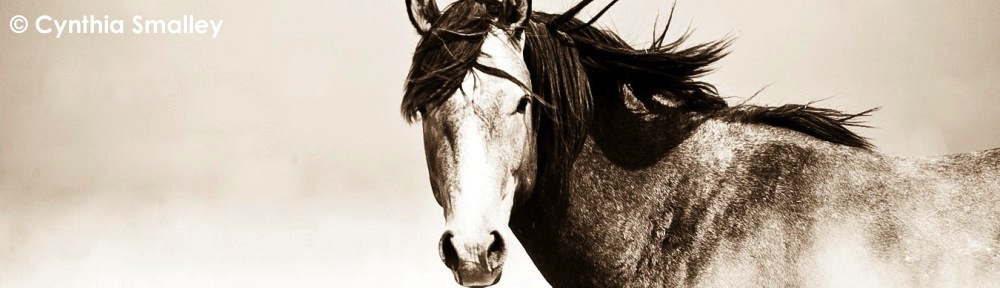
© Cynthia Smalley

Statement for the 109th Congress (1st Session) in support of H.R. 297
A Bill in the House of Representatives
House Committee on Resources
Introduced January 25, 2005

To restore the prohibition on the commercial sale and slaughter of wild free-roaming horses and burros.

BY JAY F. KIRKPATRICK, PH.D. AND PATRICIA M. FAZIO, PH.D.

Are wild horses truly “wild,” as an indigenous species in North America, or are they “feral” weeds – barnyard escapees, far removed genetically from their prehistoric ancestors? The question at hand is, therefore, whether or not modern horses, Equus caballus, should be considered native wildlife.

The genus Equus, which includes modern horses, zebras, and asses, is the only surviving genus in a once diverse family of horses that included 27 genera. The precise date of origin for the genus Equus is unknown, but evidence documents the dispersal of Equus from North America to Eurasia approximately 2-3 million years ago and a possible origin at about 3.4-3.9 million years ago. Following this original emigration, several extinctions occurred in North America, with additional migrations to Asia (presumably across the Bering Land Bridge), and return migrations back to North America, over time. The last North American extinction occurred between 13,000 and 11,000 years ago.1 Had it not been for previous westward migration, over the land bridge, into northwestern Russia (Siberia) and Asia, the horse would have faced complete extinction. However, Equus survived and spread to all continents of the globe, except Australia and Antarctica.

In 1493, on Columbus’ second voyage to the Americas, Spanish horses, representing E. caballus, were brought back to North America, first in the Virgin Islands, and, in 1519, they were reintroduced on the continent, in modern-day Mexico, from where they radiated throughout the American Great Plains, after escape from their owners.2

Critics of the idea that the North American wild horse is a native animal, using only paleontological data, assert that the species, E. caballus (or the caballoid horse), which was introduced in 1519, was a different species from that which disappeared 13,000 to 11,000 years before. Herein lies the crux of the debate. However, the relatively new (27-year-old) field of molecular biology, using mitochondrial-DNA analysis, has recently found that the modern or caballine horse, E. caballus, is genetically equivalent to E. lambei, a horse, according to fossil records, that represented the most recent Equus species in North America prior to extinction. Not only is E. caballus genetically equivalent to E. lambei, but no evidence exists for the origin of E. caballus anywhere except North America.3

According to the work of Uppsala University researcher Ann Forstén, of the Department of Evolutionary Biology, the date of origin, based on mutation rates for mitochondrial-DNA, for E. caballus, is set at approximately 1.7 million years ago in North America. Now the debate becomes one of whether the older paleontological fossil data or the modern molecular biology data more accurately provide a picture of horse evolution. The older taxonomic methodologies looked at physical form for classifying animals and plants, relying on visual observations of physical characteristics. While earlier taxonomists tried to deal with the subjectivity of choosing characters they felt would adequately describe, and thus group, genera and species, these observations were lacking in precision. Reclassifications are now taking place, based on the power and objectivity of molecular biology. If one considers primate evolution, for example, the molecular biologists have provided us with a completely different evolutionary pathway for humans, and they have described entirely different relationships with other primates. None of this would have been possible prior to the methodologies now available through mitochondrial-DNA analysis.

Carles Vilà, also of the Department of Evolutionary Biology at Uppsala University, has corroborated Forstén’s work. Vilà et al have shown that the origin of domestic horse lineages was extremely widespread, over time and geography, and supports the existence of the caballoid horse in North American before its disappearance.4

Finally, the work of Hofreiter et al, 5 examining the genetics of the so-called E. lambei from the permafrost of Alaska, found that the variation was within that of modern horses, which translates into E. lambei actually being E. caballus, genetically. The molecular biology evidence is incontrovertible and indisputable. The fact that horses were domesticated before they were reintroduced matters little from a biological viewpoint. They are the same species that originated here, and whether or not they were domesticated is quite irrelevant. Domestication altered little biology, and we can see that in the phenomenon called “going wild,” where wild horses revert to ancient behavioral patterns. James Dean Feist dubbed this “social conservation” in his paper on behavior patterns and communication in the Pryor Mountain wild horses. The reemergence of primitive behaviors, resembling those of the plains zebra, indicated to him the shallowness of domestication in horses.6

The issue of feralization and the use of the word “feral” is a human construct that has little biological meaning except in transitory behavior, usually forced on the animal in some manner. Consider this parallel. E. Przewalski (Mongolian wild horse) disappeared from Mongolia a hundred years ago. It has survived since then in zoos. That is not domestication in the classic sense, but it is captivity, with keepers providing food and veterinarians providing health care. Then they were released a few years back and now repopulate their native range in Mongolia. Are they a reintroduced native species or not? And what is the difference between them and E. caballus in North America, except for the time frame and degree of captivity?

The key element in describing an animal as a native species is (1) where it originated; and (2) whether or not it co-evolved with its habitat. Clearly, E. caballus did both, here in North American. There might be arguments about “breeds,” but there are no scientific grounds for arguments about “species.” The non-native, feral, and exotic designations given by agencies are not merely reflections of their failure to understand modern science, but also a reflection of their desire to preserve old ways of thinking to keep alive the conflict between a species (wild horses) with no economic value anymore (by law) and th economic value of commercial livestock. Native status for wild horses would place these animals, under law, within a new category for management considerations. As a form of wildlife, embedded with wildness, ancient behavioral patterns, and the morphology and biology of a sensitive prey species, they may finally be released from the “livestock-goneloose” appellation.

_________________________________

Jay F. Kirkpatrick, Director, The Science and Conservation Center, Billings, Mondana, holds a Ph.D. in reproductive physiology from the College of Veterinary Medicine at Cornell University. Patricia M. Fazio is currently a freelance environmental writer and editor residing in Cody, Wyoming and holds a B.S. in animal husbandry/biology from Cornell University, and M.S. in environmental history from the University of Wyoming, and a Ph.D. in environmental history from Texas A&M University, College Station.

1 “Horse Evolution” by Kathleen Hunt from www.onthenet.com.au/~stear/horse_evolution.htm; Bruce J. MacFadden, Fossil Horses: Systematics, Paleobiology, and Evolution of the Family Equidae (New York: Cambridge University Press, 1992), p. 205.

2 Patricia Mabee Fazio, “The Fight to Save a Memory: Creation of the Pryor Mountain Wild Horse Range (1968) and Evolving Federal Wild Horse Protection through 1971,” doctoral dissertation, Texas A&M University, College Station, 1995, p. 21.

3 Ann Forstén, 1992. Mitochondrial-DNA timetable and the evolution of Equus: Comparison of molecular and paleontological evidence. Ann. Zool. Fennici 28: 301-309.

4 Carles Vilà, Jennifer A. Leonard, Anders Götherström, Stefan Marklund, Kaj Sandberg, Kerstin Lidén, Robert K. Wayne, Hans Ellegren. 2001. Widespread origins of domestic horse lineages. Science 291: 474- 477.

5 Hofreiter, Michael; Serre, David; Poinar, Hendrik N.; Kuch, Melanie; Pääbo, Svante. 2001. Ancient DNA. Nature Reviews Genetics. 2(5), 353-359.

6 James Dean Feist and Dale R. McCullough. 1976. Behavior patterns and communication in feral horses. Z. Tierpsychol. 41: 367.

Posted for educational purposes.

Dine’ Elders and Medicine People take action to protect horses

© Irma Novak, all rights reserved

© Irma Novak, all rights reserved

Dine’ Elders and Medicine people unanimously pass joint resolution urging Navajo Nation to comply with fundamental law in treatment of horses and expressing opposition to the 2014 Rangeland Improvement Act

TEESTO, Az — Diné Hataalii Association and Nohooka’ Diné, traditional cultural leaders, passed a joint resolution on June 14, 2014, advising the Navajo Nation to adhere to Dine’ spiritual traditions and culture to insure the humane treatment of horses and complete halt to NN horse round-up. Dr. Anthony Lee, President of DHA, spoke of the fire that is out of control on the Chuska Mountain Range, “this (fire) can be attributed, in part, to the horses that already have been slaughtered with no amends made to the Holy People.”

The resolution also expresses opposition to the 2014 Rangeland Improvement Act because the Navajo Nation has not properly consulted or informed the Dine’ people about the Act’s purpose, intent, impacts and/or consequences. The resolution states, “The 2014 Rangeland Improvement Act defines horses as “livestock” or an “animal unit” without regard for the sacred place that horses have in our healing ceremonies, prayers and way of life. This attempt to diminish or prohibit our spiritual way of life and understandings is a direct violation of the Navajo Nation’s bill of rights under freedom of religion.”

The two traditional groups also asked the Navajo Nation to conduct a formal and thorough investigation into alleged horse theft by those the Nation employed during the round-up, charging that some of the horses taken during the roundups were professionally trained with brands and grazing permits. Mr. Leland Grass of Nohooka Dine’ said, “Horse theft and cruelty is a serious crime, it victimizes both the people whose horses were taken and it victimizes the horses.  As traditional people we see every horse as sacred and when we treat them inhumanely we violate our own sacredness as human beings”.

The resolution also expresses concerns with a recent Memorandum of Understanding (MOU) between Bill Richardson, Robert Redford and Navajo Nation President Ben Shelly regarding horse slaughter and the round-ups. The resolution states, the MOU “does not acknowledge our sacred way of life and custom of Dine’ People” and “without the direct involvement and full participation of the Dine’ People, Elders, and Medicine People this MOU…will not have attained the free, prior and informed consent of the Dine’ Peoples as is required by law”. Dr. Lee states “In the long run, we, as medicine people, are advocating and protecting the sacred medicine bundles, passed down to us by our forebears and ancestry. They ensure the future survival of our children and grandchildren.”

The resolution further states, “It is unacceptable to violate or challenge our Creator’s immutable Laws and the way of life that was provided to us, as Dine’, to maintain balance and harmony with All Creation”. “We strongly urge the Navajo Nation to create and uphold man-made laws that do not oppose, challenge or go against our sacred Dine’ way of life”. “As earth surface people, we do not have the power nor the authority to change, alter, or supersede the natural and fundamental laws established by the Holy People”, adds Dr. Lee.

The resolution affirms that horses are sacred and created with the universe and ends by insisting “that all horses be treated humanely and that we maintain a healthy relationship with (the horse).”

Read more about the resolution HERE

Urgent! The WY14 need strong corral fencing


Please HELP the WY14 get panel fencing because their layover is soon to end and we need to move them soon!

Places we’ve looked at don’t have strong fencing for wild horses so we will need to put up panel fencing. These tramatized young wild horses need sturdy panel fencing for safety. We are going to need a lot of panels and posts for the WY14. This is their first panel drive and your donation is going directly to the fencing! Donate here: http://www.gofundme.com/al5tp8

Your donations are tax-deductible to the fullest extent of the law as you see here: http://www.gofundme.com/al5tp8

We will post reciepts when we purchase the fencing (panels, posts, gates) as we believe in accountability and transparency. Please keep in mind GoFundMe and WePay takes about 8% combined for this fundraising tool. We are not receiving funding from any large groups. This is grassroots aid for wild horses rescued fromt he slaughterhouse and you are part of the solution here: http://www.gofundme.com/al5tp8

The long-term goal is to create sanctuary for the 14 young wild horses (8 mo to 2 years) who were rounded up in March and purchased by the slaughterhouse for human consumption abroad. But first we need to halter gentle them for their peace and safety. They will need to be handled from time to time to have their feet trimmed regularly for example and we want that to be a calm, safe and peaceful experience. The WY14 will never be ridden. They will live in peace and hopefully inspire people to value and protect America’s wild horses.

Sadly they have already been through so much trauma.

It takes a village of caring people coming together to undo the wrong done by the horrible BLM helicopter roundup and heinous slaughter of their families. You can donate here: http://www.gofundme.com/al5tp8

The WY14 are grateful for your help.

Owyhee survivor needs a home away from 3-Strikes and slaughter

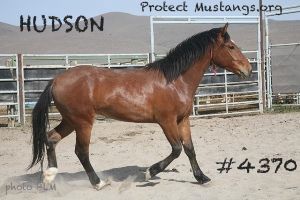
Help Hudson find a forever home.

Hudson is a bay gelding with id number is 12224370 from the Owyhee HMA in Nevada. He’s 2 years old and already 14.3 hands.

So many of Hudson’s relations were killed during the Owyhee roundup. Reports came in of wild horses being chased by choppers and run off cliffs. . .

Why did the BLM roundup the Owyhee mustangs? Why did they spin to the public that they didn’t have enough water? Didn’t award-winning reporter, George Knapp, find bodies of water out on the Owyhee range? Why were the wild horses fenced out? Does their tragic removal have anything to do with fracking in Nevada? What is the truth?

Help Hudson find his forever home to keep him safe from the heinous 3-Strike system.

Every time a protected wild horses is offered for adoption and no one picks him or her they earn a strike against them. After 3 strikes they loose all their protections and legally can be sold for $10 a head by the truckload. The pro-slaughter Burns Amendment twisted the intention of the 1971 Free Roaming Wild Horse and Burro Protection Act. The BLM claims that after the Tom Davis fiasco they won’t do this anymore. Do you believe BLM?

Why does Congress support the Burns Amendment?

Here is a video of Hudson #4370. He’s a nice mover and a sweet boy.

Here is information from BLM about the California Internet Adoption event:

The Bureau of Land Management (BLM) will offer 45 wild horses and 6 wild burros through its first online adoption in California beginning June 16.

Profiles of adoptable animals will be available on the BLM California website http://www.blm.gov/ca/st/en/prog/wild_horse_and_burro/whb_internet_adoption.htmlbeginning June 9 and will be available on a first come, first served basis. The website will be updated daily as animals are adopted.

The animals are available for adoption from 8:00 a.m. to 4:00 p.m. Monday, June 16, through Friday, June 27. The adoption fee is $125 per animal. Animals can be picked up at the Santa Clara Horseman’s Park in San Jose on July 12 from 8 a.m. to 12 p.m., or at either the Ridgecrest or Litchfield Corral.

All animals available for adoption have been vaccinated, de-wormed and have a health certificate. None of these animals are gentled or trained.

Those individuals interested in adopting must first complete an application and be approved by the BLM.  Applications can be accessed online at http://www.blm.gov/or/resources/whb/files/adoption_application_4710-010.pdf

For more information about the adoption, please contact Videll Retterath, BLM Wild Horse and Burro Program Assistant, at (530) 254-6575.

Please share this widely to help Hudson find a home where he will be safe and loved. Thank you for taking action to help the wild horses and burros.

Alarm over behavioral and physiological side effects of wild horse birth control (PZP)


MANAGEMENT OF WILD HORSES WITH PORCINE ZONA PELLUCIDA: HISTORY, CONSEQUENCES, AND FUTURE STRATEGIES

Cassandra M.V. Nuñez

Department of Ecology and Evolutionary Biology, Princeton University, Princeton, New Jersey

ABSTRACT

The advent of immunocontraception with porcine zona pellucida (PZP) has all but revolutionized wild horse management, providing a more humane method of population control than earlier strategies. Early studies on Assateague Island National Seashore have described it as an ideal form of fertility control in that it reduces the chance of conception to below 10%, can be delivered remotely, is reversible (after short-term use), lacks debilitating physiological side effects, cannot pass through the food chain, and shows minimal effects on social behaviors. However, recent research in other populations has revealed behavioral and physiological side effects of long-term PZP use. These results indicate that studies from one population may not necessarily be applicable to another, regardless of similarities in habitat and population structure. Careful study of the animals’ demography, physiology, and behavior is necessary prior to and during treatment to ensure that a) the potential effects of PZP can be assessed accurately, and b) within managerial constraints, PZP effects are ameliorated as much as is possible. Here I explain the history of PZP use in wild horses, its side effects on the horses of Shackleford Banks, North Carolina in comparison to other populations, and offer management suggestions based upon wild horse biology and behavioral ecology, which may minimize or prevent these side effects in other populations.

Read the full article here: PM Nunez 2010 management of horses with PZP


Posted for educational purposes only

PZP, the restricted use pesticide for wild horses, is problematic


Photo credit: Eduardo Amorim / Foter.com / CC BY-NC-SA

Photo credit: Eduardo Amorim / Foter.com / CC BY-NC-SA

Immunocontraception in Wild Horses (Equus caballus) Extends Reproductive Cycling Beyond the Normal Breeding Season

by Cassandra M. V. Nuñez, James S. Adelman, Daniel I. Rubenstein

Background

Although the physiological effects of immunocontraceptive treatment with porcine zona pellucida (PZP) have been well studied, little is known about PZP’s effects on the scheduling of reproductive cycling. Recent behavioral research has suggested that recipients of PZP extend the receptive breeding period into what is normally the non-breeding season.

Methodology/Principal Findings

To determine if this is the case, we compiled foaling data from wild horses (Equus caballus) living on Shackleford Banks, North Carolina for 4 years pre- and 8 years post-contraception management with PZP (pre-contraception, n = 65 births from 45 mares; post-contraception, n = 97 births from 46 mares). Gestation lasts approximately 11–12 months in wild horses, placing conception at approximately 11.5 months prior to birth. Since the contraception program began in January 2000, foaling has occurred over a significantly broader range than it had before the contraception program. Foaling in PZP recipients (n = 45 births from 27 mares) has consistently occurred over a broader range than has foaling in non-recipients (n = 52 births from 19 mares). In addition, current recipients of PZP foaled later in the year than did prior recipient and non-recipient mares. Females receiving more consecutive PZP applications gave birth later in the season than did females receiving fewer applications. Finally, the efficacy of PZP declined with increasing consecutive applications before reaching 100% after five consecutive applications.

Conclusions/Significance

For a gregarious species such as the horse, the extension of reproductive cycling into the fall months has important social consequences, including decreased group stability and the extension of male reproductive behavior. In addition, reproductive cycling into the fall months could have long-term effects on foal survivorship. Managers should consider these factors before enacting immunocontraceptive programs in new populations. We suggest minor alterations to management strategies to help alleviate such unintended effects in new populations.

Read the complete article here:  http://www.plosone.org/article/info%3Adoi%2F10.1371%2Fjournal.pone.0013635

Posted for educational purposes only

Photos of the Wyoming 14 ~ National treasures saved from the slaughterhouse


©PM


Horseback Magazine reported on National treasures saved from the slaughterhouse http://horsebackmagazine.com/hb/archives/28702


A special to thank you to Craig Downer who took photos of the WY14 for us.

www.ProtectMustangs.org
Protect Mustangs is a nonprofit organization who protects and preserves native and wild horses.


Craig Downer at Western Horse Expo Friday-Sunday

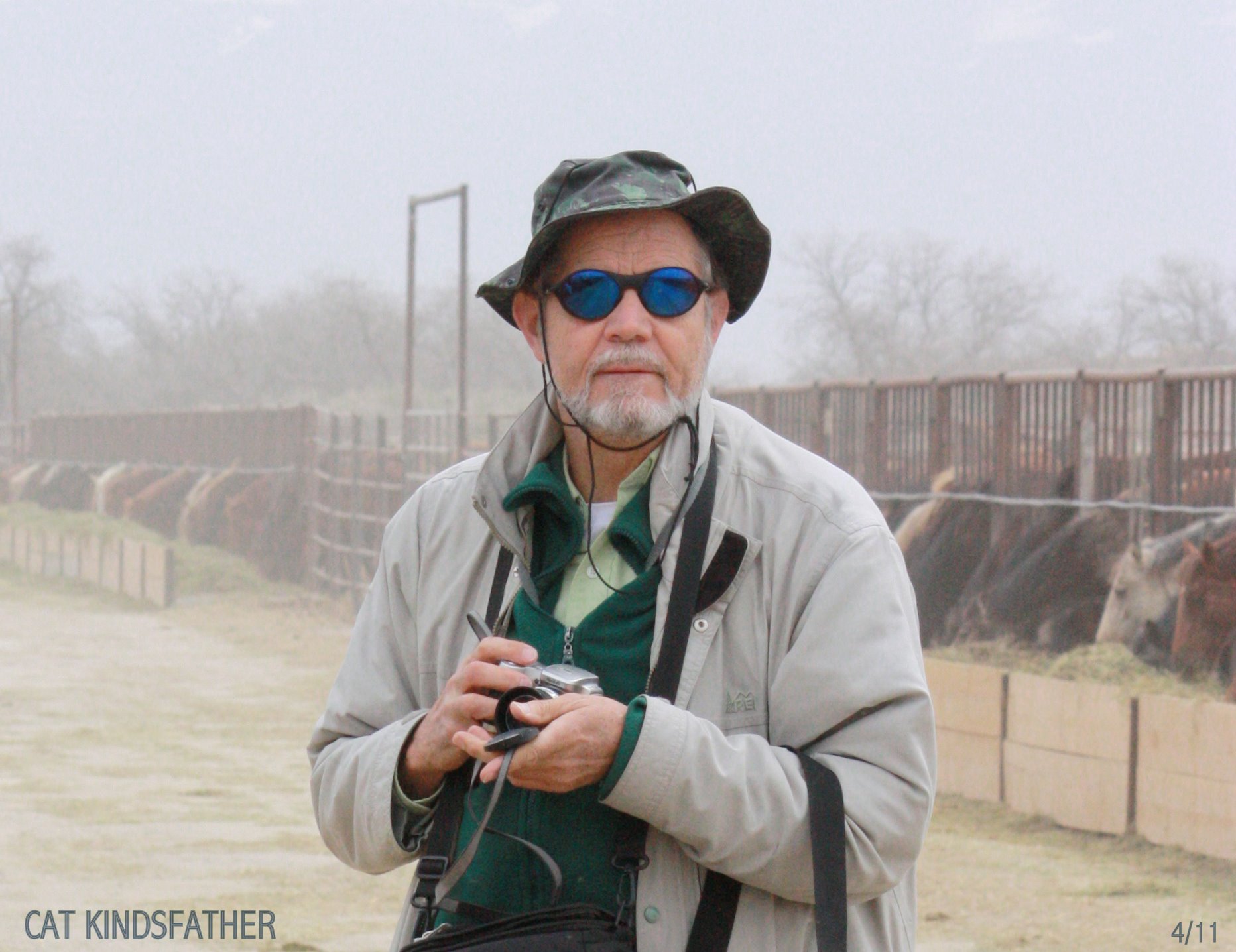
Photo © Cat Kindsfather

Photo © Cat Kindsfather

Craig C. Downer, wildlife biologist, PhD candidate and Protect Mustangs’ Advisory Board Member will be at the Western States Horse Expo, June 13-15 in Sacramento.

The Author will be at the Book Corral as part of this major event. Copies of his updated book will be available along with his musical CD Wild Horse Rhapsody. There will be free handouts and some wild horse pictures, some on canvas, for sale.

The author will answer questions about the wild horses and burro, their survival crisis, and what must be done to restore these magnificent animals to their rightful land and freedom.

Link: www.horseexpo.com


Help Feed the WY14 saved from slaughter


Dear Friends of wild horses and burros,

After a stealth Bureau of Land Management (BLM) roundup, paid for with tax dollars, 37 wild horses were sold to a Canadian slaughterhouse.

These wild horses from the Bighorn Basin and Pryor Mountain area were found 1 mile from a former protected Heard Area, zeroed out in 1987, known as Dry Creek/Foster Gulch. The heritage herd had been on the range for generations but the State of Wyoming didn’t want them roaming free on public land anymore so they called in the BLM to round them up.

In March the herd was chased by helicopters and rounded up at taxpayer expense, handed over to the Wyoming Livestock Board and sold at auction to a Canadian slaughterhouse for $40 a piece. 23 herd members over the age of 2 were slaughtered to be eaten abroad before we got involved.

I’m grateful actor Mark Boone Junior and I were able to secure all 14 youngsters ages 8 months to 2-years-old and get them out before they were slaughtered too. We call them the WY14. Sadly all their mamas and papas were butchered at the Canadian slaughterhouse shortly after the clandestine roundup.

On Memorial Day weekend we transported the WY14 out of the Montana feedlot to a ranch, in California near Reno where they will stay temporarily until they move down to their home in the San Francisco Bay Area.

While at the ranch , Protect Mustangs pays for all their hay and these youngsters need to eat a lot. Right now the orphans eat about 3 bales a day. We need your help to feed the 14 survivors. We have started a fundraiser here:  http://www.gofundme.com/9xcfag Please share it with your friends and family so we can raise the money for hay to help the survivors of the roundup.

Grass hay locally is $17.50 for a 100 pound bale, if we buy it in 2 ton loads–otherwise it is $20 a bale at the feed store plus the gas to pick it up. We would like to buy grass hay by the ton to stretch dollars. Once the WY14 move to the Greater Bay Area, the heritage herd will need hay until we can find irrigated pasture for them.  Please make a donation today to help feed the young wild horses who have lost their freedom and their families but have survived the horrors: http://www.gofundme.com/9xcfag

For more information about the plight of the WY14 visit www.ProtectMustangs.org We are a California nonprofit. While we are applying for our 501c3, donations are retroactive, but even so, for this Hay Drive we are under The Wild Horse & Burro Fund which is part of the Andean Tapir Fund–an established 501c3 so your donations are tax-deductible right now. All donations go directly toward buying hay minus the fund-raising widget fee (4.5%).

Please help by making a donation for hay right here: http://www.gofundme.com/9xcfag  These 14 little orphans are skinny and need good quality hay to grow strong. Every dollar goes to nurture and feed them so they can heal from the trauma of the roundup and the loss of their families.

The WY14 know people care about them. They felt everyone’s prayers to find them before it was too late. Now they are counting on us all to come together and buy hay so they can grow strong and have the best chance at a new life. Please share this post with your friends and family because it takes a village. . .

In gratitude,

Anne


Anne Novak

Executive Director

Protect Mustangs


Twitter: https://twitter.com/TheAnneNovak 

Facebook: https://www.facebook.com/ProtectMustangs 

In the news: http://protectmustangs.org/?page_id=218 

Protect Mustangs is a nonprofit organization who educates, protects and preserves native and wild horses.