Shocking meeting minutes reveal Nevada wants to slaughter wild horses

Reno: Damonte wild horses trapped w/ cruelty

Issue: The Nevada Board of Agriculture minutes reveal a discussion on how to open up a horse slaughter plant for the Virginia Range horses.Date: January 3,2013For some months horse advocates have predicted two things. That the Nevada Department of Agriculture’s claims that they aren’t trying to sell horses for slaughter is the pure nonsense that it is, and that the end game is to test public opinion to see if the public would stomach having our free-roaming horses go to the slaughterhouses.In reality advocates apparently underestimated theactual situation. After struggling to get documents from the Department of Agriculture, Carrol Abelhas been going through the minutes of meetings of the Board of Agriculture and is discovering that some startling conversations have taken place.The minutes also reveal that the Department of Agriculture is flat lying to the public when they put out statements that horses that they dump off the livestock auction aren’t at risk of going to the slaughter buyers.

The following text is from the December 6th, 2011 meeting of the Nevada Board of Agriculture. A complete copy of the minutes can be downloaded here.

We chose to print the entire discussion about the Virginia Range horses in order to provide more complete context. The slaughterhouse issue, and references to discussions with Governor Sandoval, start in the 5th paragraph.

(Typos that appear below are the same as they appear in the minutes.)


Name of Organization:           Nevada Board of Agriculture

Date and Time of Meeting:	December 6, 2011

Place of Meeting:	        Nevada Department of Agriculture
                                405 S. 21st  Street
                                Sparks, Nevada  89431
                                775-353-3601

Minutes December 6, 2011

Board Members Present:	        Board Members Absent:

Alan Perazzo, Chairman          Ramona Morrison
Paul Anderson
Dean Baker
Charlie Frey
Grady Jones
Paul Noe
Jim Snyder
Boyd Spratling
Dave Stix, Jr.
Hank Vogler

Staff Members Present:	        Guests:

Jim Barbee                      Don Alt,NLSA
Bryan Stockton                  Jerry Lentz
Mark Jensen                     John M. Wildlife
Jay Ludlow                      Trish Swain, Trail Safe
Joann Mothershead, Elko         Joey Hastings, Governor's Office
Jodi Protopappas                Audry Spratling
                                Doug Busselman, NV Farm Bureau
                                Don Molde
                                Billy Howard, Trail Safe

(Jump to item in Director's Report, bottom of Page 3.)

October 4, 2011- conference call meeting with Board to go to
workshop.  Met with Dept. of corrections and worked thru Gov
office dealing with VR Horse issues.  Horses up for sale at the
Stewart Correctional facility we are giving the horse advocacy
groups an opportunity at the horse we have collected first come
first serve, identified cost to Agriculture to collect horses in
traps take horses to prison, feed, processing, branding on left
hip if they do not buy horses today then horses will be
transported to fallon on Wednesday can't afford to hold and feed
horses with the budget restraints we are in.  We will continue
to keep horses off the roadway for public safety.  We continue
to have horses hit on the highway.  Don Alt shared that along 95
route looking at completing fence line by dept. of 
transporation.  Word from DOT putting in a horse underpass past
moundhouse around stagecoach area that will hopefully help with 
the horses coming across the roadway.

October 13,2011-  met with Amy Lueder, USDA re: V. Range issues
felt there is a connection between the pinenut herd and the
Lahontan herd areas.  They are adamate there is no genetic
connection between those horses and Carson river keeps horses
from moving back and forth.  I have walked across the Carson
river when things are pretty dry, Director questions that stand. 
They are willing to support us with equipment, traps but they 
believe they have no responsibility or liablility with the horses
that are on the Virginia Range.

Dave Sticks Jr. comment: -for the record can you tell everyone
where the funding is coming for for state personnel to do this?

Barbee answers: Animal identification which is fee based thru
Brands, and registrations, certificates, trip permits is the fee
source.  Advertised price for this mornings sale is 90.00 per
head.

Charlie Frey comment, question: for the record: - Have you had
meetings with Governor re: the slaughter of horses, how is public 
conception being changed?

Jim Barbee:  Briefly talked about it.  Have not seen it as huge
impact relative to VR horses immediately.

Charlie Frey: Thought if we could create demand it would take
some of the responsibility off this dept. and open up a market
place.  I think it is something for the general public to
consider in view that overseas some of that meat is real good
delicacy.

Jim Barbee:  response:  We are continuing based on motion you
guys passed 2 meetings ago to look at other opportunities to the
dept of Ag managing the VR horses, working with AG's office
regarding statutes and what option we have there and continuing
to work with Gov office on ideas and ways we could more
appropriately transfer that authority to a better place.

Dean Baker for the record:  Put on agenda to say ability to
slaughter horses because we are agriculture and it is an 
important thing to do.  It would cause up controversy and 
problems there are many putting that out.  I am not pushing this
just putting idea out.

Jim Barbee: As I understand it with the uplifting of the band it
is anywhere that you have a slaughter house it is legal now.

Dean Baker:  But if we supported it, legislators couldn't do
anything in legislation about wild horses like the water thing,
they got hammered in the ground.  We would not get hammered the
same way it would be a subject we could put out.

Boyd Spratling:  Financial strategy on getting slaughter house
going because that is when the river is going to meet the road
is when they slaughter the first horse.  Think looking at
putting facilities on Indian reservations which takes
legislature and everybody out of the equation.

Dean Baker: I would hope it might some help to some of the
legislators if the Board of Agriculture would take a clear
position.  Just throwing it out.

Dave Styx Jr:  I think we should trust that the private sector
will handle this eventually if slaughters increase, need to talk
with Gov office have to be careful where this Board goes with
that because it may take care of itself, however brings up issue 
you need to be prepared as well as the Governor that prior to 
today there has only been 1 buyer at the sale yards purchasing
horses and that is why market is so bad.  This could increase
more buyers at the sale like 10 years ago.  If we take VR horses
to the sale we need to be prepared for that.  Right now with 1
buyer everyone knows where those horses are going.

Jim Barbee:  I think you are right about how it will play out in
private industry but one would assume that it would affect that
issue and we have to make justifications one way or another.


Paragraph Eleven in This discussion serves as a good exampleas to why members serving on any policy making bodies need to be elected and be directly accountable to the voters! Those whoare appointed to secure positionsappear to get the sense that they can do anything they want.Carrol will likely file a more complete report once she goes throughadditional documents.


Persons trapping horses for the Nevada Department of Agriculture
demonstrate how to bring in an approx. 3 week old foal. (NOT!)
Get twine aruond its neck.
Choke it and drag it.
Then shove it when it resists.

Where they go…


If you have an opinion on this issue, you can express it to the following officials:

Secretary of Interior, Sally Jewell (runs the BLM)

Bring signs and bullhorns March 26, 2015, at 6:30 p.m. outside Wheeler Hall, UC Berkeley Campus 2222 Bancroft Way, Berkeley, CA 94720 Info on Secretary Jewell’s panel discussion http://protectmustangs.org/?p=8048

Secretary Jewell

Department of the Interior
1849 C Street, N.W.
Washington DC 20240

Phone: (202) 208-3100
E-Mail: feedback@ios.doi.gov

Twitter: https://twitter.com/secretaryjewell

President Obama  https://www.whitehouse.gov/contact


URGENT! Stop Wild Horse Slaughter & Cruelty in Nevada

Protect native wild horses! © Protect Mustangs.org

Protect native wild horses! © Protect Mustangs.org


Take Action to Save Wild Horses 

Gather in peaceful protest on January 4th (in conjunction with the Carson City Rally) in hometowns around the world to STOP the Slaughter of Native Wild Horses. Let your friends know what is going on. TOURISTS speak out! Do you support NEVADA’s cruel treatment of iconic mustangs?

Post pics holding your signs on Protect Mustangs’ FB wall and we will share them out!

Post here: https://www.facebook.com/ProtectMustangs

Make your voice heard, contact the White House, your Congressional Representative and your Senators to request they halt the roundups, stop the slaughter of U.S. wild horses and burros as well as return all wild horses in holding to the range.

Come to the Carson City “Slaughter is not the Answer” Rally in Nevada’s Capitol. From 10:30 a.m. -1 p.m on January 4th. In front of the Nevada State Legislature building 401 South Carson Street, Carson City, NV. Info: Bonnie Matton 775-720-6086

Send your letters in to Hidden Valley by 9 p.m. PST Jan 3rd. Your letters will be taken to the Governor at the end of the Jan 4th Rally in Carson City.

email: hiddenvalleywildhorses@gmail.com

We need your HELP! Please write an original letter off this form letter and send it to Shannon Windle, President of Hidden Valley Wild Horse Protection Fund. She is taking it to the Governor!

Dear Governor Sandoval,

I am appalled by the current treatment of Nevada’s Virginia Range wild horses. These horses belong to the State of Nevada and their fate ultimately lies in your hands. 80% of Americans are opposed to horse slaughter; now the Virginia Range wild horses are being dumped at livestock auctions by the State of Nevada – the first step in the slaughter pipeline. To treat one of this State’s natural resources with such disregard is reprehensible. You, as the highest ranking official of the State of Nevada, have the authority to stop your Department of Agriculture from this inhumane treatment and its continued determination to wipe them off the range altogether.

To preserve these icons of Nevada’s western heritage, please direct the Nevada Department of Agriculture (NDoA) to take the following steps immediately, before these horses are gone forever:

1. STOP sending all Nevada Virginia Range wild horses to the livestock auction immediately. These horses are entering the slaughter pipeline and being put at direct risk of ending up at slaughterhouses in Canada and/or Mexico. I am opposed to having Nevada’s horses served on dinner platters in foreign markets.

2. STOP the random trapping of these horses. Poor to no planning has resulted in 153 horses being removed from the Virginia Range. The opportunistic methods being implemented to trap Nevada’s horses has had almost no impact to the public safety concerns that the NDoA is using as an excuse for the taking up of these horses. I oppose the indiscriminant taking up of Nevada wild horses.

3. RE-ENGAGE the cooperative agreements previously entered in to between NDoA and wild horse advocate groups. These agreements originally allowed non-profit funds to be used to relieve the burden on the tax payer regarding the management of the Nevada wild horses. I support cooperative agreements that allow NDoA to hand over Nevada’s horses to the care of advocate groups that use their donor funds to find them good, quality forever homes.

4. RE-ENGAGE wild horse advocates willing to assist in the on-going management of the Nevada horses as provided in NRS 569. I oppose the current policies affecting Nevada’s wild horses that have led to reactive versus proactive decision making regarding which horses to remove, have led to the use of dangerous techniques implemented in the taking up of horses, put the public at risk of injury during these round ups, and caused entire communities to become outraged at the activities in which the NDoA has engaged.

5. ENCOURAGE AND SUPPORT new legislation and departmental policies that will protect and preserve the Nevada Virginia Range horses. I support these living symbols of our pioneering American spirit and laud them as proud symbols of Nevada’s past, its courageous present, and its strength of tomorrow. I encourage you to ensure they are protected and become the focus of enjoyment for both tourists and residents of current and future generations.

The next meeting of the Nevada Department of Agriculture Board of Directors isn’t scheduled until March. By then, several hundred more horses might be removed from the range. Additionally, there are 41 Virginia Range wild horses scheduled to be sold at the livestock auction on January 9, 2013.

Please act now to protect the Virginia Range wild horses so a long-term solution can be found.

Sincerely,


Sign, print your name and address.

Mail your letter to Hidden Valley Wild Horse Protection Fund, PO Box 20052, Reno, NV 89515 or scan and email it to hiddenvalleywildhorses@gmail.com no later than January 3, 2013.


All letters will be delivered in person to the Governor’s office in Carson City on Friday, January 4, 2013.

Cruel way to drag foal by pulling bailing twine around their neck (Photo © Bo Rodriguez)

Cruel way to drag foal by pulling bailing twine around their neck (Photo © Bo Rodriguez)

Reno: Damonte wild horses trapped w/ cruelty

(Graphic by Anne Novak & Denise Delucia for © Protect Mustangs.www.ProtectMustangs.org May be used for social sharing. Photo © Bo Rodriguez)


Teen reports on gentling native wild horses

Cross-posted from Discover Mustangs

Helping gentle Blondie

PM Blondie Adopt Dec 29 2012.001


PM Blondie Inez Touches Back Dec 29 2012.001


Today was amazing. Blondie seems to know the sound of our car. We pulled up and she looked at us from the other side of the corral to say “Hi.”

Without a round pen the gentling process is unusual but fun. It’s my first time to gentle a wild horse fresh from the holding facility and it’s really cool. I’m working in a team with my mom and Inez.

Before Blondie came up to me, Inez was scratching her face up to her ears and under her chin. Blondie enjoyed it. She understands we all love wild horses. They know who the nice people are.

Later Blondie came up to me. We started connecting nose to nose when Inez reached out and touched her back for the first time.

Inez said, “Look! She doesn’t mind this.”

Later Mom was scratching Blondie’s hindquarters for the first time and Blondie was loving it!

I think things are moving along well with the gentling because we are taking our time. These 4 California wild horses have lost their families and their freedom. They deserve compassion.

Sadly we can’t give them back their previous lives and I wish we could . . . We can offer them the best lives in captivity–filled with love, respect and partnership.

I dream of a day when we can have a large space for the wild horses we work with so they can run in a herd, work with us, then go back to the herd for sleep time.


~ Irma Novak, Director of Discover Mustangs


BLM ducks complaint about suppressing livestock damage

By U.S. Government [Public domain], via Wikimedia Commons

By U.S. Government [Public domain], via Wikimedia Commons

Washington, DC (November 29, 2012) — The biggest and most ambitious scientific undertaking in the history of the U.S. Bureau of Land Management is languishing after it was revealed the agency directed scientists to exclude livestock grazing as a possible factor in changing landscapes. The agency has also yet to respond to a scientific integrity complaint filed one year ago by Public Employees for Environmental Responsibility (PEER) charging that the exclusion of livestock data constituted political interference.

Launched in 2010 with more than $40 million in stimulus funds, BLM sought to analyze ecological conditions across six “eco-regions” covering the Sagebrush West. There was only one catch: when scientists were assembled BLM managers informed them that there was one “change agent” that would not be studied – the impacts of commercial livestock grazing. BLM managers told stunned scientists the reason for this puzzling exclusion was due to “stakeholders” opposition and fear of litigation, according to documents appended to the PEER complaint. Since that complaint –

  • These so-called “Rapid Ecoregional Assessments” have all stalled with no timetable for completion although they were slated to be finished this year;
  • To investigate the PEER complaint, BLM tagged Louis Brueggeman, its Fire Management Liaison, to act as “Scientific Integrity Officer.” It is not clear that Mr. Brueggeman has interviewed a single witness proffered by PEER. Nonetheless in an October 12, 2012 email, he said he was “in the process of finalizing the report” responding to the November 2011 PEER complaint; and
  • BLM now claims its studies are limited to “four overarching environmental change agents: climate change, wildfires, invasive species, and development (both energy development and urban growth)” but notes “Additional change agents may also be addressed based on ecoregional needs.”

What makes this last bit of revisionist rationale from BLM so questionable is that the agency’s own records show that the primary cause (nearly 80%) for BLM lands not meeting range health standards is damage from livestock, far eclipsing drought, fire, invasion by non-native plants or sprawl – the factors BLM now calls “overarching.” In fact almost 40% of all BLM allotments surveyed since 1998 fail to meet the agency’s own required land health standards due to livestock grazing – more than 33 million acres, an area bigger than the entire State of Alabama. Livestock occupies two-thirds of all BLM lands. Moreover, livestock is directly linked to aggravating drought conditions and spreading invasive species.

“After pledging not to repeat the pattern of political manipulation of science associated with the Bush years, the Obama administration has both embraced that pattern while striving to mask its manipulations though the charade of scientific integrity investigations,” remarked PEER Executive Director Jeff Ruch, whose organization has likened these investigations to damage control operations rather than objective scientific reviews. “Because they were financed with stimulus funds, these landscape assessments were described as ‘shovel-ready science’ – a term far more apt than originally envisioned.”
###

Read unanswered PEER scientific misconduct complaint

Look at heavy landscape damage inflicted by commercial livestock

View the six Eco-regions being assessed in continental U.S.

Scan stalled schedule for assessments

See how Interior has politicized its scientific integrity program

33 million Acres of BLM Grazing Allotments Fail Basic Rangeland Health Standards

LIVESTOCK’S HEAVY HOOVES IMPAIR ONE-THIRD OF BLM RANGELANDS

PM No More Roundups By Cat


Washington, DC (May 14, 2012) — A new federal assessment of rangelands in the West finds a disturbingly large portion fails to meet range health standards principally due to commercial livestock operations, according to Public Employees for Environmental Responsibility (PEER).  In the last decade as more land has been assessed, estimates of damaged lands have doubled in the 13-state Western area where the U.S. Bureau of Land Management (BLM) conducts major livestock leasing.

The “Rangeland Inventory, Monitoring and Evaluation Report for Fiscal Year 2011” covers BLM allotments in Arizona, California, Colorado, Idaho, Montana, Nevada, New Mexico, North Dakota, Oregon, South Dakota, Utah, Washington and Wyoming.  The report totals BLM acreage failing to meet rangeland health standards in measures such as water quality, watershed functionality and wildlife habitat:

  • Almost 40% of BLM allotments surveyed since 1998 have failed to meet the agency’s own required land health standards with impairment of more than 33 million acres, an area exceeding the State of Alabama in size, attributed to livestock grazing;
  • Overall, 30% of BLM’s allotment area surveyed to date suffers from significant livestock-induced damage, suggesting that once the remaining allotments have been surveyed, the total impaired area could well be larger than the entire State of Washington; and
  • While factors such as drought, fire, invasion by non-native plants, and sprawl are important, livestock grazing is identified by BLM experts as the primary cause (nearly 80%) of BLM lands not meeting health standards.

“Livestock’s huge toll inflicted on our public lands is a hidden subsidy which industry is never asked to repay,” stated PEER Advocacy Director Kirsten Stade, noting that the percentage of impairment in lands assessed remains fairly consistent over the past decade.  “The more we learn about actual conditions, the longer is the ecological casualty list.”

Last November, PEER filed a scientific integrity complaint that BLM had directed scientists to exclude livestock grazing as a factor in changing landscapes as part of a $40 million study, the biggest such effort ever undertaken by BLM.  The complaint was referred to a newly appointed Scientific Integrity Officer for BLM but there are no reports of progress in the agency’s self-investigation in the ensuing months.

At the same time, BLM range evaluations, such as this latest one, use ambiguous categories that mask actual conditions, employing vague terms such as “making significant progress” and “appropriate action has been taken to ensure significant progress” that obscure damage estimates and inflate the perception of restoration progress.  For example, in 2001 nearly 60% of BLM lands (94 million acres, an area larger than Montana) consisted of grazing allotments that were supposed to be managed to “improve the current resource condition” – a number that has stayed unchanged for a decade.

“Commercial livestock operations are clearly a major force driving degradation of wild places, jeopardy to wildlife, major loss of water quality and growing desertification throughout the American West,” Stade added, while noting that BLM has historically been dominated by livestock interests.  “The BLM can no longer remain in denial on the declining health of our vast open range.”

Rally to Save Nevada’s Wild Horses from Slaughter ~ January 4th

PM HV Girl with sign trap to slaughter
Protect mustangs & Stop the cruelty!
Make signs, bring friends and join the rally on Friday, January 4, 2012 (11 a.m. to 1 p.m.) in front of the Legislative Building (Hwy 395 East) in downtown Carson City, Nevada.

If you can’t come to Nevada then hold a peaceful protest in your hometown and send us your photos. We will post them here. Even one person can have a protest. Well traveled roads with lots of traffic are great spots for small protests.

Are you aware the federal officials discussed a plan to kill most of the native wild horses left in America? Read: Outrage over secret documents planning to kill or slaughter 50,000 native wild horses!

Feel free to send us an email with any questions Contact@ProtectMustangs.org

Photo by Bo Rodriguez


From Bonnie Matton:

Well, as you all know by now, we are battling the Nevada Department of Agriculture to get them to stop sending our Virginia Range Horses + horses from other areas as well – to auction: MEANING TO SLAUGHTER.

So, we are having an emergency rally on Friday, January 4, 2012 (11 a.m. to 1 p.m.) in front of the Legislative Building (Hwy 395 East) in downtown Carson City.    Sorry for the last minute notice.  We have to have it before the next auction which is on January 9, 2013.  NO TIME TO LOSE.

We are calling it “Slaughter is not the Answer.”  We will have flyers to pass out to press and others. Would appreciate your emailing me of  how many people will be coming from your area and where you are coming from.

Many of you have participated in demonstrations before. Please come at least 1/2 hour before the rally begins (in the park area next to the Legislative Building) so you can receive instructions (especially if you’ve never attended a demonstration before).  There are certain regulations we must abide with. The Legislative police have always welcomed us wild horse advocates because we are polite and follow their directions.

After the rally, we will be marching to the Governor’s Building (which is next door to the Legislative Building and close to where we gathered before the rally). Shannon Windle, President of Hidden Valley Wild Horse Protection Fund, will then bring hundreds of letters directly up to the Governor’s office – letters she has been gathering for some time opposing what NDA is doing with Nevada’s Treasures.

You are welcome to make up signs and bring them with you. We have lots in our storage shed which will work and I’ll bring them as well.  You are also welcome to bring your organizational signs.

The easiest place to park is if you drive down Stewart Street. There’s usually plenty of parking directly behind the Legislative Building, which is convenient for carrying signs and tables to our setup area.


Write a letter ~ Save a life

PM Virginia Range Ellen Holcomb 1

Virginia Rage wild horses living in freedom (Photo © Ellen Holcomb, all rights reserved)

Governor Sandoval: Protect Native Wild Horses in Nevada

Dear Friends,

Please join us to write your original handwritten letter to Governor Sandoval or send the form letter below.

Mail your letter to Hidden Valley Wild Horse Protection Fund, PO Box 20052, Reno, NV 89515 or scan and email it to hiddenvalleywildhorses@gmail.com no later than January 3, 2013.

All letters will be delivered in person to the Governor’s office in Carson City on Friday, January 4, 2013.

Thank you for taking action to protect mustangs and save lives.

In gratitude,

Anne Novak

 
PROTECT NEVADA’S WILD HORSES

 
Dear Governor Sandoval,


I am appalled by the current treatment of Nevada’s Virginia Range native wild horses. These horses belong to the State of Nevada and their fate ultimately lies in your hands.  80% of Americans are opposed to horse slaughter; now the Virginia Range wild horses are being dumped at livestock auctions by the State of Nevada – the first step in the slaughter pipeline.  To treat one of this State’s natural resources with such disregard is reprehensible.  You, as the highest ranking official of the State of Nevada, have the authority to stop your Department of Agriculture from this inhumane treatment and its continued determination to wipe them off the range altogether. 
 
To preserve these icons of Nevada’s western heritage, please direct the Nevada Department of Agriculture (NDoA) to take the following steps immediately, before these horses are gone forever:


1.  STOP sending all Nevada Virginia Range wild horses to the livestock auction immediately.  These horses are entering the slaughter pipeline and being put at direct risk of ending up at slaughterhouses in Canada and/or Mexico.  I am opposed to having Nevada’s horses served on dinner platters in foreign markets.


2. STOP the random trapping of these horses.  Poor to no planning has resulted in 153 horses being removed from the Virginia Range.  The opportunistic methods being implemented to trap Nevada’s horses has had almost no impact to the public safety concerns that the NDoA is using as an excuse for the taking up of these horses. I oppose the indiscriminant taking up of Nevada wild horses.

 
3. RE-ENGAGE the cooperative agreements previously entered in to between NDoA and wild horse advocate groups.  These agreements originally allowed non-profit funds to be used to relieve the burden on the tax payer regarding the management of the Nevada wild horses.  I support cooperative agreements that allow NDoA to hand over Nevada’s horses to the care of advocate groups that use their donor funds to find them good, quality forever homes.

 
4. RE-ENGAGE wild horse advocates willing to assist in the on-going management of the Nevada horses as provided in NRS 569.  I oppose the current policies affecting Nevada’s wild horses that have led to reactive versus proactive decision making regarding which horses to remove, have led to the use of dangerous techniques implemented in the taking up of horses, put the public at risk of injury during these round ups, and caused entire communities to become outraged at the activities in which the NDoA has engaged.

 
5. ENCOURAGE AND SUPPORT new legislation and departmental policies that will protect and preserve the Nevada Virginia Range horses.  I support these living symbols of our pioneering American spirit and laud them as proud symbols of Nevada’s past, its courageous present, and its strength of tomorrow.  I encourage you to ensure they are protected and become the focus of enjoyment for both tourists and residents of current and future generations.

 
The next meeting of the Nevada Department of Agriculture Board of Directors isn’t scheduled until March.  By then, several hundred more horses might be removed from the range.  Additionally, there are 41 Virginia Range wild horses scheduled to be sold at the livestock auction on January 9, 2013. 
 
Please act now to protect the Virginia Range wild horses so a long-term solution can be found.


Sincerely,

Your name
Your address

Ten tips for hauling adopted wild horses

You can make the hauling easier on your new friends.
MUSTANG Chutes Day 1 Feb 8 2011 MUSTANG Trailer Exit Feb 8 2011

Tips for Happy Hauling

1.     Send the BLM pickup facility a photo of your trailer before you leave, so they sign off that it’s suitable. They don’t want ramps or dividers, etc.
2.    Make sure your truck and trailer are in the best working condition and your bearings are greased.
3.    Let the BLM know you want to be there while they load so you aren’t distracted with paperwork. Then you can oversee the BLM employees loading your adopted wild horses. If something feels wrong express yourself politely and advocate for your wild horses. You will be responsible if the horses in your care are injured once you drive off.
4.    Having the BLM wranglers take their tags off when they are in the chute has worked for us.
5.    We don’t let the BLM wranglers halter them because we want the first haltering to be out of love and trust–not force, fear and domination. We don’t halter the wild ones in the trailer as it causes A LOT of stress before loading. They cannot be tied as they are not trained to tie. They are wild.
6.    We don’t feed during short trailering as hay nets could be something that could cause trouble.
7.    We did not bed the last trailer we used for a 6 hour ride. It had a rubber floor and they traveled well.
8.    Upon arrival at our destination, we back the trailer up to the gate and open the gate to create a barrier between the paddock and the trailer. Then we carefully open the trailer door and stand aside.
9.    Whips aren’t necessary but patience is. We have witnessed the BLM employees use a whip to get a young wild horse out of a trailer. This terrified the horse and caused him to bash around in the metal trailer and fall down. Using horse psychology and taking your time makes the experience safe and easy.
10.    If the wild horses are hesitant to come out of the trailer then we give them some hay just outside the trailer and wait patiently. They are extremely sensitive to pressure so we give them their space. We give them time and they always unload. We never stand in front of their exit path as that puts pressure on them and makes it scary to come out. They have been known to bolt out so watch out!

Have someone there to film the unloading because it’s a moment you will never forget. Here is a short clip of Sol and Val, our Discover Mustangs project horses, unloading after getting out of the BLM’s facility.


Disclaimer: Horses, wild or domesticated, are inherently dangerous and can be unpredictable. Use the information and advice in this article at your own risk.

(Photos © Carolyn Orndof)


Bureau of Land Management and DOI Missing $168 Billion Dollars; Taxpayers Have a Right to Know Where It Is!

 Cross-posted

by Photographer and Journalist

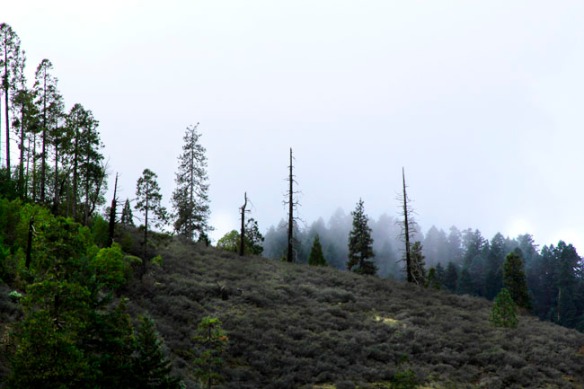
landing_trees_fog

“In summary, there were nearly 70 different types of leasable minerals extracted from federal lands and waters in fiscal years 2010 and 2011. . . For example, the volumes of the four most valuable of these minerals—oil, gas, natural gas liquids, and coal—are measured in barrels, million cubic feet (mcf), gallons, and tons, respectively. According to ONRR data, the total value of all leasable minerals extracted from federal and Indian land and sold in fiscal years 2010 and 2011 was $92.3 billion and $98.6 billion, respectively.”1  Keep these figures in mind, explained further, and also keep in mind this is only one segment of many these agencies recklessly managed.

The Department of the Interior (DOI) and Bureau of land management (BLM) within this example, is easily missing $168.20 Billion dollars of taxpayer money!  “Where’s the money?”  The American Public has a right to know!

Once again the Department of the Interior and the Bureau of Land Management is under fire.  Not so surprising is the continuing fact of mismanagement, incompetence, dispersing false information, and managing America’s taxpayer dollars in a reckless and irresponsible manner. After many years of misinformation the BLM, for example, begins to believe it.  This is when money starts missing from their fees banks, criminal behavior takes precedence, and lies to cover-up the behavior becomes more and more outlandish and unbelievable.  These agencies have reached their maximum within this capacity and time for a thorough investigation overall.

Theft cover-up or just incompetence?

The Problem in this instance, the GAO Report goes further in Actual Profit Received: “The resulting revenue to the federal government from mineral leasing activity on federal and Indian land in fiscal years 2010 and 2011 was $11.3 billion and $11.4 billion, respectively. Of this amount, oil, gas, and natural gas liquids accounted for the majority of the revenue—$10.1 billion in each fiscal year. The bulk of this revenue comes from royalties, which accounted for 92.8 percent of total revenue in 2011.” 

In easy terms and within this particular case, missing is $168.20 Billion dollars of taxpayer money, belonging to Americans, not the DOI or BLM or their favored corporations!

Not so farfetched is the fact many people state DOI and BLM’s management procedures and irresponsible conduct illegal in many cases.  The general public continues to ask, “Why is there no one in jail from either of these agencies, when considering this type of deplorable conduct and outright theft?”

The fact is the subject brought up by Senator Tom Udall in a September 7, 2011 letter to Gene Dodaro, Comptroller General, Government Accountability Office. . . : 

Senator Udhall”s request to the GAO:

It is vitally important that the American taxpayer receives a fair return for the mineral resources extracted from federal land. Therefore, we are requesting that GAO undertake an examination of the value of minerals extracted and the amount of revenues collected in fiscal year 2010 for minerals obtained from federally managed lands and waters under the General Mining Act of 1872, and the other various mineral leasing acts. The examination should include the following:

• What was the amount of minerals extracted from federal land and the Outer Continental

Shelf and what was the estimated dollar value of these minerals?

• How much did the federal government collect for these minerals, including royalties,

rents, and bonuses, and how was this amount determined?

The unbeatable reality

We can take the GAO Report math as accurate, and generating the difference in the reality of what was charged in Fees, and in accord with law and management’s responsibility to do so, we then find missing the amounts of $81.0 Billion dollars in 2010 and $87.2 Billion in 2011.  This is considered chargeable revenue from authentic fees being charged, or should have been charged, while these corporations used and depleted our Public Lands.

We can also legitimately debate the fact of how much destruction and ruin was done by these corporations (i.e. BP for example), and allowed by DOI and BLM agencies, who are responsible for oversight and proper management of our Public Lands.

We discover quickly that either the fees were not charged to the appropriate corporations using our Public Lands, or the fees simply taken and used elsewhere.  Assumptive conclusions are the need to record these same fees, apparently thought to be unnecessary by DOI or BLM personnel.  Either way a crime has been committed, and yet, no one is in jail or has been investigated!

Conclusion

This type of conduct by government agency personnel has always been, and remains so today, questionable and illegal.  DOI and BLM remains a conduit for Lobby Groups and special interest groups only.  Both of these agencies state they operate at a profit, but that remains simply misinformation, as usual.

Basically, if one multiplies this situation and estimates how much of this is ongoing throughout the Department of the Interior and the Bureau of Land Management, then we can obtain an overall “low” estimate of $450 Billion dollar expenditures’ every couple of years (upon summaries of several DOI and BLM budgets as can be reviewed in Public Domain).  Oddly at the same time taxpayers are having their taxes raised!  Why is this?

This math is not so farfetched when one considers energy, oil, natural gas, mining and minerals, and other large money-making corporations are involved on our Public Lands.

So the Public is currently being blamed for outright fiscal spending and being asked to sacrifice more and more and daily.  Yet we find this situation, as well as many more within our government, to be not only costly but criminal.

It becomes quite obvious where the budget cuts should be made.  It is also quite obvious that the DOI and the BLM are too large, and have indeed become a monopoly not for the American Public, but for Lobby groups and special interest groups, and at taxpayer expense, wildlife expense, and the ruination of our Public Land environments and ecosystems!

This is a problem not just for Legislators, but for Americans.  This problem must be resolved in order for America to continue as a Democracy, and the overall Public interest to not be ignored any longer.  The reality is American’s Rights have been replaced by short term profits received by criminal corporations and conducted by criminals within our government agencies.  We as Americans are being led to believe, by these same government entities, that everything is okay — But it is NOT OKAY!

__________________________________________

1  Letter from Government Accountability Office on November 15, 2012 The Honorable Raúl M. Grijalva Ranking Member Subcommittee on National Parks, Forests, and Public Lands Committee on Natural Resources House of Representatives – GAO Report enclosed — Internet —http://grijalva.house.gov/uploads/GAO%20Report%20on%20Mineral%20Extraction%20on%20Federal%20Lands.pdf

2  Letter from Senator Tom Udall to The Honorable Gene Dodaro Comptroller General, Government Accountability Office, 441 G Street, NW, Washington, DC 20548 – Internethttp://grijalva.house.gov/uploads/Grijalva%20Udall%20GAO%20Letter%20on%20Extraction%20Sept%207.pdf