Shocking meeting minutes reveal Nevada wants to slaughter wild horses

Reno: Damonte wild horses trapped w/ cruelty

Issue: The Nevada Board of Agriculture minutes reveal a discussion on how to open up a horse slaughter plant for the Virginia Range horses.Date: January 3,2013For some months horse advocates have predicted two things. That the Nevada Department of Agriculture’s claims that they aren’t trying to sell horses for slaughter is the pure nonsense that it is, and that the end game is to test public opinion to see if the public would stomach having our free-roaming horses go to the slaughterhouses.In reality advocates apparently underestimated theactual situation. After struggling to get documents from the Department of Agriculture, Carrol Abelhas been going through the minutes of meetings of the Board of Agriculture and is discovering that some startling conversations have taken place.The minutes also reveal that the Department of Agriculture is flat lying to the public when they put out statements that horses that they dump off the livestock auction aren’t at risk of going to the slaughter buyers.

The following text is from the December 6th, 2011 meeting of the Nevada Board of Agriculture. A complete copy of the minutes can be downloaded here.

We chose to print the entire discussion about the Virginia Range horses in order to provide more complete context. The slaughterhouse issue, and references to discussions with Governor Sandoval, start in the 5th paragraph.

(Typos that appear below are the same as they appear in the minutes.)


Name of Organization:           Nevada Board of Agriculture

Date and Time of Meeting:	December 6, 2011

Place of Meeting:	        Nevada Department of Agriculture
                                405 S. 21st  Street
                                Sparks, Nevada  89431
                                775-353-3601

Minutes December 6, 2011

Board Members Present:	        Board Members Absent:

Alan Perazzo, Chairman          Ramona Morrison
Paul Anderson
Dean Baker
Charlie Frey
Grady Jones
Paul Noe
Jim Snyder
Boyd Spratling
Dave Stix, Jr.
Hank Vogler

Staff Members Present:	        Guests:

Jim Barbee                      Don Alt,NLSA
Bryan Stockton                  Jerry Lentz
Mark Jensen                     John M. Wildlife
Jay Ludlow                      Trish Swain, Trail Safe
Joann Mothershead, Elko         Joey Hastings, Governor's Office
Jodi Protopappas                Audry Spratling
                                Doug Busselman, NV Farm Bureau
                                Don Molde
                                Billy Howard, Trail Safe

(Jump to item in Director's Report, bottom of Page 3.)

October 4, 2011- conference call meeting with Board to go to
workshop.  Met with Dept. of corrections and worked thru Gov
office dealing with VR Horse issues.  Horses up for sale at the
Stewart Correctional facility we are giving the horse advocacy
groups an opportunity at the horse we have collected first come
first serve, identified cost to Agriculture to collect horses in
traps take horses to prison, feed, processing, branding on left
hip if they do not buy horses today then horses will be
transported to fallon on Wednesday can't afford to hold and feed
horses with the budget restraints we are in.  We will continue
to keep horses off the roadway for public safety.  We continue
to have horses hit on the highway.  Don Alt shared that along 95
route looking at completing fence line by dept. of 
transporation.  Word from DOT putting in a horse underpass past
moundhouse around stagecoach area that will hopefully help with 
the horses coming across the roadway.

October 13,2011-  met with Amy Lueder, USDA re: V. Range issues
felt there is a connection between the pinenut herd and the
Lahontan herd areas.  They are adamate there is no genetic
connection between those horses and Carson river keeps horses
from moving back and forth.  I have walked across the Carson
river when things are pretty dry, Director questions that stand. 
They are willing to support us with equipment, traps but they 
believe they have no responsibility or liablility with the horses
that are on the Virginia Range.

Dave Sticks Jr. comment: -for the record can you tell everyone
where the funding is coming for for state personnel to do this?

Barbee answers: Animal identification which is fee based thru
Brands, and registrations, certificates, trip permits is the fee
source.  Advertised price for this mornings sale is 90.00 per
head.

Charlie Frey comment, question: for the record: - Have you had
meetings with Governor re: the slaughter of horses, how is public 
conception being changed?

Jim Barbee:  Briefly talked about it.  Have not seen it as huge
impact relative to VR horses immediately.

Charlie Frey: Thought if we could create demand it would take
some of the responsibility off this dept. and open up a market
place.  I think it is something for the general public to
consider in view that overseas some of that meat is real good
delicacy.

Jim Barbee:  response:  We are continuing based on motion you
guys passed 2 meetings ago to look at other opportunities to the
dept of Ag managing the VR horses, working with AG's office
regarding statutes and what option we have there and continuing
to work with Gov office on ideas and ways we could more
appropriately transfer that authority to a better place.

Dean Baker for the record:  Put on agenda to say ability to
slaughter horses because we are agriculture and it is an 
important thing to do.  It would cause up controversy and 
problems there are many putting that out.  I am not pushing this
just putting idea out.

Jim Barbee: As I understand it with the uplifting of the band it
is anywhere that you have a slaughter house it is legal now.

Dean Baker:  But if we supported it, legislators couldn't do
anything in legislation about wild horses like the water thing,
they got hammered in the ground.  We would not get hammered the
same way it would be a subject we could put out.

Boyd Spratling:  Financial strategy on getting slaughter house
going because that is when the river is going to meet the road
is when they slaughter the first horse.  Think looking at
putting facilities on Indian reservations which takes
legislature and everybody out of the equation.

Dean Baker: I would hope it might some help to some of the
legislators if the Board of Agriculture would take a clear
position.  Just throwing it out.

Dave Styx Jr:  I think we should trust that the private sector
will handle this eventually if slaughters increase, need to talk
with Gov office have to be careful where this Board goes with
that because it may take care of itself, however brings up issue 
you need to be prepared as well as the Governor that prior to 
today there has only been 1 buyer at the sale yards purchasing
horses and that is why market is so bad.  This could increase
more buyers at the sale like 10 years ago.  If we take VR horses
to the sale we need to be prepared for that.  Right now with 1
buyer everyone knows where those horses are going.

Jim Barbee:  I think you are right about how it will play out in
private industry but one would assume that it would affect that
issue and we have to make justifications one way or another.


Paragraph Eleven in This discussion serves as a good exampleas to why members serving on any policy making bodies need to be elected and be directly accountable to the voters! Those whoare appointed to secure positionsappear to get the sense that they can do anything they want.Carrol will likely file a more complete report once she goes throughadditional documents.


Persons trapping horses for the Nevada Department of Agriculture
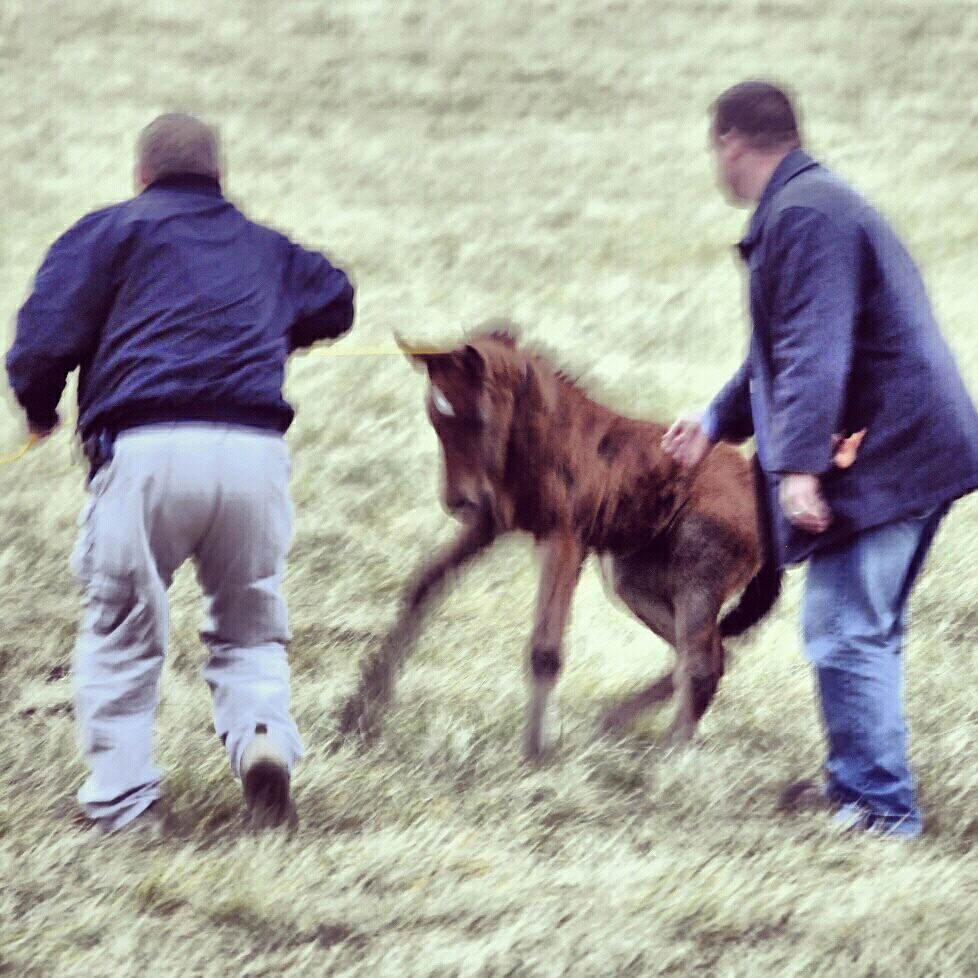
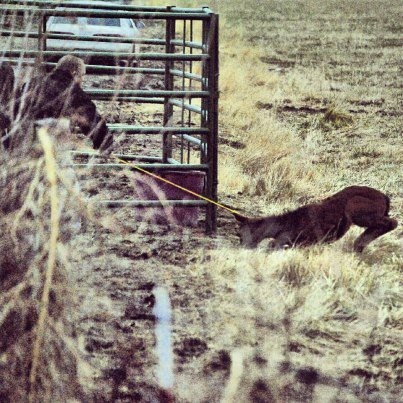
demonstrate how to bring in an approx. 3 week old foal. (NOT!)
Get twine aruond its neck.
Choke it and drag it.
Then shove it when it resists.

Where they go…


If you have an opinion on this issue, you can express it to the following officials:

Secretary of Interior, Sally Jewell (runs the BLM)

Bring signs and bullhorns March 26, 2015, at 6:30 p.m. outside Wheeler Hall, UC Berkeley Campus 2222 Bancroft Way, Berkeley, CA 94720 Info on Secretary Jewell’s panel discussion http://protectmustangs.org/?p=8048

Secretary Jewell

Department of the Interior
1849 C Street, N.W.
Washington DC 20240

Phone: (202) 208-3100
E-Mail: feedback@ios.doi.gov

Twitter: https://twitter.com/secretaryjewell

President Obama  https://www.whitehouse.gov/contact


URGENT! Stop Wild Horse Slaughter & Cruelty in Nevada

Protect native wild horses! © Protect Mustangs.org

Protect native wild horses! © Protect Mustangs.org


Take Action to Save Wild Horses 

Gather in peaceful protest on January 4th (in conjunction with the Carson City Rally) in hometowns around the world to STOP the Slaughter of Native Wild Horses. Let your friends know what is going on. TOURISTS speak out! Do you support NEVADA’s cruel treatment of iconic mustangs?

Post pics holding your signs on Protect Mustangs’ FB wall and we will share them out!

Post here: https://www.facebook.com/ProtectMustangs

Make your voice heard, contact the White House, your Congressional Representative and your Senators to request they halt the roundups, stop the slaughter of U.S. wild horses and burros as well as return all wild horses in holding to the range.

Come to the Carson City “Slaughter is not the Answer” Rally in Nevada’s Capitol. From 10:30 a.m. -1 p.m on January 4th. In front of the Nevada State Legislature building 401 South Carson Street, Carson City, NV. Info: Bonnie Matton 775-720-6086

Send your letters in to Hidden Valley by 9 p.m. PST Jan 3rd. Your letters will be taken to the Governor at the end of the Jan 4th Rally in Carson City.

email: hiddenvalleywildhorses@gmail.com

We need your HELP! Please write an original letter off this form letter and send it to Shannon Windle, President of Hidden Valley Wild Horse Protection Fund. She is taking it to the Governor!

Dear Governor Sandoval,

I am appalled by the current treatment of Nevada’s Virginia Range wild horses. These horses belong to the State of Nevada and their fate ultimately lies in your hands. 80% of Americans are opposed to horse slaughter; now the Virginia Range wild horses are being dumped at livestock auctions by the State of Nevada – the first step in the slaughter pipeline. To treat one of this State’s natural resources with such disregard is reprehensible. You, as the highest ranking official of the State of Nevada, have the authority to stop your Department of Agriculture from this inhumane treatment and its continued determination to wipe them off the range altogether.

To preserve these icons of Nevada’s western heritage, please direct the Nevada Department of Agriculture (NDoA) to take the following steps immediately, before these horses are gone forever:

1. STOP sending all Nevada Virginia Range wild horses to the livestock auction immediately. These horses are entering the slaughter pipeline and being put at direct risk of ending up at slaughterhouses in Canada and/or Mexico. I am opposed to having Nevada’s horses served on dinner platters in foreign markets.

2. STOP the random trapping of these horses. Poor to no planning has resulted in 153 horses being removed from the Virginia Range. The opportunistic methods being implemented to trap Nevada’s horses has had almost no impact to the public safety concerns that the NDoA is using as an excuse for the taking up of these horses. I oppose the indiscriminant taking up of Nevada wild horses.

3. RE-ENGAGE the cooperative agreements previously entered in to between NDoA and wild horse advocate groups. These agreements originally allowed non-profit funds to be used to relieve the burden on the tax payer regarding the management of the Nevada wild horses. I support cooperative agreements that allow NDoA to hand over Nevada’s horses to the care of advocate groups that use their donor funds to find them good, quality forever homes.

4. RE-ENGAGE wild horse advocates willing to assist in the on-going management of the Nevada horses as provided in NRS 569. I oppose the current policies affecting Nevada’s wild horses that have led to reactive versus proactive decision making regarding which horses to remove, have led to the use of dangerous techniques implemented in the taking up of horses, put the public at risk of injury during these round ups, and caused entire communities to become outraged at the activities in which the NDoA has engaged.

5. ENCOURAGE AND SUPPORT new legislation and departmental policies that will protect and preserve the Nevada Virginia Range horses. I support these living symbols of our pioneering American spirit and laud them as proud symbols of Nevada’s past, its courageous present, and its strength of tomorrow. I encourage you to ensure they are protected and become the focus of enjoyment for both tourists and residents of current and future generations.

The next meeting of the Nevada Department of Agriculture Board of Directors isn’t scheduled until March. By then, several hundred more horses might be removed from the range. Additionally, there are 41 Virginia Range wild horses scheduled to be sold at the livestock auction on January 9, 2013.

Please act now to protect the Virginia Range wild horses so a long-term solution can be found.

Sincerely,


Sign, print your name and address.

Mail your letter to Hidden Valley Wild Horse Protection Fund, PO Box 20052, Reno, NV 89515 or scan and email it to hiddenvalleywildhorses@gmail.com no later than January 3, 2013.


All letters will be delivered in person to the Governor’s office in Carson City on Friday, January 4, 2013.

Cruel way to drag foal by pulling bailing twine around their neck (Photo © Bo Rodriguez)

Cruel way to drag foal by pulling bailing twine around their neck (Photo © Bo Rodriguez)

Reno: Damonte wild horses trapped w/ cruelty

(Graphic by Anne Novak & Denise Delucia for © Protect Mustangs.www.ProtectMustangs.org May be used for social sharing. Photo © Bo Rodriguez)


Rally to Save Nevada’s Wild Horses from Slaughter ~ January 4th

PM HV Girl with sign trap to slaughter
Protect mustangs & Stop the cruelty!
Make signs, bring friends and join the rally on Friday, January 4, 2012 (11 a.m. to 1 p.m.) in front of the Legislative Building (Hwy 395 East) in downtown Carson City, Nevada.

If you can’t come to Nevada then hold a peaceful protest in your hometown and send us your photos. We will post them here. Even one person can have a protest. Well traveled roads with lots of traffic are great spots for small protests.

Are you aware the federal officials discussed a plan to kill most of the native wild horses left in America? Read: Outrage over secret documents planning to kill or slaughter 50,000 native wild horses!

Feel free to send us an email with any questions Contact@ProtectMustangs.org

Photo by Bo Rodriguez


From Bonnie Matton:

Well, as you all know by now, we are battling the Nevada Department of Agriculture to get them to stop sending our Virginia Range Horses + horses from other areas as well – to auction: MEANING TO SLAUGHTER.

So, we are having an emergency rally on Friday, January 4, 2012 (11 a.m. to 1 p.m.) in front of the Legislative Building (Hwy 395 East) in downtown Carson City.    Sorry for the last minute notice.  We have to have it before the next auction which is on January 9, 2013.  NO TIME TO LOSE.

We are calling it “Slaughter is not the Answer.”  We will have flyers to pass out to press and others. Would appreciate your emailing me of  how many people will be coming from your area and where you are coming from.

Many of you have participated in demonstrations before. Please come at least 1/2 hour before the rally begins (in the park area next to the Legislative Building) so you can receive instructions (especially if you’ve never attended a demonstration before).  There are certain regulations we must abide with. The Legislative police have always welcomed us wild horse advocates because we are polite and follow their directions.

After the rally, we will be marching to the Governor’s Building (which is next door to the Legislative Building and close to where we gathered before the rally). Shannon Windle, President of Hidden Valley Wild Horse Protection Fund, will then bring hundreds of letters directly up to the Governor’s office – letters she has been gathering for some time opposing what NDA is doing with Nevada’s Treasures.

You are welcome to make up signs and bring them with you. We have lots in our storage shed which will work and I’ll bring them as well.  You are also welcome to bring your organizational signs.

The easiest place to park is if you drive down Stewart Street. There’s usually plenty of parking directly behind the Legislative Building, which is convenient for carrying signs and tables to our setup area.


Call to stop cruel roundups on National Day of the Horse

For immediate release

Deaths are disguised

SAN FRANCISCO (December 13, 2012)–In honor of the National Day of the Horse today, Protect Mustangs calls for an end to cruel roundups of native wild horses. The California based conservation group is circulating a Change.org petition to Congress to De-fund and Stop the Roundups. The roundups are deadly and the Bureau of Land Management (BLM) is skewing the death count.The BLM emphasizes preexisting conditions so Congress won’t realize how many federally protected wild horses are being killed as a result of the roundups.

“Enough is enough!” states Anne Novak, executive director for Protect Mustangs. “If they weren’t rounded up at the hands of the BLM then those wild horses at Owyhee and other ranges surely would not be dead now. We want the roundups to stop, the warehousing to stop, the fiscal irresponsibility to stop, the bad science to stop and we are asking for an accurate independent census of how many wild horses are left on the range.”

Today close to 50,000 wild horses are warehoused in government short or long term holding facilities yet only an estimated 20,000 remain in the wild. In the 1900s two million wild horses roamed in America. Afterwards the wild horse population dropped mostly due to hunting for their meat.

Call The White House:

Comments: 202-456-1111
Switchboard: 202-456-1414

Contact The White House:
http://www.whitehouse.gov/contact/write-or-call

“America’s wild horses should be returned to the range,” states Inez Fort, vice president of Protect Mustangs’ board of directors. “In 1971 there were almost twice as many herd management areas for wild horses. Today it’s hard to find free roaming mustangs on the range. They’ve been stampeded by helicopters and have become victims of roundups.”

“Today, with the public land grab for water rights, energy development and mining projects, the wild horse is facing a huge monster called greed,” explains Novak. “It’s not sustainable to wipe them out. Native wild horses can reverse desertification, offset carbon emissions and heal the land. We need our wild horses to help stop global warming.”

The horse originated in North America. Many breeds of horse exist today–including the American wild horse aka mustang. The Spanish Conquistadors reintroduced the horses to their native homeland where they benefit the ecosystem, reduce global warming and inspire people across the globe.

Ph.D.s J.F. Kirkpatrick, and P.M. Fazio cite in Wild Horses as Native North American Wildlife that:

The key element in describing an animal as a native species is (1) where it originated; and (2) whether or not it co‐evolved with its habitat. Clearly, E. 6 caballus did both, here in North American. There might be arguments about “breeds,” but there are no scientific grounds for arguments about “species.”

The non‐native, feral, and exotic designations given by agencies are not merely reflections of their failure to understand modern science but also a reflection of their desire to preserve old ways of thinking to keep alive the conflict between a species (wild horses), with no economic value anymore (by law), and the economic value of commercial livestock.

Native status for wild horses would place these animals, under law, within a new category for management considerations. As a form of wildlife, embedded with wildness, ancient behavioral patterns, and the morphology and biology of a sensitive prey species, they may finally be released from the “livestock‐gone‐loose” appellation.

In 2004, Congress recognized the first official National Day of the Horse.  The text of the resolution states:

Encouraging citizens to be mindful of the contribution of horses to the economy, history, and character of the United States and expressing the sense of Congress that a National Day of the Horse should be established.
Whereas the horse is a living link to the history of the United States;
Whereas, without horses, the economy, history, and character of the United States would be profoundly different;
Whereas horses continue to permeate the society of the United States, as witnessed on movie screens, on open land, and in our own backyards;
Whereas horses are a vital part of the collective experience of the United States and deserve protection and compassion;
Whereas, because of increasing pressure from modern society, wild and domestic horses rely on humans for adequate food, water, and shelter; and
Whereas the Congressional Horse Caucus estimates that the horse industry contributes well over $100,000,000,000 each year to the economy of the United States: Now, therefore, be it Resolved by the House of Representatives (the Senate concurring), That Congress–
(1) encourages all citizens to be mindful of the contribution of horses to the economy, history, and character of the United States;
(2) expresses its sense that a National Day of the Horse should be established in recognition of the importance of horses to the Nation’s security, economy, recreation, and heritage; and
(3) urges the President to issue a proclamation calling on the people of the United States and interested organizations to observe National Day of the Horse with appropriate programs and activities.

On the eighth anniversary of the first official National Day of the Horse, horse enthusiasts are encouraged to celebrate the horse’s contribution to the United States.

# # #

Media Contacts:

Anne Novak, 415-531-8454  Anne@ProtectMustangs.org

Kerry Becklund, 510-502-1913  Kerry@ProtectMustangs.org

Links of interest:

Petition to Defund and Stop the Roundups: http://www.change.org/petitions/defund-and-stop-the-wild-horse-burro-roundups

America’s native wild horses: http://www.Protectmustangs.org/?page_id=562

www.ProtectMustangs.org

Protect Mustangs is a California-based preservation group whose mission is to educate the public about the American wild horse, protect and research wild horses on the range and help those who have lost their freedom.

Help save Nevada’s Virginia Range wild horses from cruelty and probable slaughter

The public around the world is outraged at the photos showing cruelty toward young native wild horses.

We want Governor Sandoval to stop allowing the Nevada Department of Agriculture to let citizens cruelly trap wild horses.

We strongly encourage you to call, email and/or fax Nevada’s Governor Brian Sandoval,
http://gov.nv.gov/contact/governor/

Office Phone: (775) 684-5670

Office Fax: (775) 684-5683

The baby horse was manhandled–the men put twine around her neck and inhumanely pulled her into the trap. Next the Nevada Department of Agriculture processes the wild horses and sells them at an auction where kill buyers shop for horses to sell to slaughter. This is heinous!

Hidden Valley Wild Horse Protection Fund has been buying all the Virginia Range wild horses at the auction. They are saving them (125+) but they are a small volunteer nonprofit and can’t afford to do this anymore unless you help them to help the wild horses in this crisis.

What’s the long term answer? Cooperative agreements with Nevada and local advocate groups such as Hidden Valley to help those wild horses labelled a nuisance by developers because urban sprawl has encroached on the mustangs’ wild lands.

Nevada is a fence out state. Developers, such as the one who hired the men in the photo to catch wild horses, should fence out their property if they don’t want wildlife on their land.

Native wild horses should never be treated this way. Nevada needs to stop this condoned cruelty now.

Here is a comment from the photographer:

Bo Rodriguez says:

“The foal was three weeks old, an the developers DiLoreto and Damonte are responsible for this also. They have allowed an continue to allow Nevada Department of Agriculture to trap horses on their properties. I have photos of them there at the trap an heard Mr Damonte say he didn’t care for the horses, an wanted them all gone. Tom DiLorreto said he followed states guide lines to the tee. But as you can see, the state must have changed its policy of handling animals humanly to do what you have to, to get rid of it an get the money from the kill buyers as fast as you can.

I did not enjoy taking these photos of the three week old foal being drug around by a piece of bailing twin, it was a long and traumatic for both protesters and horses. There has to be a better solution.”

Please send your donations directly to Hidden Valley Wild Horse Protection Fund so they can keep saving the Virginia Range wild horses from going to slaughter. The link is here: http://hiddenvalleyhorses.com/main.php?c=donate

Thank you for taking action to save Nevada’s wild horses from cruelty and probable slaughter.

All my best wishes,
Anne

Anne Novak
Executive Director of Protect Mustangs


Wild horse fans worldwide outraged over photos showing cruelty in Nevada

3 week foal under attack

3 week foal under attack by hired security ~ picture by Bo Rodriques

Reno Wild Horse Advocates are not only outraged by the Nevada Department of Agriculture’s war against the Virgina Range horses but also the documented cruelty exhibited with the manhandling of the these wild horses upon capture.

R.T. Fitch received testimonials and pictures regarding the inhumane practices of the Ag dept. and developer Diloretto from outraged advocates.

Included, here, are two photos of hired gun security cruelly manhandling a 3 month old foal at the Ag Dept trap on private land.  This needs to stop and it needs to stop now.

We strongly encourage you to call, email and/or fax Nevada’s Governor Brian Sandoval,

http://gov.nv.gov/contact/governor/

Office Phone: (775) 684-5670
OfficeFax: (775) 684-5683

12-6-12_dept_of_ag_manhandling_a_3_week_old_foal

photo by Bo Rodriques

and let him know, even if you do not live in Nevada, that you do not approve of the state’s attack upon the Virginia range horses and that you will spread the negative news far and wide until such actions cease.

Likewise, please contact the office of the Department of Agriculture’s Director Jim Barbee and express your concern.

Office Phone: 775-353-3600
Office Fax: 775-668-1178

Please remember that these captured horses will go to auction and historically, if not rescued by advocates, will be purchased by kill buyers and go to slaughter, that is a given.

Cross-posted from Straight from The Horses Heart

Adopt a BLM wild horse to save it from an unknown fate

Meet Ellie (#6457). She’s a gorgeous 4 yr old Palomino mare from the Calico Mts. She is at the Palomino Valley Center near Reno. (Photo courtesy BLM)

Taking action to find homes for at-risk wild horses

Protect Mustangs is working with members of the public to find homes for all the wild horses who were not adopted during the recent Bureau of Land Management (BLM) internet adoption. The unadopted are at risk of being sold to pro-slaughter people like Tom Davis.

“We are reaching out to the public through Facebook and Twitter to find adopters,” explains Anne Novak, executive director of Protect Mustangs. “People across the country are expressing interest in adopting these great horses. I don’t know why the BLM isn’t marketing the adoption program better.”

BLM’s three strike program

America’s living legends receive a strike against them every time they are offered for adoption. If they are offered on the internet and not adopted they get a strike and another internet adoption gives them another strike. If they are offered for adoption at an event and don’t find their person then they get their third strike . . . It’s a cruel system. After three strikes the federally protected wild horses can be sold to anyone who signs on the dotted line that they won’t sell them to slaughter or for use as rodeo stock. The BLM doesn’t check that the buyers are complying so it’s a free for all.

“If indigenous wild horses are not adopted then they will be shipped out to the Midwest where they are at-risk of being sold by the truckloads–even the one year olds,” states Novak. “With the recent E.U. crackdown on American horse meat, riddled with toxic substances, we are concerned wild horses face an increased risk of going to slaughter because they have never been given substances such as bute.”

Positive communication

Members of the public may email Contact@ProtectMustangs.org to enlist their help in communicating with BLM for a smooth adoption process as well as getting information on trainers and transportation.

Below are some wild horses available for adoption:

Meet Baby Red (#2484) a sorrel yearling gelding. His mother was captured during the Twin Peaks roundup and he was born at the BLM facility in California near Susanville. (Photo courtesy BLM)


Lily (#3361) is from the Fox Hog herd. They have some draft in their line and make wonderful pets/riding horses when you give them a lot of love. (Photo courtesy BLM)

Good News! This horse has an adopter waiting for him at the Ridgecrest facility. Sam (#3275) is from California’s High Rock area and appears to be from cavalry stock. He is handsome and might make a nice little jumper or sport horse.


Meet Stuart (#2600), a yearling gelding from High Rock in California (eastern Sierra). This internet auction could be his 3rd strike and put him “at risk”. He is located near Susanville, California. (Photo courtesy BLM)


Here is Merlot (#9380) a yearling red roan gelding from Green Mountain, Wyoming. He is located in Rock Springs, WY and can be shipped to various locations.

To learn about these horses and others in need of adoption, visit Protect Mustangs on Facebook: https://www.facebook.com/ProtectMustangs

From the BLM website:

Adoption Requirements

Applicant must be 18 years of age or older.

Applicant must have access to a stall/corral that meets the following criteria:
  • Stall, corral, etc. must contain a minimum of 400 square feet per animal
  • Stall, corral, etc. that is 6′ tall on all sides with access to feed, water and adequate shelter for anything 2 years or older. The stall/corral height is 5′ for a yearling and 4.5′ for a burro. (This area is only required until animal is gentled, not for the life of the animal.)
  • Stall, corral, etc. must be made of protrusion-free materials, (EX) Wood, Pipe, Cattle Panels. Barb wire is not allowed in the area that is being used for gentling the animal.
  • Covered stock trailer. Covered stock trailer refers to: solid top, pipe rails, tarp, etc. BLM will not load into two-horse or drop-ramp trailers.
Applicant must describe their stall/corral, etc. in the application packet and submit to BLM for approval.
  • Application – Describe the area where you will keep the animal(s) during the gentling phase. (Application is located in back of brochure.)

Breaking News: Historic Virginia City wild horses going to auction October 24

Protect Mustangs (Photo by Cat Kindsfather)

Iconic wild horses will need adopters

Famous for the classic TV series, Bonzanza, Virginia City’s wild horses have been trapped and are being processed to be sold at an auction frequented by kill-buyers.

On Oct 24th, twenty-nine Virginia Range wild horses are going to be sold by the State of Nevada at the Fallon Livestock Auction.

Historic Virginia Range wild horses are loosing their freedom due to urban sprawl. Wild horses create biodiversity on the range and reduce fuel for wildfires.

“Nevada has a four legged goldmine but they don’t realize it,” states Anne Novak, executive director of Protect Mustangs. “These native grazers reduce the fuel for multimillion dollar wildfires. Tourists from around the world love taking photographs of historic wild horses living in freedom–living symbols of the wild West. We hope Nevada will get hip to their assets on the range and stop selling them off to the highest bidder.”

Hidden Valley Wild Horse Protection Fund will spearhead the rescue lead by Shannon Windle. Protect Mustangs will lend their support to help save the historic wild horses from going to slaughter for human consumption.

Last month 53 Virginia Range wild horses were trapped and sent to the auction. All the horses were rescued thanks to a huge team effort Lead by Hidden Valley Wild Horse Protection Fund with Protect Mustangs, Let ‘Em Run, American Wild Horse Preservation Campaign, Least Resistance Training Concepts, HorsePower, Starlight Sanctuary, other groups and individuals around the world.

Read about it in New Zealand’s Horsetalk and Australia’s HorseYard.

Adoption information is here. Contact Anne@ProtectMustangs.org if you want to adopt a wild horse or two.

Contact Governor Sandoval if you don’t like Nevada removing indigenous wild horses and selling them at an auction with kill-buyers. Let them know if you are from out of state or out of the country because Nevada seems to care about tourism.

Politely ask Governor Sandoval to step in–to stop the removals and the sales. Ask him to RELOCATE all the wild horses who have been trapped already by the Nevada Department of Agriculture (NDOA) and bring them food and water if needed on the range.

Contact the Governor here:

Governor Sandoval
Tel: 775-684-5670
fax: 775-6845683

Emails can be sent via this link.
http://gov.nv.gov/contact/governor/

Donations may be sent directly to Hidden Valley Wild Horse Protection Fund.

Links of interest:

Horsetalk reports: Charities pay three times the going rate for wild horses

HorseYard reports: Horse lovers unite to save Nevada’s wild horses from kill buyers

Notice of sale from the Nevada Department of Agriculture:

29 VIRGINIA RANGE HORSES from Virginia City, Nevada

NOTICE OF ESTRAY ANIMALS

AS PER N.R.S. 569.070 NOTICE IS HEREBY GIVEN that the following described animal(s) have been taken up as an Estray Animal(s) VRE Horses #1898, 1899, 1900, 1901, 1902, 1903, 1904, 1905, 1906, 1907, 1908, 1909, 1910, 1911, 1912, 1913, 1914, 1915, 1916, 1917, 1918, 1919, 1920, 1921, 1922, 1923, 1924, 1925, and 1926. The

Estray Horses were captured in Virgina City, in Storey County. The described animals are being held at The Nevada Prison Ranch, 5500 Synder Ave., Carson City, Nv. The Estray Stallions 1 year and older will be gelded prior to placement.Estray #1898 VRE Bay Stud
5 years

Estray # 1899 VRE Bay Stud
4 years

Estray #1900 VRE Bay Stud
Offset star
4 year

Estray #1901 VRE Bay Stud
2 years

Estray #1902 VRE Black Mare
5 year

Estray #1903 VRE Bay Stud
Star, LH & RH socks, LF pastern
6 months

Estray #1904 VRE Bay Mare
Star LH coronet
5 years

Estray #1905 VRE Bay Stud
Star, RH pastern, LF coronet
2 years

Estray #1906 VRE Bay Mare
RH coronet
8 years

Estray #1907 VRE Bay Stud
Large star and snip, RH &LH pastern
10 months

Estray #1908 VRE Black Mare
Small star and snip, RH & LH socks
10 years

Estray # 1909 VRE Bay Mare
Small star
7 years

Estray #1910 VRE Bay Stud
Small star, LH & RH pastern
5 years

Estray #1911 VRE Bay Mare
Star, RH stocking
8 years

Estray #1912 VRE Bay Stud
3 years

Estray #1913 VRE Bay Stud
2 years

Estray #1914 VRE Bay Mare
Star,short strip, large snip LH &RH stockings, LF coronet
4 years

Estray #1915 VRE Bay Mare
Star, RH pastern, LH coronet
5 years

Estray #1916 VRE Bay Mare
7 years

Estray #1917 VRE Sorrel Mare
Star, strip, and snip
10 years

Estray # 1918 Bay Stud
RH coronet
1 year

Estray #1919 Bay Filly
Strip
4 months

Estray #1920 VRE Bay Stud
Star, snip, RH sock
2 years

Estray #1921 VRE Bay Stud
Large star, offset snip
1 year

Estray #1922 VRE Appaloosa Mare
5 years

Estray #1923 VRE Bay Mare
2 years

Estray #1924 VRE Bay Stud
Snip
4 years

Estray #1925 VRE Bay Filly
4 months

Estray #1926 VRE Bay Stud
Star, RH pastern
1 year

AS PER N.R.S. 569.080, if an estray animal is not claimed within 5 working days after the last publication of the advertisement, as required before sale or placement, said animal (s) will be available for sale or placement by the Division of Livestock Identification on Wednesday, October 24, 2012, at the Nevada Livestock Market, Fallon, NV.

NEVADA DEPARTMENT OF AGRICULTURE
4780 East Idaho Street
Elko, Nevada 89801
1-775-738-8076

First four Virginia Range wild horses move to Colorado

Nevada’s historic wild horses arrive safe and sound

Virginia Range wild horses Brittany and Spencer arrive in Colorado 2012 Photo curtesy HVWHPF


Virginia Range wild horses Jesse & JJ arrive in Colorado Photo curtesy HVWHPF

Thanks to everyone’s participation to save 53 Virginia Range wild horses from being sold to possible slaughter!

23 wild horses have been adopted, they are waiting to have their Coggins tests and be shipped out.

30 wild horses need their forever homes. Please help if you can.

Adoption applications are on Hidden Valley Wild Horse Protection Fund’s page.

Press Release: Protests to stop roundups and sales to kill buyers

(Photo © Cat Kindsfather, all rights reserved)

For immediate release

Call for peaceful protests to stop the roundups and stop the BLM from selling federally protected wild horses to kill-buyers

American public outraged at cruel ‘management’

WASHINGTON (October 6, 2012)–Protect Mustangs announced on Facebook Friday their call for nationwide protests to stop the roundups and stop the Bureau of Land Management (BLM) from selling federally protected indigenous wild horses to kill buyers.

“We are calling for peaceful protests as well as candlelight vigils so no more wild horses will die from roundups, be tortured by the helicopters or sold to kill buyers for delicacy meat abroad,” states Anne Novak, executive director for California based Protect Mustangs “The public is outraged.”

Last week ProPublica exposed the BLM selling at least 1,700 federally protected wild horses to known pro-slaughter buyer, Tom Davis, and the public is furious. The BLM is charged with managing and protecting wild horses–not selling them for $10 a head to a pro-slaughter middle man to reduce the numbers in holding due to years of fiscally irresponsible roundups.

“Members of the public who are active in their communities must let their friends, family and neighbors know they can contact Congress if they don’t like their tax dollars used to fund cruel roundups,” says Tami Hottes, Protect Mustangs’ outreach coordinator for the Midwest and South. “People are upset to learn about the BLM selling all those historic wild horses to a guy like Tom Davis. It’s disgusting.”

This week the Antelope roundup, in northeastern Nevada, started under the pretense of saving the wild horses from a drought stricken area.

“We are concerned the BLM is jumping on the drought opportunity to zero out herds for industrialization of public land–especially massive energy projects that could pollute the water,” explains Novak. “Our indigenous wild horses are environmental barometers. If they die from drinking the water then that’s a red flag something is poisoning the water out there.”

Novak continues,”If there is a real problem on the range then bring them aid in the field–don’t round them up and warehouse them at taxpayer expense. It won’t cost much to bring them hay and water for a few months to get them through a difficult time.”

In watching videos from the roundup it should be pointed out that these wild horses were actually in excellent shape and there is no sign they have been suffering from lack of water or forage this summer. They are efficient browsers.

Even though the BLM announced last spring they would bait trap, they are not keeping their word to the American public. The BLM continues with cruel helicopter roundups.

The contractor has been criticized in the past for deadly incidents that could have been prevented. Despite objections from advocates and members of the public, the BLM continues to hire the contractor.

At the Antelope roundup advocates from The American Wild Horse Preservation Campaign (AWHPC) recorded videos showing healthy horses stampeded into traps, foals terrorized by choppers and a terrified stallion jumping out of the capture corral breaking his leg and running away. He was then euthanized by the BLM.

During the roundup wild horses were traumatized with whips and a wild mare broke her neck and died in transport.

If these historic wild horses had not been rounded up surely they would be alive with their families roaming in the West.

Outraged members of the public are calling BLM officials requesting the roundups stop. Officials downplay the cruelty and trauma, claiming these were rare incidents and touting that roundups, also known as “gathers”, only have a 1% death rate.

“We disagree with their whittled down death rate,” states Novak. “For years we have caught the BLM avoiding the correct death count and misleading Congress about the true number of horses painfully dying in roundups. During winter 2010 more than 180 wild horses died or were euthanized as a result of the roundup but the BLM tried to rewrite the numbers.”

The federal agency, funded by Congress to manage wild horses and burros, attributes the gross majority of roundup deaths to pre-existing conditions when they are obviously roundup related. If the horses weren’t rounded up they surely would not have died at that time.

The BLM often kills indigenous wild horses for being “old” and claims it was a pre-existing condition. They also kill baby horses claiming they have leg deformities. The foals can’t tolerate being stampeded for many miles on their undeveloped baby feet and legs and suffer severe injuries and are euthanized. BLM resists taking responsibility for their heinous actions.

At roundups since 2009, advocates as well as members of the press and public have been pushed back from the trap site and the holding corrals. It appears the BLM wants to hide the cruel roundups and injured animals from public view.

“The Wild Horse and Burro Program avoids transparency because of their disgusting secrets,” states Novak. “The public has a right to know what’s happening at roundups and afterwards. The public wants to know how many federally protected wild horses have been sold to the slaughter middle men since 2005.”

In 2004, a stealth rider known as the Burns amendment was attached to the Congressional Appropriations Bill to allow unlimited sales of captive wild horses over the age of ten or those who have been presented at adoption venues (live or Internet) three times–even pregnant mares and one-year-olds called yearlings.

The recent ProPublica article, written by Dave Phillips, highlights a corrupt program and interviews a pro-slaughter middle man. According to ProPublica, ‘Tom Davis buys 100s of mustangs at a time, sight unseen, for $10 a head. BLM has sold him more than 1,700 wild horses and burros since 2009.

“Hell, some of the finest meat you will ever eat is a fat yearling colt,” he says.

“. . . but BLM’s Sally Spencer said it would be unfair for BLM to look more closely at him based on the volume of his purchases. “It’s no good to just stir up rumors,” she said.’

In 1997 Associated Press investigative journalist, Martha Mendoza, uncovered BLM’s internal corruption wherein adopted wild horses were quickly being sold to slaughter even by BLM employees who adopted them.

‘A multimillion-dollar federal program created to save the lives of wild horses instead is channeling them by the thousands to slaughterhouses where they are chopped into cuts of meat.

Among those profiting from the slaughter are employees of the Bureau of Land Management, the federal agency that administers the program.’

Mendoza’s Freedom of Information Act (FOIA) research and the story she exposed, forced the adoption program to change their protocol and only give title to the mustangs after one year to prevent the wild horses from being sold into the slaughter pipeline.

Today the BLM sends America’s living treasures to slaughter by selling them to the middle men who sell them to slaughter. Protect Mustangs asks Congress for a freeze on roundups, a freeze on sales and a full investigation into the ‘sale authority program’ since 2005.

The roundups ramped up in 2009 with the stimulus package push for the New Energy Frontier on public land and a new mandate to wipe out the wild herds of the West known as The Salazar Plan.

Despite nationwide protests in 2009-10 against the Secretary of the Interior’s plan, the majority of wild horses and burros were ripped from their family bands, taken off their land and the stallions were sterilized. President Obama ignored public outcry and Congress eventually fell for the BLM pleas for funding to ‘help the wild horses’.

In 2010, 54 members of Congress joined Congressman Raul Grijalva requesting a moratorium on roundups and a National Academy of Science (NAS) investigation into the broken program. Somehow the BLM has taken charge of the NAS investigation now called a “study” and is feeding the NAS the information instead of the Academy conducting independent research.

Today more than 52,000 wild horses and burros are living in captivity–mostly in the Midwest as specified in the Salazar Plan. Last year the controversial Wild Horse and Burro Program cost the American taxpayer 78 million dollars. Next year the cost will increase.

Protect Mustangs requests that Congress work with advocates to find a way to return wild horses to their wild lands in the West–to create biodiversity on the range–a win-win for wild horses, livestock, landowners, tourism and energy development on the New Energy Frontier. Their presence also helps greatly to reduce wildfires.

“Shrinking the numbers of wild horses left on public land today could be dangerous,” explains Kerry Becklund, director of outreach for Protect Mustangs. “Giving already small herds fertility control will ruin genetic viability and could create inbreeding.”

The BLM’s reproduction rates don’t account much for mortality within the herd. Often foals don’t live to be two years old but the BLM spin on population has them multiplying like rabbits.

Studies show predators such as mountain lions and coyotes reduce the wild horse foal population. Last summer several young foals were killed by coyotes at a BLM holding facility near Sparks, Nevada. Even so, the BLM hides the truth about predators reducing the population and continues to repeat they have no natural predators despite the fact they do.

“Show me a real independent headcount before we talk about fertility control,”says Novak. “There aren’t enough wild horses left on the range any more. The truth is that the BLM will continue to roundup wild horses to treat them with fertility control. Roundups have been deadly so far. Roundups are NOT the answer. Biodiversity is the answer.”

Novak continues, “More than 52,000 indigenous wild horses have been captured and are warehoused in government holding. Selling ‘excess’ wild horses to kill-buyers is a heinous act and must stop now as well as the gluttony of roundups”

# # #

Media Contacts:

Anne Novak, 415-531-8454, Anne@ProtectMustangs.org

Kerry Becklund, 510-502-1913, Kerry@ProtectMustangs.org

Links of interest:

AP reports & Protect Mustangs speaks out against the roundups: 3,500 Wild horses going to loose their freedom starting October 1st Federal roundup of wild horses burros starts today http://www.lvrj.com/news/federal-roundup-for-wild-horses-burros-starts-today-172056591.html

ProPublica reports: All the missing horses: What happened to the wild horses Tom Davis bought from the government  http://www.propublica.org/article/missing-what-happened-to-wild-horses-tom-davis-bought-from-the-govt

Brutal report for day 1 of Nevada’s Antelope roundup. Two horses die. AWHPC video. http://www.youtube.com/watch?v=ne3ppBnbr7g&feature=youtu.be

Day 3 of Antelope roundup. Foals are terrorized by the helicopter and chased too long on their tender hooves. AWHPC video. http://www.youtube.com/watch?v=-N9LDAwZqyU&feature=youtu.be

Buffalo News (January 5, 1997) US effort to save wild horses leads thousands to slaughter as workers profit by Martha Mendoza http://nl.newsbank.com/nl-search/we/Archives?p_product=BN&p_theme=bn&p_action=search&p_maxdocs=200&p_topdoc=1&p_text_direct-0=0EAF99E45C1DF5CF&p_field_direct-0=document_id&p_perpage=10&p_sort=YMD_date:D&s_trackval=GooglePM

The Burns amendment http://en.wikipedia.org/wiki/Conrad_Burns#The_Burns_Amendment

Huffington Post (October 17, 2009) Ken Salazar’s wild horse plan fuels accusations that he’s in the pocket of ranchers by Martin Griffith http://www.huffingtonpost.com/2009/10/17/ken-salazars-wild-horse-p_n_324799.html

News 4 KRNV Reno BLM selling to kill buyer? http://www.mynews4.com/news/local/story/BLM-selling-to-a-kill-buyer/s7svkl_zd0i1NVKHbd0ceA.cspx

Oct 5th Facebook announcement~Call to Stop the Roundups: https://www.facebook.com/photo.php?fbid=418628774862814&set=a.240625045996522.58710.233633560029004&type=1&theater

Protect Mustangs on the web http://www.ProtectMustangs.org